Rod bolt torque after inspection
 09-17-2020 | 11:07 AM
#1

Thread Starter
Platinum Member


Joined: Feb 2001
Posts: 4,295
Likes: 1,457
From: Virginia Beach
 Rod bolt torque after inspection
Guys,
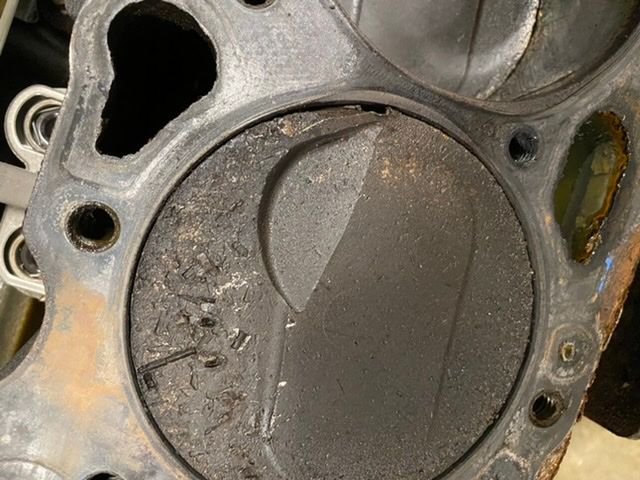
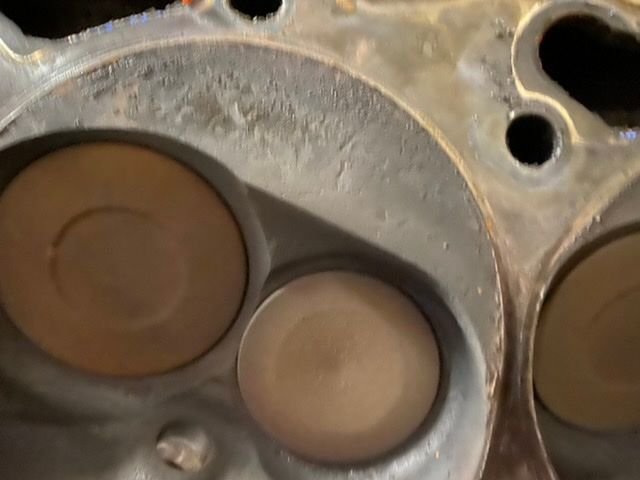
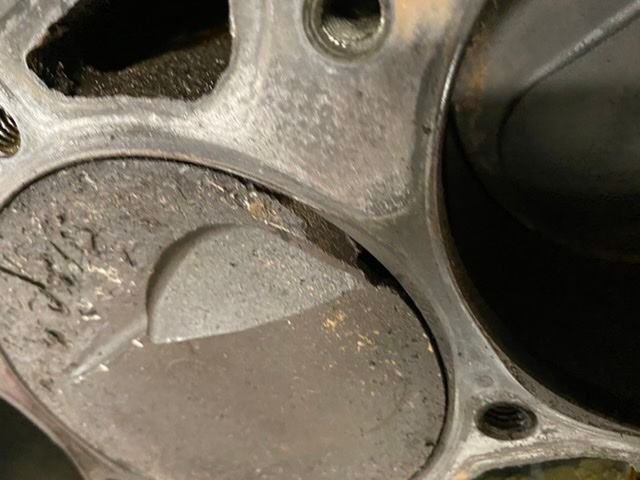
During tear down of one of my 502s, I found a piston that looks like it kissed some parts at one point and time it's bad enough that I can't leave it even though compression and leakage were good. Compression was an average of 150 PSI across the board, leakage on this hole was 20 percent with air coming through the valves. No issues with the bore. Out of the two engines, this one was running perfect. I was absolutely floored to see this.
From my paperwork from the previous owner, it looks there was a valve issue that required repair on the cylinder head (it was not factory sealed like I thought). I guess some techs think it's okay to have left it this way?
Here's my dilemma: a friend has a stock 502 piston that I'll be able to use as a replacement. I'll have the piston swapped to the rod, rings reinstalled the way they came out, and back in it will go. My concern is with rod bolt torque. I hate disturbing the bottom end. What's the best way of ensuring the rod bolts have the right torque/stretch when it goes back together? The last thing I want to do it spin a bearing.
I'm half tempted to just rebuild the entire short block at this point, but the rest of it really doesn't need it. Had I not pulled the head, I would have never even known there was an issue. I'll post a pic from my phone in the next reply.
Thanks.
During tear down of one of my 502s, I found a piston that looks like it kissed some parts at one point and time it's bad enough that I can't leave it even though compression and leakage were good. Compression was an average of 150 PSI across the board, leakage on this hole was 20 percent with air coming through the valves. No issues with the bore. Out of the two engines, this one was running perfect. I was absolutely floored to see this.
From my paperwork from the previous owner, it looks there was a valve issue that required repair on the cylinder head (it was not factory sealed like I thought). I guess some techs think it's okay to have left it this way?
Here's my dilemma: a friend has a stock 502 piston that I'll be able to use as a replacement. I'll have the piston swapped to the rod, rings reinstalled the way they came out, and back in it will go. My concern is with rod bolt torque. I hate disturbing the bottom end. What's the best way of ensuring the rod bolts have the right torque/stretch when it goes back together? The last thing I want to do it spin a bearing.
I'm half tempted to just rebuild the entire short block at this point, but the rest of it really doesn't need it. Had I not pulled the head, I would have never even known there was an issue. I'll post a pic from my phone in the next reply.
Thanks.

 09-17-2020 | 12:04 PM
#4
Registered

Joined: Oct 2005
Posts: 1,074
Likes: 251
From: Waldorf, Md
Tom,
I have seen plenty of engines over the years that have run just fine for a loooong time with marks like that. I would almost say leave it alone.
That being said about the only way you can get the rod bolts exactly where they are is take a stretch gauge and measure them before you pull them apart and then tighten them back to the same exact stretch. If they are factory rods and bolts it should be fine just torquing them to the factory specs.
I have seen plenty of engines over the years that have run just fine for a loooong time with marks like that. I would almost say leave it alone.
That being said about the only way you can get the rod bolts exactly where they are is take a stretch gauge and measure them before you pull them apart and then tighten them back to the same exact stretch. If they are factory rods and bolts it should be fine just torquing them to the factory specs.
09-17-2020 | 12:17 PM
#7
Thread Starter
Platinum Member
Joined: Feb 2001
Posts: 4,295
Likes: 1,457
From: Virginia Beach
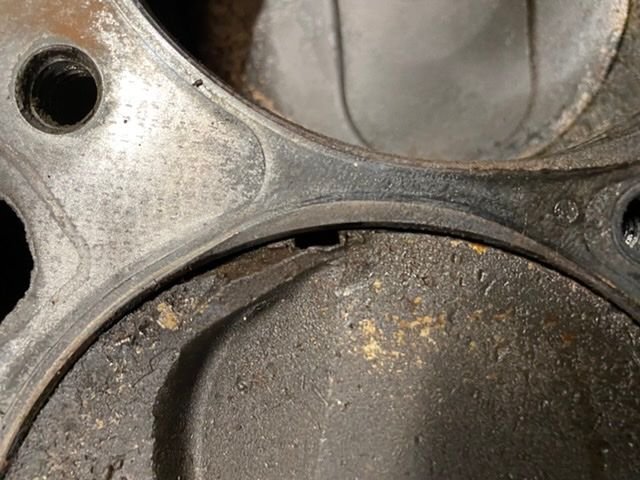
Doesn't appear to be broken. Damage is from something striking it. Like I said, this thing had good compression and leak down. Strange isn't it?
To my knowledge it has never run lean. I put in new BUP injectors last year as a precaution.
To my knowledge it has never run lean. I put in new BUP injectors last year as a precaution.

 09-17-2020 | 12:57 PM
#9
Registered

Joined: Feb 2013
Posts: 1,459
Likes: 391
Looks like a broken ring land to me too. I had a very similar failure with a sbc I built. In my case, compression was a bit lower which caused me to pull the head. Insufficient top-ring end-gap and ring poping out of ring compressor as its going in the hole made the short list of possible causes. Replaced piston (had to grind off a little material to get down to the same weight as orig). 15 years later and its still running great.
I agree that using a bolt stretch gage is the best way to get rod bolts back to original torque.
I'd also remove the valves for at least that cyl and inspect. Many years ago, we used a blue ink like liquid (Persian Blue?) on the valve seats to see where valve was and wasn't contacting valve seat.
I agree that using a bolt stretch gage is the best way to get rod bolts back to original torque.
I'd also remove the valves for at least that cyl and inspect. Many years ago, we used a blue ink like liquid (Persian Blue?) on the valve seats to see where valve was and wasn't contacting valve seat.
09-17-2020 | 01:04 PM
#10

Registered
Joined: Jan 2003
Posts: 6,020
Likes: 1,522
From: Grand Rapids, MI
I'd hang the other piston on the rod and torque to factory specs. I'd also probably put the same bearings right back in if they look good. You will probably learn a lot when you remove that rod.