



What’s out there for Chevy LS based engines
 10-18-2020 | 05:38 PM
#1
Thread Starter
Registered

Joined: Apr 2015
Posts: 1,268
Likes: 68
 What’s out there for Chevy LS based engines
Wondering what LS engine packages are out there and what hp range.
Does stainless marine off exhaust manifolds for the LS engines? Thanks in advance for any info
Does stainless marine off exhaust manifolds for the LS engines? Thanks in advance for any info


 10-19-2020 | 11:23 AM
#3
Registered

Joined: Jun 2007
Posts: 7,311
Likes: 1,817
From: Merritt Island, FL
Like JaayTee said those plus these. The ski boat industry has used them for years and proven to be very reliable. The 650 LT4 is the newest, basiclly GM builds and sells to the marine builders, they add the marine accessories.
Marine power has them up to 650HP.
https://marinepowerusa.com/
KEM (Kodiac).
KEM Equipment, Inc.
LME if you want to do you own,,,
https://latemodelengines.com/long-blocks.html
Of course there is a lot of road builders,
Marine power has them up to 650HP.
https://marinepowerusa.com/
KEM (Kodiac).
KEM Equipment, Inc.
LME if you want to do you own,,,
https://latemodelengines.com/long-blocks.html
Of course there is a lot of road builders,
10-20-2020 | 07:36 AM
#4
Registered
Joined: Mar 2019
Posts: 172
Likes: 65
10-21-2020 | 03:16 PM
#6
Thread Starter
Registered
Joined: Apr 2015
Posts: 1,268
Likes: 68
the 6.2 ls 3 motor I think is the best to build dollar to hp. The ls 7s are crazy expensive vs the 6.2.
the Ls 3 heads are rectangular port and flow 293 cfm stock and have a smaller combustion chamber so make more compression.
I bet installing good rods a big roller cam and lifters, Single Plane I take and forged piston I can make around 600 ponies but Ls parts are expensive and I’d need all the mounts, exhaust, etc, etc etc to put it in a boat. Where as I can buy a 530hp old school 406 sbc with dart block, heads, and roller cam, minis carb and ign for 6400 bucks and use all the existing mounts and exhaust. The LS is a hell of a platform tho! If I can buy A used pair of ls 3 engines for 1500-2k each it might make sense. I’d sell the good running 320hp engines and exhaust to do the swap. The ls motors are small and a lot lighter than big blocks
this is a good read on the LS engines. One of the most popular LS engines is the LS3. Chevy introduced the LS3 in the 2008, and it was the most popular engine ever found in a base model Corvette. Like the LS2, the LS3 uses the Gen IV design. The LS1 and LS3 have a lot on in common, but they also have a lot of differences.
The larger 6.2L of displacement helps the LS3 make significantly more power and torque compared to the LS1. The real difference that makes the LS3 so attractive are the cylinder heads. All LS engines are known for their superb flowing heads. The LS1 flows 244cfm on the intake side of the head, an awe-inspiring feat for a production engine at the time. LS3 heads, however, flow an insane 293 cfm of air. Unfortunately, LS3 heads will not fit on an LS1, as they require a 4” bore.
Another big difference between the two is the design of the intake ports. The LS1 uses a cathedral port design (as do LS2, LS6, and LQ truck heads) while the LS3 uses rectangular ports. As tested by Hot Rod magazine, the LS3 intake is one of the best OEM intakes ever produced on any car. The heads are also some of the OEM heads ever produced. There’s no question that the LS3 is better than the LS1.
10-21-2020 | 10:07 PM
#7
Thread Starter
Registered
Joined: Apr 2015
Posts: 1,268
Likes: 68
Here are some things to note about this test. Richard Holdener, the guy in the video, made some changes to the 250,000 5.3 LS before hitting the dyno. The reason he did this was to make sure that all of the problem areas would not be an issue during the dyno. Holdener opened up the ring gap to ensure the cast pistons would not suffer ring land damage with the extra heat generated by the combination. While nothing in the video mentions upgrading the head gaskets or bolts, we are willing to bet that the torque to yield bolt was swapped out for head studs or at least aftermarket head bolts. Holder mentions that he made sure the head gaskets were sealing but didn’t go into any details.
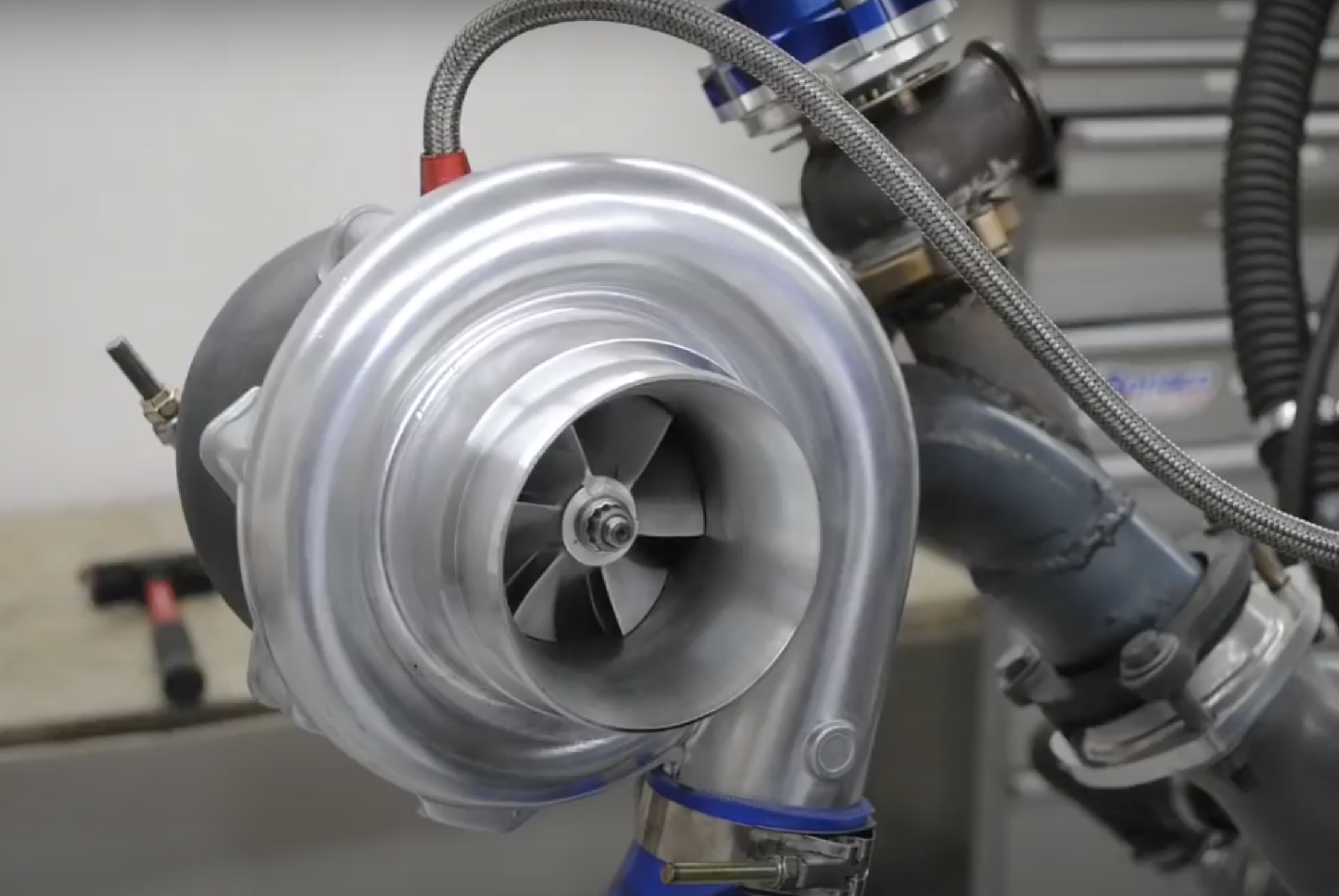
So what’s the purpose of this “big bang” test? Holdener wanted to see what horsepower the stock Gen III crankshaft, rods, and pistons could make. Before we get into the dyno, we should note that this engine had an excellent tune, good fuel, air-to-water intercooler, Trickflow heads, COMP cam, twin 76mm turbos, and FAST intake manifold.
In naturally aspirated form, the little Gen III 5.3 made an impressive 503 horsepower and 442 lb-ft of torque. Holdener then removed the long tube headers and replaced them with a set of twin 76mm turbos. At only 5.5-pounds of boost, the 5.3 laid down 697 horsepower and 606 lb-ft of torque. When upped to 15.5-pounds, the mill produced 1,015-horsepower and 872 lb-ft of torque. Surely these power figures were close to breaking the Gen III internals. Nope. Holdener made pulls all the way through 24-pounds of boost where the engine produced 1,305 horsepower and 1,106 lb-ft of torque before calling it quits.
10-22-2020 | 08:14 AM
#9
Registered
Joined: Oct 2010
Posts: 1,621
Likes: 402
From: Cheboygan, MI
look at the gen III 5.3 with summit heads and twin 76mm tubos on a stock bottom end He just opened the ring gap and made sure the head gaskets had good sealThere’s no doubt that the Gen IV LS is stronger than the Gen III. With better rods and pistons, it seems to be the go-to combination for guys wanting to throw some power at a stock bottom end. In fact, we know some people that refuse to use stock Gen III components. So the question is, how much power can a stock bottom-end Gen III 5.3 take?
Here are some things to note about this test. Richard Holdener, the guy in the video, made some changes to the 250,000 5.3 LS before hitting the dyno. The reason he did this was to make sure that all of the problem areas would not be an issue during the dyno. Holdener opened up the ring gap to ensure the cast pistons would not suffer ring land damage with the extra heat generated by the combination. While nothing in the video mentions upgrading the head gaskets or bolts, we are willing to bet that the torque to yield bolt was swapped out for head studs or at least aftermarket head bolts. Holder mentions that he made sure the head gaskets were sealing but didn’t go into any details.
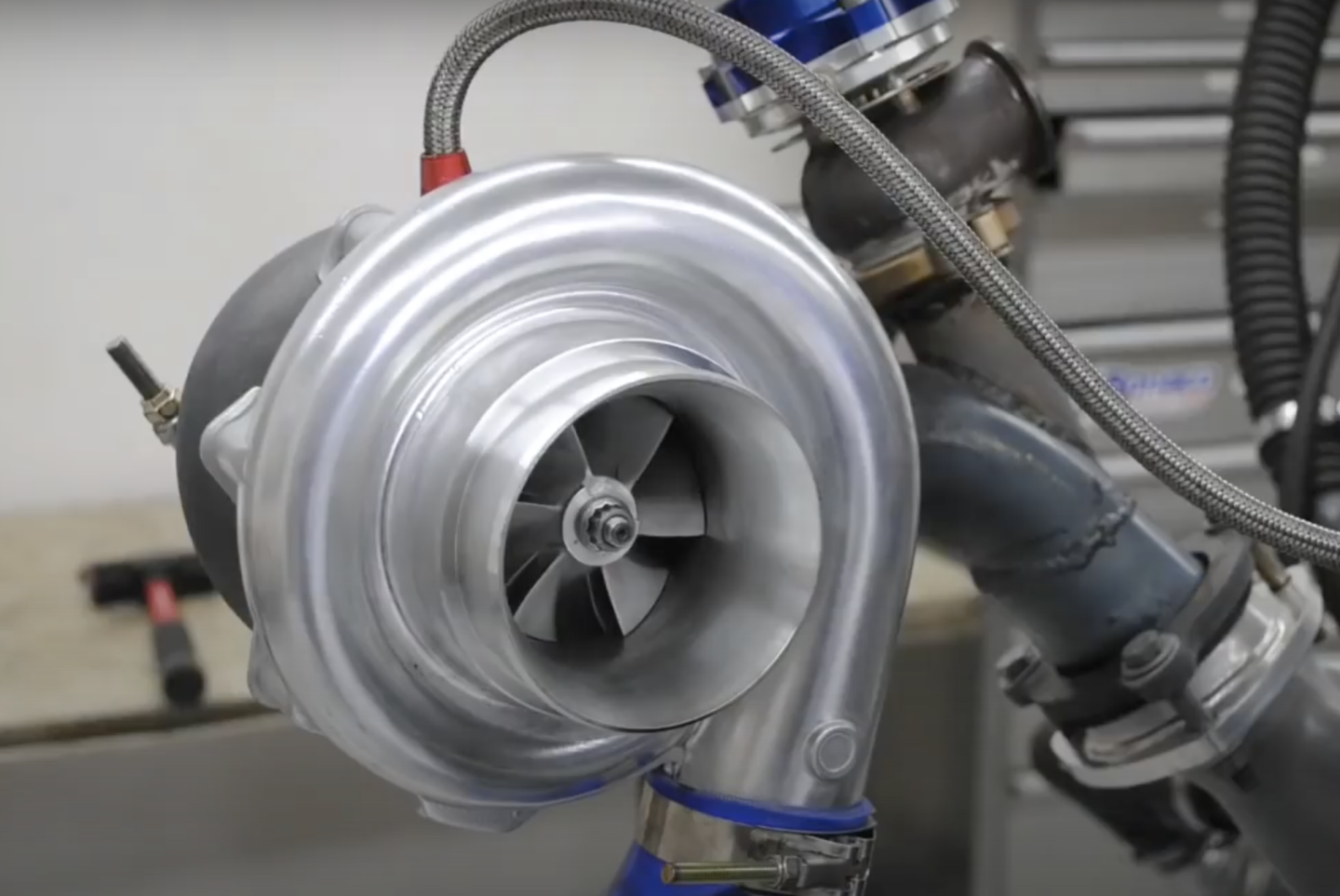
So what’s the purpose of this “big bang” test? Holdener wanted to see what horsepower the stock Gen III crankshaft, rods, and pistons could make. Before we get into the dyno, we should note that this engine had an excellent tune, good fuel, air-to-water intercooler, Trickflow heads, COMP cam, twin 76mm turbos, and FAST intake manifold.
In naturally aspirated form, the little Gen III 5.3 made an impressive 503 horsepower and 442 lb-ft of torque. Holdener then removed the long tube headers and replaced them with a set of twin 76mm turbos. At only 5.5-pounds of boost, the 5.3 laid down 697 horsepower and 606 lb-ft of torque. When upped to 15.5-pounds, the mill produced 1,015-horsepower and 872 lb-ft of torque. Surely these power figures were close to breaking the Gen III internals. Nope. Holdener made pulls all the way through 24-pounds of boost where the engine produced 1,305 horsepower and 1,106 lb-ft of torque before calling it quits.
Here are some things to note about this test. Richard Holdener, the guy in the video, made some changes to the 250,000 5.3 LS before hitting the dyno. The reason he did this was to make sure that all of the problem areas would not be an issue during the dyno. Holdener opened up the ring gap to ensure the cast pistons would not suffer ring land damage with the extra heat generated by the combination. While nothing in the video mentions upgrading the head gaskets or bolts, we are willing to bet that the torque to yield bolt was swapped out for head studs or at least aftermarket head bolts. Holder mentions that he made sure the head gaskets were sealing but didn’t go into any details.
So what’s the purpose of this “big bang” test? Holdener wanted to see what horsepower the stock Gen III crankshaft, rods, and pistons could make. Before we get into the dyno, we should note that this engine had an excellent tune, good fuel, air-to-water intercooler, Trickflow heads, COMP cam, twin 76mm turbos, and FAST intake manifold.
In naturally aspirated form, the little Gen III 5.3 made an impressive 503 horsepower and 442 lb-ft of torque. Holdener then removed the long tube headers and replaced them with a set of twin 76mm turbos. At only 5.5-pounds of boost, the 5.3 laid down 697 horsepower and 606 lb-ft of torque. When upped to 15.5-pounds, the mill produced 1,015-horsepower and 872 lb-ft of torque. Surely these power figures were close to breaking the Gen III internals. Nope. Holdener made pulls all the way through 24-pounds of boost where the engine produced 1,305 horsepower and 1,106 lb-ft of torque before calling it quits.
10-22-2020 | 08:35 AM
#10
Thread Starter
Registered
Joined: Apr 2015
Posts: 1,268
Likes: 68
I saw the video the other day and I couldn't believe he didn't grenade it. I also saw a similar dyno run on Engine Power, they took a junk yard 5.3 and cleaned it up, gapped the rings and put a 150 shot of nitrous and made 720ftlbs of torque and over 600hp. These motors can make crazy power with stock bottom ends. SSC is using the LS platform in their super car to make 1750hp and run 331mph. Heck my Yukon Denali with the truck version of the LT1 with a few mods is pushing 500hp. How many 5800lb SUV's with 33's get rubber in second?
Someone should design a twin turbo marine set up for this platform and sell it as a kit.
I think the sb2 small block gm made to race in nascar that was never allowed to race is where the head design for the LS series came from. I’ve seen the sb2 440ci engines make 980hp on the motor lol.
I like the fact that the LS is over 200 lbs lighter than a bbc.
who sells water jacketed turbos for marine use?

