


How to get white gelcoat back to white
 02-01-2022 | 10:20 AM
#1
Thread Starter
Registered
Joined: Jan 2018
Posts: 198
Likes: 0
 How to get white gelcoat back to white
I`m working on a project I picked up and I`m wondering if it`s possible to get the white gelcoat to either lighten up a few shades or more or get it back to ultra pure white.
There`s thousands of shades of "white" and this boat`s current white is more like a light mocha or Swiss Coffee and I`d like to get it back to or as close as possible to ultra pure white.
I have a rotary with a Lake Country white wool pad, a Lake Country yellow wool (for polishing), a LC Orange curved waffle (for light polishing). On product I have Presta Super Cut Compound, Regular Cut Compound, and Polish (plus a ```` load of car products, DA, pads, and products if needed). Current plan is Presta compound, Presta polish, colonite 446 super double coat as a sealer.
So far I used the rotary with the white wool pad and the Presta regular cut down one side. It got most of the oxydization off but it didn`t really remove most of the marks in the gel coat or really clean it up and make it white-white. It`s shiney but not super white, I haven`t polished it but I`m holding off until I see if there`s something I can do to make the white whiter or possibally the red more fire truck red vs maroonish-red?
The rear upper pa
Is it possible to lighten the gel a few shades with wet sanding it, or using a different product, or possibally wiping it down with a solvent (mineral spirits, aceatone, etc prior to buffing to whiten it up or handle the burn marks?
Here`s some pics
There`s thousands of shades of "white" and this boat`s current white is more like a light mocha or Swiss Coffee and I`d like to get it back to or as close as possible to ultra pure white.
I have a rotary with a Lake Country white wool pad, a Lake Country yellow wool (for polishing), a LC Orange curved waffle (for light polishing). On product I have Presta Super Cut Compound, Regular Cut Compound, and Polish (plus a ```` load of car products, DA, pads, and products if needed). Current plan is Presta compound, Presta polish, colonite 446 super double coat as a sealer.
So far I used the rotary with the white wool pad and the Presta regular cut down one side. It got most of the oxydization off but it didn`t really remove most of the marks in the gel coat or really clean it up and make it white-white. It`s shiney but not super white, I haven`t polished it but I`m holding off until I see if there`s something I can do to make the white whiter or possibally the red more fire truck red vs maroonish-red?
The rear upper pa
Is it possible to lighten the gel a few shades with wet sanding it, or using a different product, or possibally wiping it down with a solvent (mineral spirits, aceatone, etc prior to buffing to whiten it up or handle the burn marks?
Here`s some pics
 02-01-2022 | 10:55 AM
#2
Thread Starter
Registered
Joined: Jan 2018
Posts: 198
Likes: 0
Heres how the side turned out.
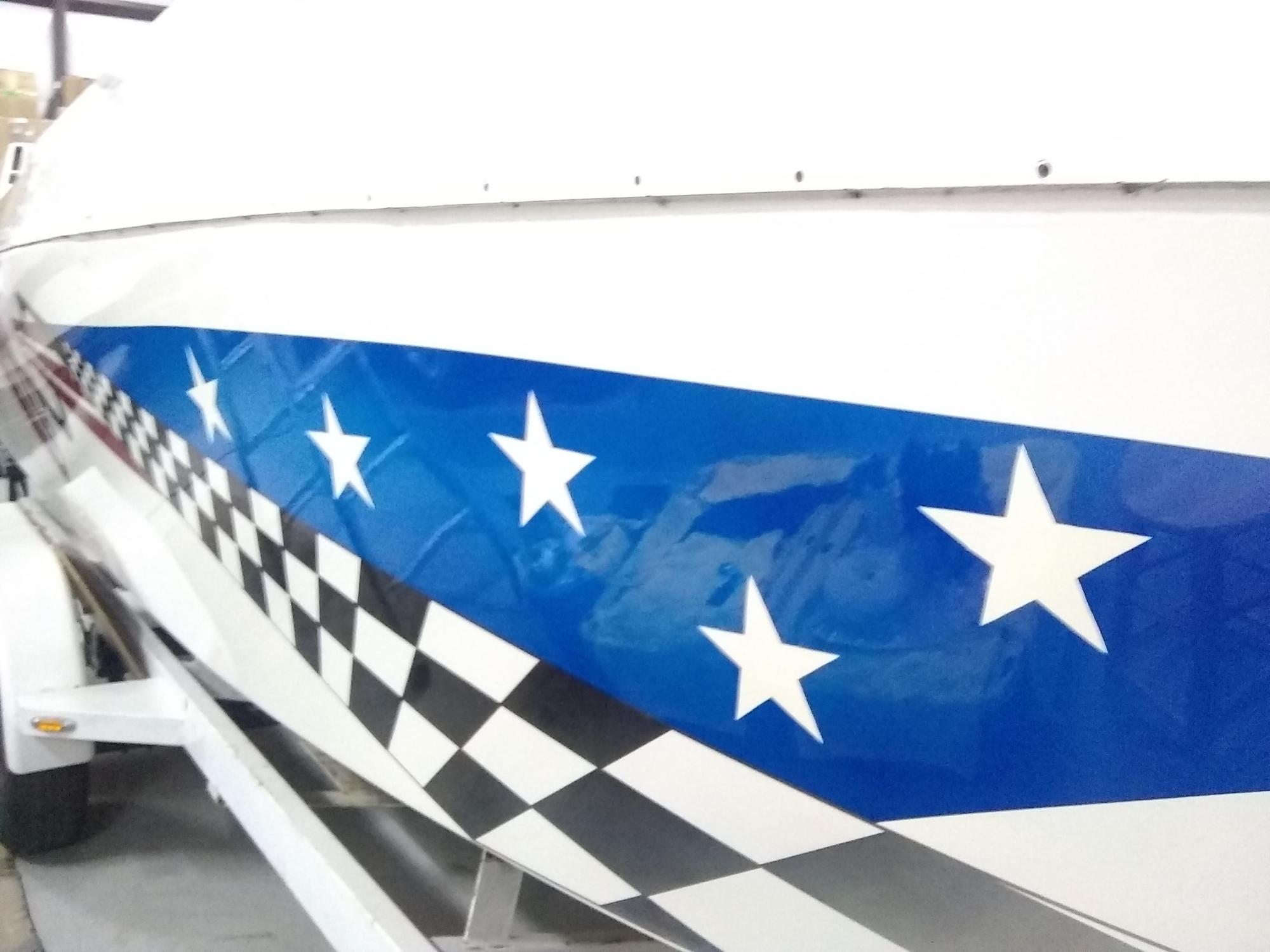

In these you can see the difference between the original swiss coffee and
the fresh pure white and some of the original white that was covered up from the sun.


The hatch cover white edge VS. the swiss coffee gelcoat


Also have some burn marks from the cover being in the sun


In these you can see the difference between the original swiss coffee and
the fresh pure white and some of the original white that was covered up from the sun.
The hatch cover white edge VS. the swiss coffee gelcoat
Also have some burn marks from the cover being in the sun
Last edited by Mohavvalley; 02-01-2022 at 11:01 AM.

 02-02-2022 | 11:49 AM
#5
Registered

Joined: Jun 2011
Posts: 462
Likes: 372
From: Palos, Illinois
I would try wet sanding one of the darker areas. Start with 1000 , 1200, 1500, then 2000 grit. Then buff with Total boat buffing compound and a 1750 rpm buffer with a wool pad. Follow that up with a polishing compound and a soft wool polishing pad. If that does not bring it back it has either faded lighter than original or may have been refinished.
02-02-2022 | 12:39 PM
#6

*


Joined: Nov 2002
Posts: 1,027
Likes: 138
From: PortRoyal Bermuda
Although I don't think you'd want to try this , especially on the deck , I'm gonna throw it out there for future reference .
A few years back a friend with a substantial sailboat asked me to help him out with some cosmetic refreshing .
The boat was moored full time in a rather dirty harbor. I wasn't familiar with this boat up close and thought the hull sides looked fine but the owner had me acid wash the sides , something I'd never done before . (White hull)
I can't remember what it was that we used , muriatic acid/on off , etc but I couldn't believe the difference afterwards .
I thought the hull looked white before we started but the end result was very noticeable.
A few years back a friend with a substantial sailboat asked me to help him out with some cosmetic refreshing .
The boat was moored full time in a rather dirty harbor. I wasn't familiar with this boat up close and thought the hull sides looked fine but the owner had me acid wash the sides , something I'd never done before . (White hull)
I can't remember what it was that we used , muriatic acid/on off , etc but I couldn't believe the difference afterwards .
I thought the hull looked white before we started but the end result was very noticeable.
02-02-2022 | 11:54 PM
#8
Charter Member # 55


Joined: Oct 2000
Posts: 20,257
Likes: 2,506
From: Omaha/LOTO
As far as the OP's post, you may get it a little whiter by wet sanding and buffing, but it will never be as white as the original. It is from UV rays
 02-03-2022 | 05:48 AM
#9
Registered

Joined: Oct 2000
Posts: 1,516
Likes: 602
From: Lake Ozark, MO USA
Acids should not damage any painted or powdercoated surfaces. The sides of my boat are painted and acid gets on the paint whenever I clean the bottom with acid. Same with drives, swim platform and transom assemblies. Bare metal or galvanizing is another story and the acid will etch into it.
As far as the OP's post, you may get it a little whiter by wet sanding and buffing, but it will never be as white as the original. It is from UV rays
As far as the OP's post, you may get it a little whiter by wet sanding and buffing, but it will never be as white as the original. It is from UV rays

