


Marine fuel regulators, what the difference

 06-28-2022 | 01:10 AM
#2

Platinum Member


Joined: Sep 2001
Posts: 5,769
Likes: 151
From: tn

USCG Approved Fuel devices do not have any venys "open" to atmosphere that can burp fuel if a component or diaphragm fails.
Automotive mechanical fuel pumps have an atmospheric vent hole behind the diaphragm. Marine ones have a hose barb fitting in that vent hole that gets routed back to the carb so that fuel spillage goes into the carb instead of into your bilge.
Automotive carbs have float bowl vents that stick up into the area of filtered air above the carb body. Marine carbs have those vent tubes make a 90 degree "J" at the top which prevents gravity "drooling" of fuel vapor. The carbs also have a hose barb above the throttle plates where you would run the fuel pump diaphragm vent hose.
Auto regulators generally have an open "atmosoheric" vent which is used to bias the line pressure in relation to the atmosphere outside of the engine. Marine regulators have a barb fitting that you run a hose to basically the same place you run the fuel pump vent hose to. Any mechanical regulator with a "boost reference" port can be used in the same way - the hose goes to a safe atmospheric location (the fuel pump vent tap mentioned earlier).
Automotive mechanical fuel pumps have an atmospheric vent hole behind the diaphragm. Marine ones have a hose barb fitting in that vent hole that gets routed back to the carb so that fuel spillage goes into the carb instead of into your bilge.
Automotive carbs have float bowl vents that stick up into the area of filtered air above the carb body. Marine carbs have those vent tubes make a 90 degree "J" at the top which prevents gravity "drooling" of fuel vapor. The carbs also have a hose barb above the throttle plates where you would run the fuel pump diaphragm vent hose.
Auto regulators generally have an open "atmosoheric" vent which is used to bias the line pressure in relation to the atmosphere outside of the engine. Marine regulators have a barb fitting that you run a hose to basically the same place you run the fuel pump vent hose to. Any mechanical regulator with a "boost reference" port can be used in the same way - the hose goes to a safe atmospheric location (the fuel pump vent tap mentioned earlier).
06-28-2022 | 07:07 AM
#3
Thread Starter
Registered
Joined: Nov 2016
Posts: 14
Likes: 1
From: Cornfield, IL
Thanks mccollinstn, I guess I’m curious to know if the marine versus is a diaphragm just like the non-marine versus. The reason I’m curious is when that diaphragm goes bad the vacuum reference port basically becomes a fuel line pumping raw fuel into the manifold resulting in a very bad deal...especially if it pops off the hose barb or ruptures the vacuum line from the +40 psi fuel pressure the regulator is trying to maintain. Ask me how I know....
 06-28-2022 | 01:45 PM
#5
Thread Starter
Registered
Joined: Nov 2016
Posts: 14
Likes: 1
From: Cornfield, IL
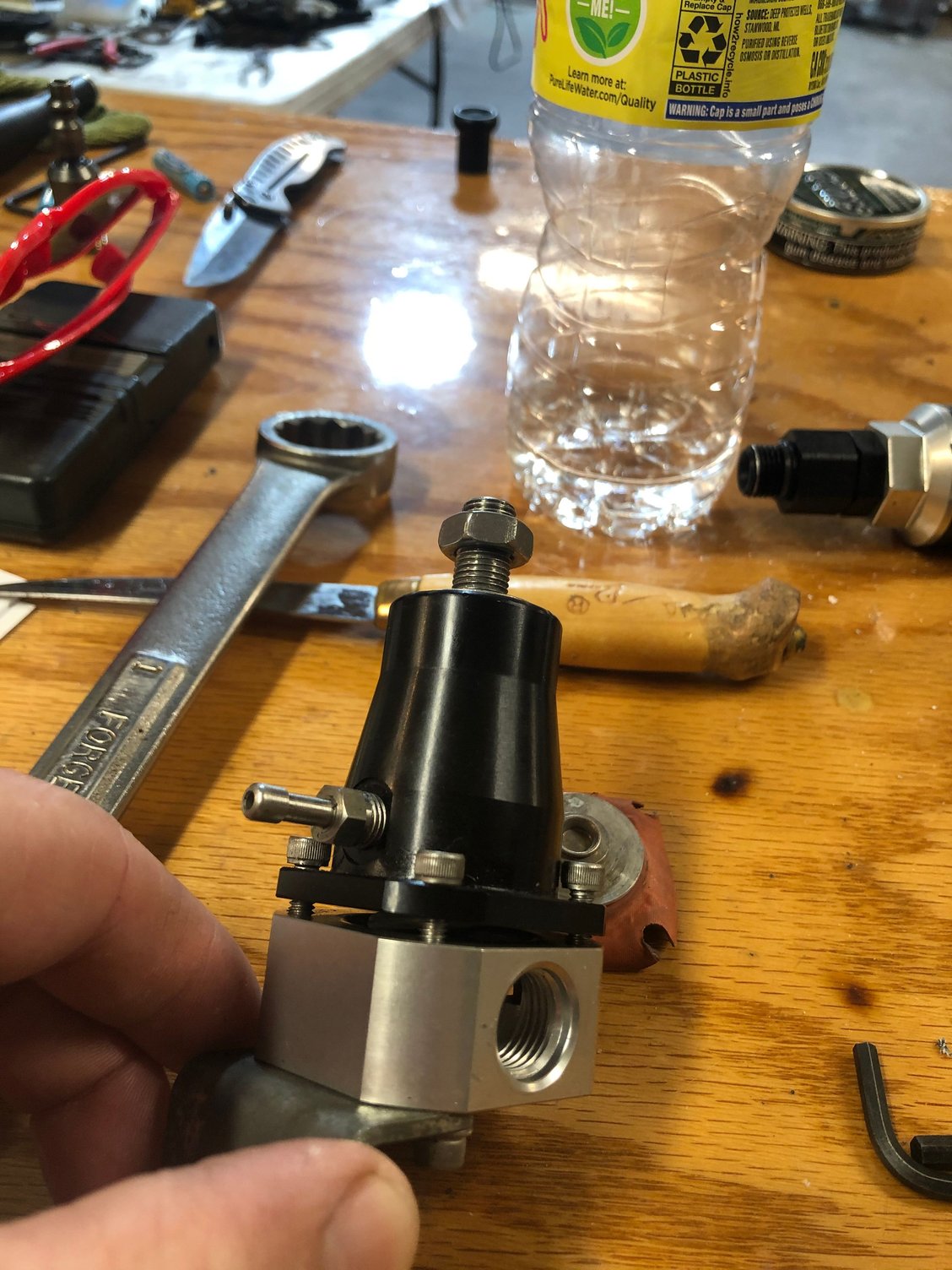
This one I have went bad and was feeding raw fuel straight into the manifold. I was fortunate to get it back on the trailer and back home where I could figure out what was going on. During the process of trouble shooting the vacuum line literally blew off the manifold spraying fuel all over the intake. The fuel came from the hole in the diaphragm. If this had happened out on the water while running it would of been horrible.


