


Two Bilge Pumps/Two Switches
 02-24-2023 | 03:33 PM
#1
Thread Starter
Registered

Joined: Sep 2002
Posts: 2,096
Likes: 178
From: King george, Virginia/Potomac River
 Two Bilge Pumps/Two Switches
This is my first boat with two pumps. The dash has two switches, (on-off) and (on-off-on). I'm getting ready to untangle and redo the wiring behind the dash and probably replace the rockers. (it is a mess) Unfortunately I didn't test the exact operation of the pumps before I started the bilge & cockpit redo. I'm wondering if this is typical or factory? The dash is etched and I'll have to keep two switches. Is there a simpler or better way? Is it wise to even have the ability to turn the pumps "OFF"? Seems to me they should be either on, or on auto (float).
I'm guessing the operation here is:
The left switch is the left pump and a simple on-off operation.
The right switch: in the down, or auto, position puts both pumps to the their float switches (does red light illuminate if pumps come on?). In the middle position they are both off (if left switch is off) and in the up position, the right pump is on.
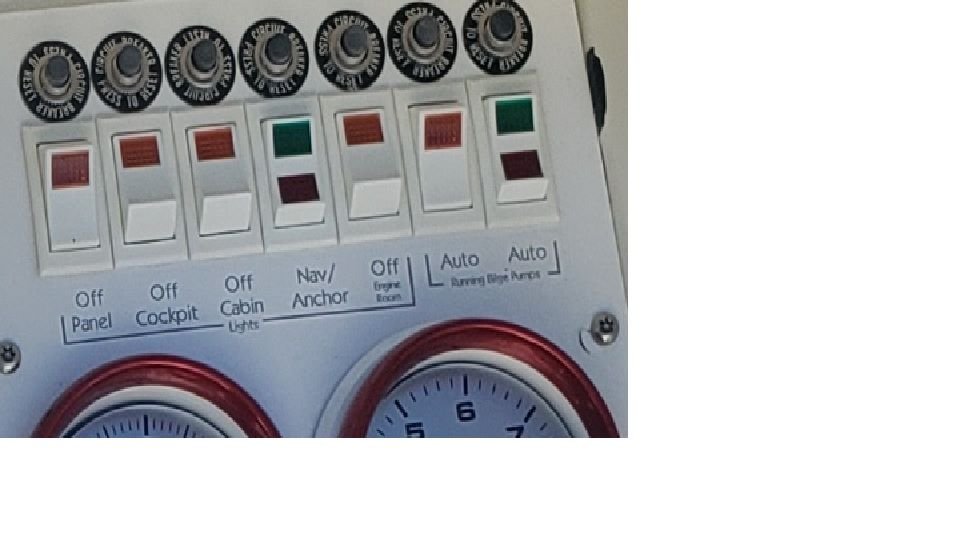
I'm guessing the operation here is:
The left switch is the left pump and a simple on-off operation.
The right switch: in the down, or auto, position puts both pumps to the their float switches (does red light illuminate if pumps come on?). In the middle position they are both off (if left switch is off) and in the up position, the right pump is on.
 02-27-2023 | 08:11 AM
#3
Registered
Joined: Sep 2022
Posts: 172
Likes: 124
From: Dawsonville, GA
When I upgraded my previous boat to two pumps & switches, I wired them completely independent from each other and each to a separate battery... (float switches wired directly to batteries)... and a positive wire from the helm switches to remotely activate if needed. One float switch was a couple inches higher so they both didn't activate at once. The higher float under normal circumstances should never kick-on, but is there as a backup if the first pump fails or cant keep up with water coming into bilge.
Reliability and redundancy is key here because it could mean the difference between a sunken boat or not.
I also had an onboard battery tender/charger that stayed plugged-in to shore power while the boat was kept in a wet slip at the marina... in addition to a couple small solar panels to trickle charge if out on the water all day away from shore power.
The bracket was just some cheap aluminum flat stock... and enabled me to build the system as a "drop-in" unit that just fastened to the forward wood bulkhead without having to monkey around like an octopus reaching under the engine.
Reliability and redundancy is key here because it could mean the difference between a sunken boat or not.
I also had an onboard battery tender/charger that stayed plugged-in to shore power while the boat was kept in a wet slip at the marina... in addition to a couple small solar panels to trickle charge if out on the water all day away from shore power.
The bracket was just some cheap aluminum flat stock... and enabled me to build the system as a "drop-in" unit that just fastened to the forward wood bulkhead without having to monkey around like an octopus reaching under the engine.
 02-28-2023 | 02:37 PM
#6

Platinum Member


Joined: Feb 2001
Posts: 4,319
Likes: 1,465
From: Virginia Beach
When I upgraded my previous boat to two pumps & switches, I wired them completely independent from each other and each to a separate battery... (float switches wired directly to batteries)... and a positive wire from the helm switches to remotely activate if needed. One float switch was a couple inches higher so they both didn't activate at once. The higher float under normal circumstances should never kick-on, but is there as a backup if the first pump fails or cant keep up with water coming into bilge.
Reliability and redundancy is key here because it could mean the difference between a sunken boat or not.
I also had an onboard battery tender/charger that stayed plugged-in to shore power while the boat was kept in a wet slip at the marina... in addition to a couple small solar panels to trickle charge if out on the water all day away from shore power.
The bracket was just some cheap aluminum flat stock... and enabled me to build the system as a "drop-in" unit that just fastened to the forward wood bulkhead without having to monkey around like an octopus reaching under the engine.
Reliability and redundancy is key here because it could mean the difference between a sunken boat or not.
I also had an onboard battery tender/charger that stayed plugged-in to shore power while the boat was kept in a wet slip at the marina... in addition to a couple small solar panels to trickle charge if out on the water all day away from shore power.
The bracket was just some cheap aluminum flat stock... and enabled me to build the system as a "drop-in" unit that just fastened to the forward wood bulkhead without having to monkey around like an octopus reaching under the engine.
 03-01-2023 | 11:10 AM
#7
Registered
Joined: Sep 2022
Posts: 172
Likes: 124
From: Dawsonville, GA
We only bought our first boat a little over 2 years ago so I had no previous history or knowledge of this stuff. Just 30+ years of drag racing... so that said, I genuinely came up with it all on my own. lol
My current boat will get a similar setup as soon as I can pull it into my new garage currently being built.
Not sure how much GPH capacity I will need in this one. It's a 26ft bowrider... so Im thinking two 1500gph or two 2000gph pumps should suffice.


