


Fuel Pump Conversion
 11-12-2024 | 09:12 AM
#1
Thread Starter
Registered


Joined: Oct 2000
Posts: 1,533
Likes: 616
From: Lake Ozark, MO USA
 Fuel Pump Conversion
Any suggestions on converting a couple HP500's from mechanical fuel pumps mounted on Gen 6 Sea Pumps to electric pumps. Pictures would be helpful. Tired of the mechanicals leaking fuel into the sea pump oil and blowing seals. Was told by a guy this past weekend that he uses the MerCruiser style low pressure pumps used on Cool Fuel setup. I guess it is a sucker more than a pusher? Holley carbs so they do not need high pressure pumps. Whatever I do, it is going to suck tearing out all that older stock fuel lines, adding wiring, pressure regs and filters, blah, blah.
 11-12-2024 | 10:37 AM
#2

Platinum Member

Joined: Feb 2001
Posts: 4,306
Likes: 1,461
From: Virginia Beach
It’s not a hard job to do, just tedious.
I removed all the MPI stuff to go carbureted on my new builds. I mounted the Aeromotive pumps to the cool fuel module brackets, setup all the plumbing, and then wired in oil pressure safety switches. I didn’t want to drill any holes in the boat to mount them hence going with the brackets on the engines - will be a ***** to get to if a pump fails, but for what they cost, I’d hope they’d last a good while.
On your water pump - get a fuel pump block off plate. One less thing to replace.
I removed all the MPI stuff to go carbureted on my new builds. I mounted the Aeromotive pumps to the cool fuel module brackets, setup all the plumbing, and then wired in oil pressure safety switches. I didn’t want to drill any holes in the boat to mount them hence going with the brackets on the engines - will be a ***** to get to if a pump fails, but for what they cost, I’d hope they’d last a good while.
On your water pump - get a fuel pump block off plate. One less thing to replace.
11-13-2024 | 08:58 AM
#3
Thread Starter
Registered
Joined: Oct 2000
Posts: 1,533
Likes: 616
From: Lake Ozark, MO USA
Thanks for the reply. Already had planned on the block off plate and total rebuild on the sea pumps. Probably will have to fabricate some sort of bracket to mount the fuel pump too, plus new fuel lines etc. What Aeromotive pumps did you use? Pictures?
11-13-2024 | 10:33 AM
#4
Platinum Member
Joined: Feb 2001
Posts: 4,306
Likes: 1,461
From: Virginia Beach
I used Aeromotive p/n 11211 pumps - 140 GPH, marine certified, and capable of supporting 750 HP. Not cheap - about $400 each plus the regulator (I used Holleys because I already had them).
The mount for the pump can be duplicated pretty easily - a MKIV block may not have the same attachment points so some creativity may be necessary.
The placement of the pump draw is below the water separating filter and effectively keeps the gravity feed needed for proper operation intact. I also setup a return line from the regulator to a return port on the water separator housing - this was how the Cool Fuel was set-up - much easier than trying to return to the tank and keeps the pump from dead-heading (Aeromotive strongly suggested using a return-style regulator to extend the life of the pump).
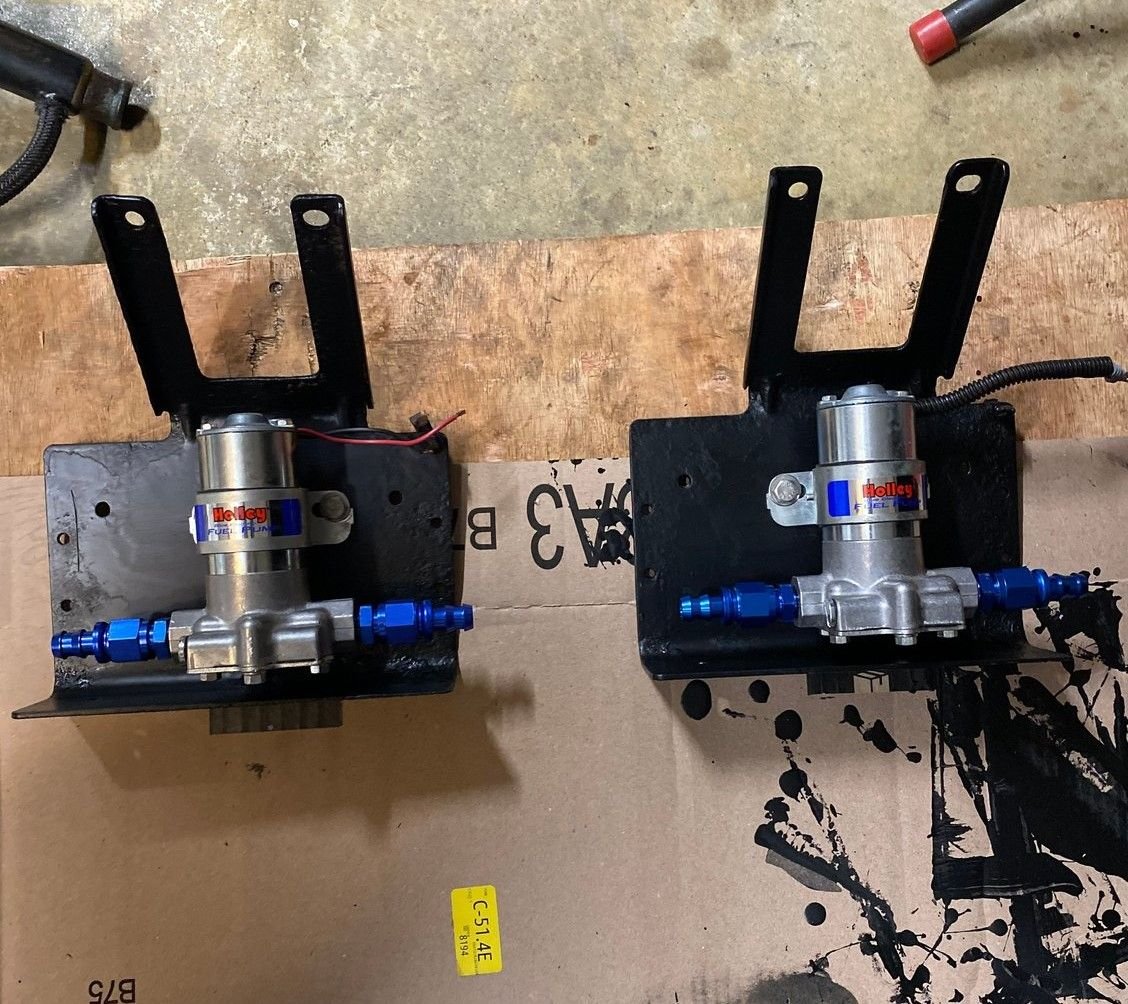
Original mock-up with Holley pumps - I didn’t think they were up to the task.
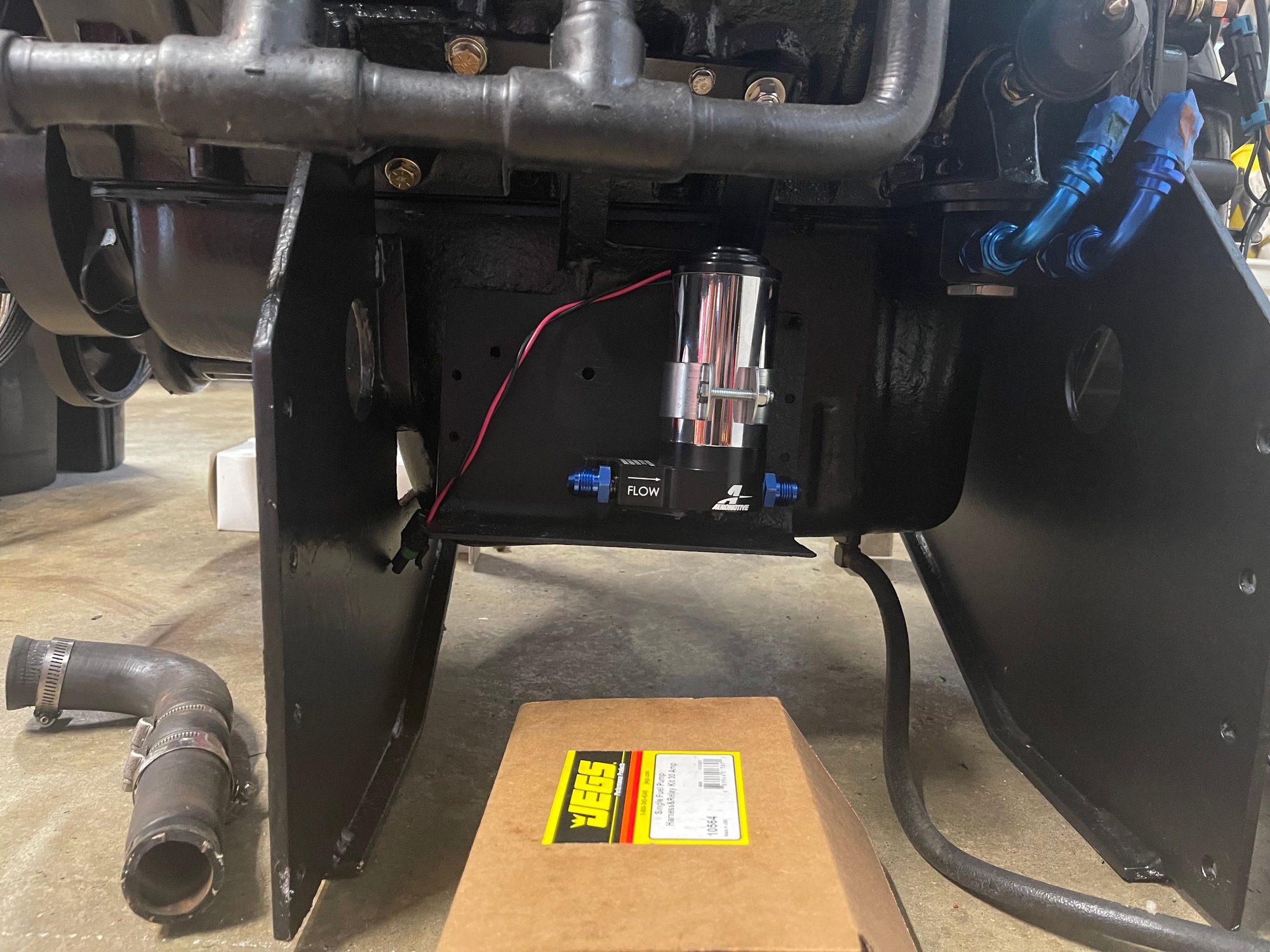
Aeromotive in place for fitting.
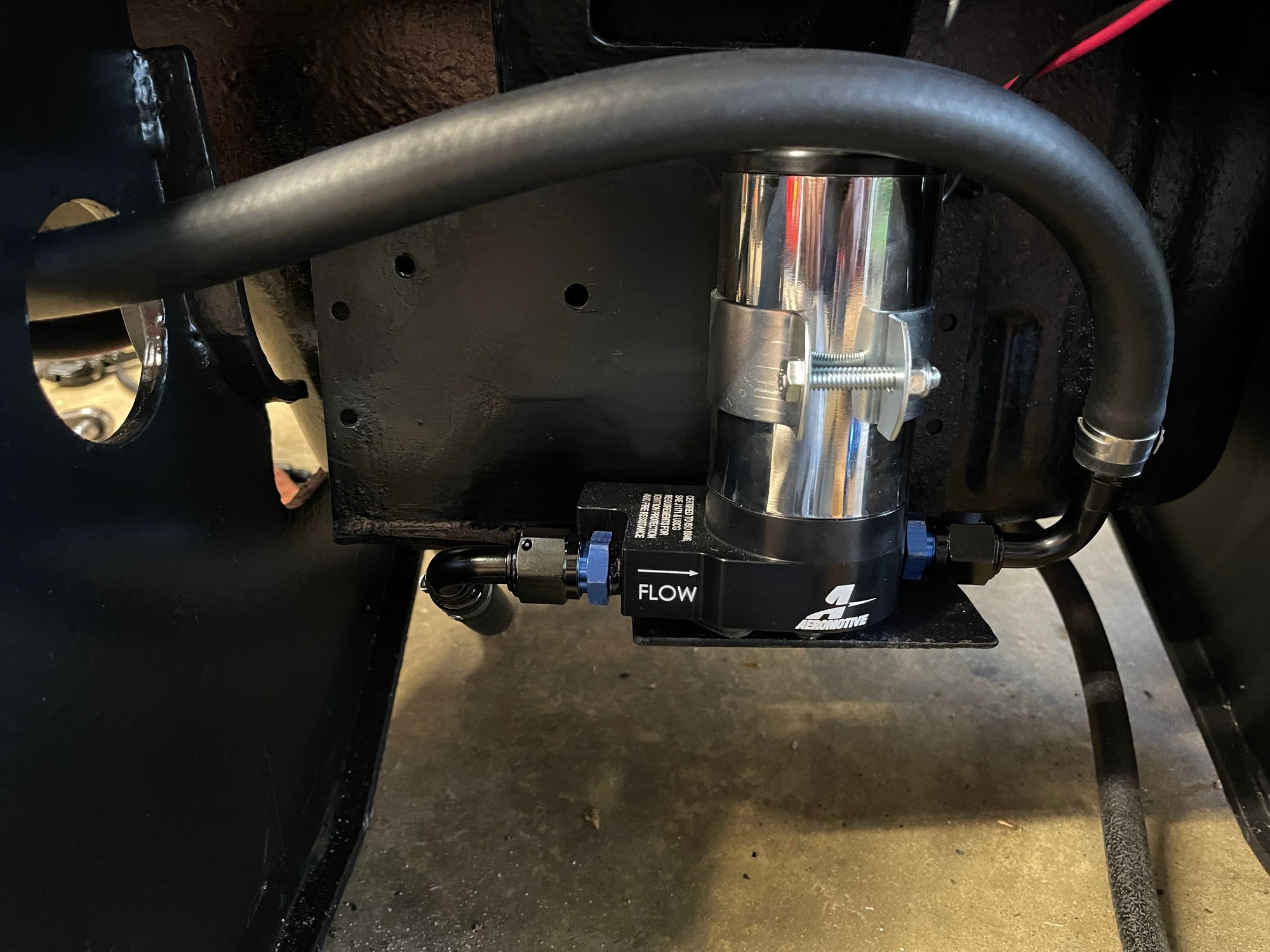
Aeromotive close-up.
The mount for the pump can be duplicated pretty easily - a MKIV block may not have the same attachment points so some creativity may be necessary.
The placement of the pump draw is below the water separating filter and effectively keeps the gravity feed needed for proper operation intact. I also setup a return line from the regulator to a return port on the water separator housing - this was how the Cool Fuel was set-up - much easier than trying to return to the tank and keeps the pump from dead-heading (Aeromotive strongly suggested using a return-style regulator to extend the life of the pump).
Original mock-up with Holley pumps - I didn’t think they were up to the task.
Aeromotive in place for fitting.
Aeromotive close-up.
Last edited by TomZ; 11-13-2024 at 11:25 AM.
11-13-2024 | 11:33 AM
#5
Platinum Member
Joined: Feb 2001
Posts: 4,306
Likes: 1,461
From: Virginia Beach
The idea of the bracket is to tuck it up close to the block out of the way of the exhaust and in-line with cooling plumbing (Cool Fuel used a cooper tube with fuel running through it as a heat exchanger). It is all a very tight fit but not bad with a regular fuel pump. My dea when working on the packaging was to make it similar to Mercury/Mercruiser; the engine assembly is a serviceable module that I can have ready to pull in about an hour if needed (transmission included).
** You will notice a piece of bar stock that attaches the bracket to the block. I'm not sure if that's how it came from Mercury but that's what was there so I made it work.
** You will notice a piece of bar stock that attaches the bracket to the block. I'm not sure if that's how it came from Mercury but that's what was there so I made it work.
11-14-2024 | 09:41 AM
#6
Thread Starter
Registered
Joined: Oct 2000
Posts: 1,533
Likes: 616
From: Lake Ozark, MO USA
Thanks for that information. My blocks are Gen 6. What was the issue with the Holley's? Mounting pumps back towards the rear of the block not going to work for me. I will likely put the somewhere in front of the engines or even mount to the stringers.
11-14-2024 | 04:45 PM
#7
Platinum Member
Joined: Feb 2001
Posts: 4,306
Likes: 1,461
From: Virginia Beach
Those Holleys were not marine rated. Also, I didn't feel they were suitable for fulfilling the fuel demand. They're rated up to 600 HP, but I wanted to make sure I had plenty of head room and that would be asking a lot from those pumps. Perhaps a bit overkill, but I felt the Aeromotive pumps were a better choice. I'd already spent a small fortune getting the engines done - going cheap on the pumps was not going to happen.
10-16-2025 | 09:37 AM
#8
Thread Starter
Registered
Joined: Oct 2000
Posts: 1,533
Likes: 616
From: Lake Ozark, MO USA
Update: Got some bigger Aeromotive pumps, will have to run feedback regulators, more work. New question: Will need to add 100micron prefilters. Aeromotive is stupid price, but I am willing to use their filter screens. I found some Evil Energy filters for way cheaper price, one of the reviews said they ran the SS Aeromotive screen in the EE housing and changed it to Viton Orings. Any comments or opinions??


