


White dots on black gelcoat
 03-02-2026 | 08:10 AM
#1
Thread Starter
Registered
Joined: Mar 2026
Posts: 3
Likes: 0
 White dots on black gelcoat
Hi everyone,
I’m restoring a boat with a black gelcoat hull and I ran into a strange issue during correction.
I started wetsanding a heavily oxidized/burnt area because buffing alone wasn’t enough. I began with
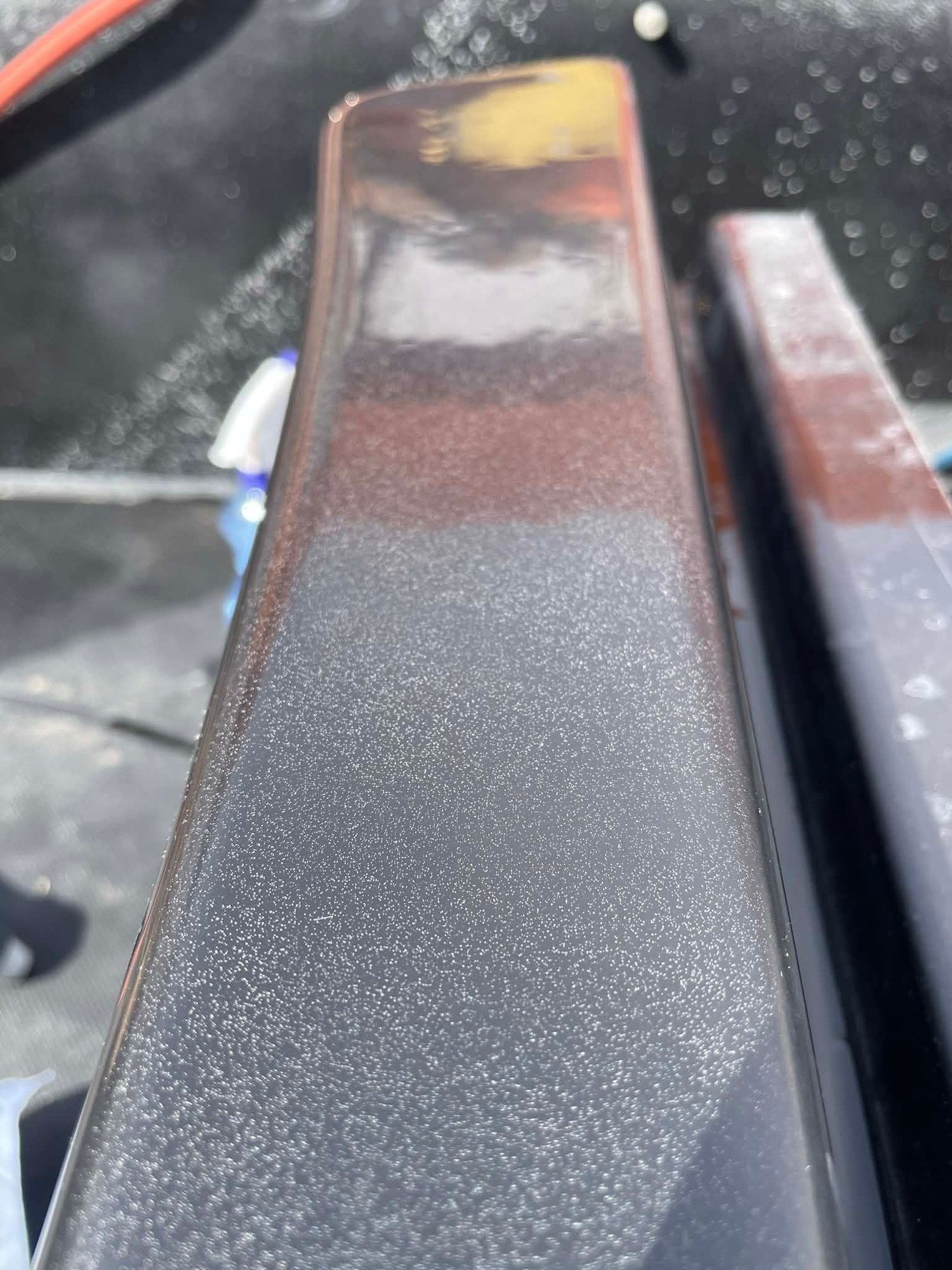
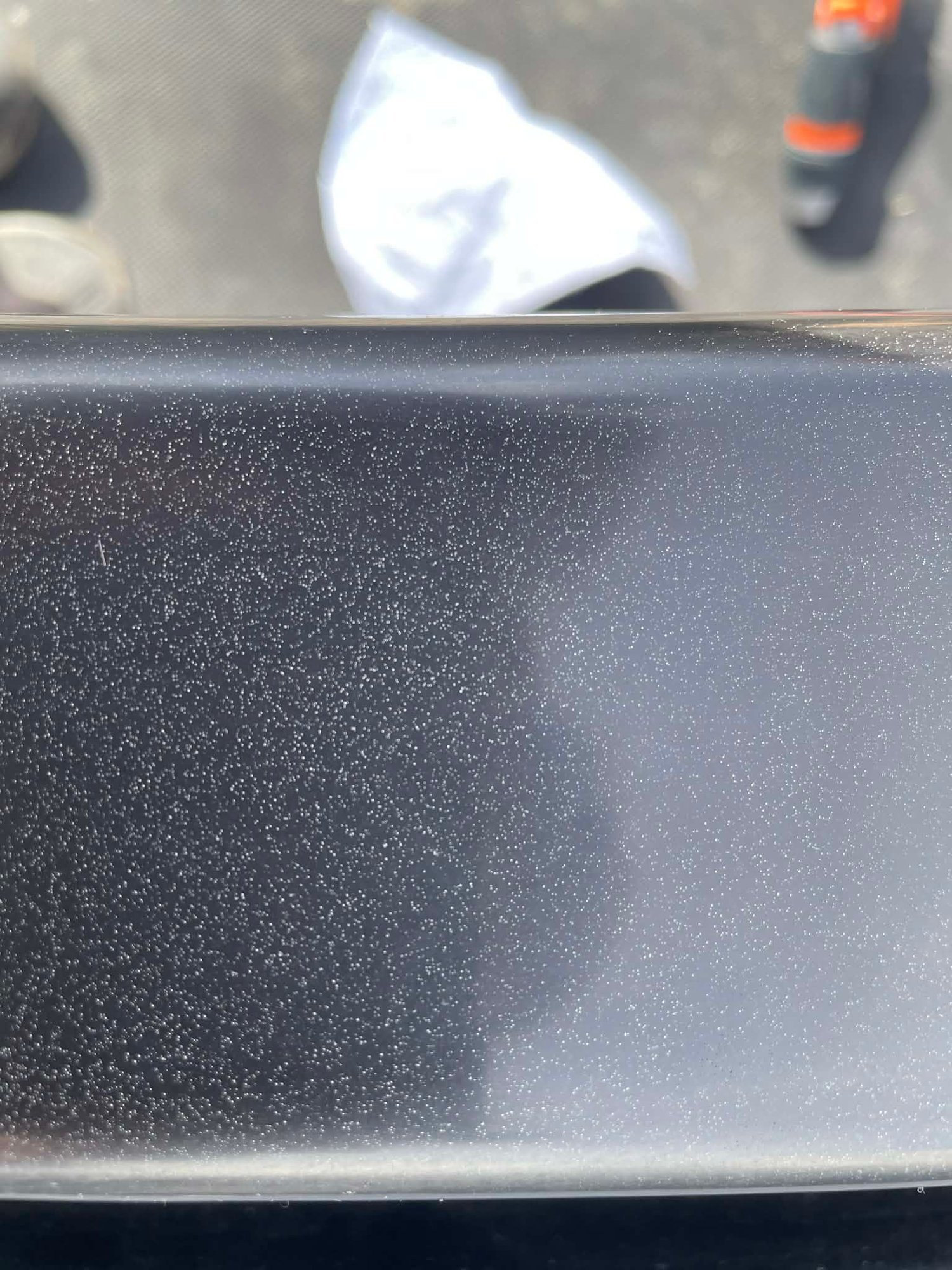
1000 grit wet, and after sanding I got a very uniform pattern of tiny white speckles across the sanded area.
It looks like it’s in the gelcoat, not residue on top. What I’ve tried / observations:
• The speckles do not wipe off with IPA.
• They appear exactly in the area I sanded; the boundary is clearly visible.
• When the surface is wet, the speckles reduce a lot .
• I haven’t gone more aggressive than 1000 yet because I don’t want to remove unnecessary material.
Questions:
1. Have you seen this before on black gelcoat? Is it typically pinholes/porosity, oxidation-related, or micro-crazing?
2. Should I continue refining the sanding steps 1500 → 2000 → 3000 and then compound/polish, or will these speckles remain visible unless I fill/seal or re-gelcoat?
3. If it’s porosity/pinholes, what repair approach works best on a large area (thin gelcoat/topcoat skim, epoxy sealer, spot filling, etc.)?
Thanks in advance for any advice!

I’m restoring a boat with a black gelcoat hull and I ran into a strange issue during correction.
I started wetsanding a heavily oxidized/burnt area because buffing alone wasn’t enough. I began with
1000 grit wet, and after sanding I got a very uniform pattern of tiny white speckles across the sanded area.
It looks like it’s in the gelcoat, not residue on top. What I’ve tried / observations:
• The speckles do not wipe off with IPA.
• They appear exactly in the area I sanded; the boundary is clearly visible.
• When the surface is wet, the speckles reduce a lot .
• I haven’t gone more aggressive than 1000 yet because I don’t want to remove unnecessary material.
Questions:
1. Have you seen this before on black gelcoat? Is it typically pinholes/porosity, oxidation-related, or micro-crazing?
2. Should I continue refining the sanding steps 1500 → 2000 → 3000 and then compound/polish, or will these speckles remain visible unless I fill/seal or re-gelcoat?
3. If it’s porosity/pinholes, what repair approach works best on a large area (thin gelcoat/topcoat skim, epoxy sealer, spot filling, etc.)?
Thanks in advance for any advice!
 03-02-2026 | 10:44 AM
#2

Were doomed!


Joined: Oct 2000
Posts: 7,099
Likes: 1,397
From: Chicago, IL
Is this in just one section of the boat or all over?
Have you tried using some compressed air to see if its porosity and if they are holes filled with material?
Its hard to say whats going on here. Unfortunately you may have to sand some more to see how deep it goes.
My first reaction is that its over-spray and someone didn't want to sand the boat down so they just covered it up. And now you are unmasking what was underneath.
But it could be in the gel itself too...if there was an over-spray in the mold that the maker didn't see before spraying it with the black it could be embedded in the gel just the same.
The good news is most gel coats on boats are thicker than a typical paint job. You'll probably find them in the 15-20mm range so you do have some room to sand more material down....I'd still try it in a spot where its not noticeable just to be safe. Most times if you have grill covers you can remove one and see how thick the gel is and if the white spots are there too...
As far as repairs go....again it depends on whats going on, and how much work you want to do. You may be able to wet sand buff it out but that takes a lot of elbow grease...or quick sand, mask and paint...not sure which one would be cheaper or better in your case..
If it is porosity...as long as you get the material out of the holes you may be able to clear coat it and seal it all up and get it looking good again too...
Have you tried using some compressed air to see if its porosity and if they are holes filled with material?
Its hard to say whats going on here. Unfortunately you may have to sand some more to see how deep it goes.
My first reaction is that its over-spray and someone didn't want to sand the boat down so they just covered it up. And now you are unmasking what was underneath.
But it could be in the gel itself too...if there was an over-spray in the mold that the maker didn't see before spraying it with the black it could be embedded in the gel just the same.
The good news is most gel coats on boats are thicker than a typical paint job. You'll probably find them in the 15-20mm range so you do have some room to sand more material down....I'd still try it in a spot where its not noticeable just to be safe. Most times if you have grill covers you can remove one and see how thick the gel is and if the white spots are there too...
As far as repairs go....again it depends on whats going on, and how much work you want to do. You may be able to wet sand buff it out but that takes a lot of elbow grease...or quick sand, mask and paint...not sure which one would be cheaper or better in your case..
If it is porosity...as long as you get the material out of the holes you may be able to clear coat it and seal it all up and get it looking good again too...
__________________
-Wally
Money can't buy happiness, but it can buy horsepower. And I've never seen a sad person hauling a$$!
-Wally
Money can't buy happiness, but it can buy horsepower. And I've never seen a sad person hauling a$$!
03-02-2026 | 03:30 PM
#3
Thread Starter
Registered
Joined: Mar 2026
Posts: 3
Likes: 0
Thanks for the reply!
It shows up in a few areas. What I’ve noticed is that it’s worst on the upper/deck surfaces, and I don’t really see it on the sides.
From what I’ve read, it looks like it may be gelcoat porosity. I’m not sure if blowing it out with air will actually remove it. Some people say it can be reduced with finer sanding/polishing, others say there’s no real way to get rid of it. I also saw a comment somewhere that a ceramic coating can help hide it.
One thing I’m sure about: when I wet the surface, most of the speckles disappear. That makes me think they’re tiny pores/pinholes that get filled with polishing residue, and once it dries they turn white again.
I really don’t want to sand more because I’m worried it could make things worse.
If it is porosity, besides blowing it out, do you think there’s any other practical fix?
It shows up in a few areas. What I’ve noticed is that it’s worst on the upper/deck surfaces, and I don’t really see it on the sides.
From what I’ve read, it looks like it may be gelcoat porosity. I’m not sure if blowing it out with air will actually remove it. Some people say it can be reduced with finer sanding/polishing, others say there’s no real way to get rid of it. I also saw a comment somewhere that a ceramic coating can help hide it.
One thing I’m sure about: when I wet the surface, most of the speckles disappear. That makes me think they’re tiny pores/pinholes that get filled with polishing residue, and once it dries they turn white again.
I really don’t want to sand more because I’m worried it could make things worse.
If it is porosity, besides blowing it out, do you think there’s any other practical fix?
03-02-2026 | 04:53 PM
#4
Registered

Joined: Sep 2020
Posts: 55
Likes: 40
From: Rhode Island
I had a similar issue to this on a section of black gel coat in the late 90's. (sorry no pics),
It was small pin holes for me and after expermenting with multiple things i finally scrubbed the section with a soft brush and lacquer thinner to clean out the pores so to speak, blew it off, let it dry and then sprayed a thin coat of gloss black outdrive enamel on the area.
Then I 1500'd the area, repeated the spray enamel / sand 2x, final 1500 and then buffed it ....... the paint filled the pin holes for me and solved my issue........
good luck
It was small pin holes for me and after expermenting with multiple things i finally scrubbed the section with a soft brush and lacquer thinner to clean out the pores so to speak, blew it off, let it dry and then sprayed a thin coat of gloss black outdrive enamel on the area.
Then I 1500'd the area, repeated the spray enamel / sand 2x, final 1500 and then buffed it ....... the paint filled the pin holes for me and solved my issue........
good luck
03-03-2026 | 02:19 PM
#5
Were doomed!
Joined: Oct 2000
Posts: 7,099
Likes: 1,397
From: Chicago, IL
If it is porosity and you have tons of tiny pin holes...only real cure is either sanding it down some more and hoping you don't burn through to the glass under it...or topping it off with something. (New Gel/ Paint or clear coat) If your scared or burning through, I would try and maybe clear a small section of it that's been thoroughly cleaned and see how it reacts...
__________________
-Wally
Money can't buy happiness, but it can buy horsepower. And I've never seen a sad person hauling a$$!
-Wally
Money can't buy happiness, but it can buy horsepower. And I've never seen a sad person hauling a$$!
 03-09-2026 | 06:07 AM
#7
Thread Starter
Registered
Joined: Mar 2026
Posts: 3
Likes: 0
Thanks everyone for the input. Quick update from my side after a few more days of testing..
I don’t really want to keep going more aggressive with sanding because I don’t know the gelcoat thickness and I’m worried I could make it worse or start getting close to the laminate, especially on edges/high spots.
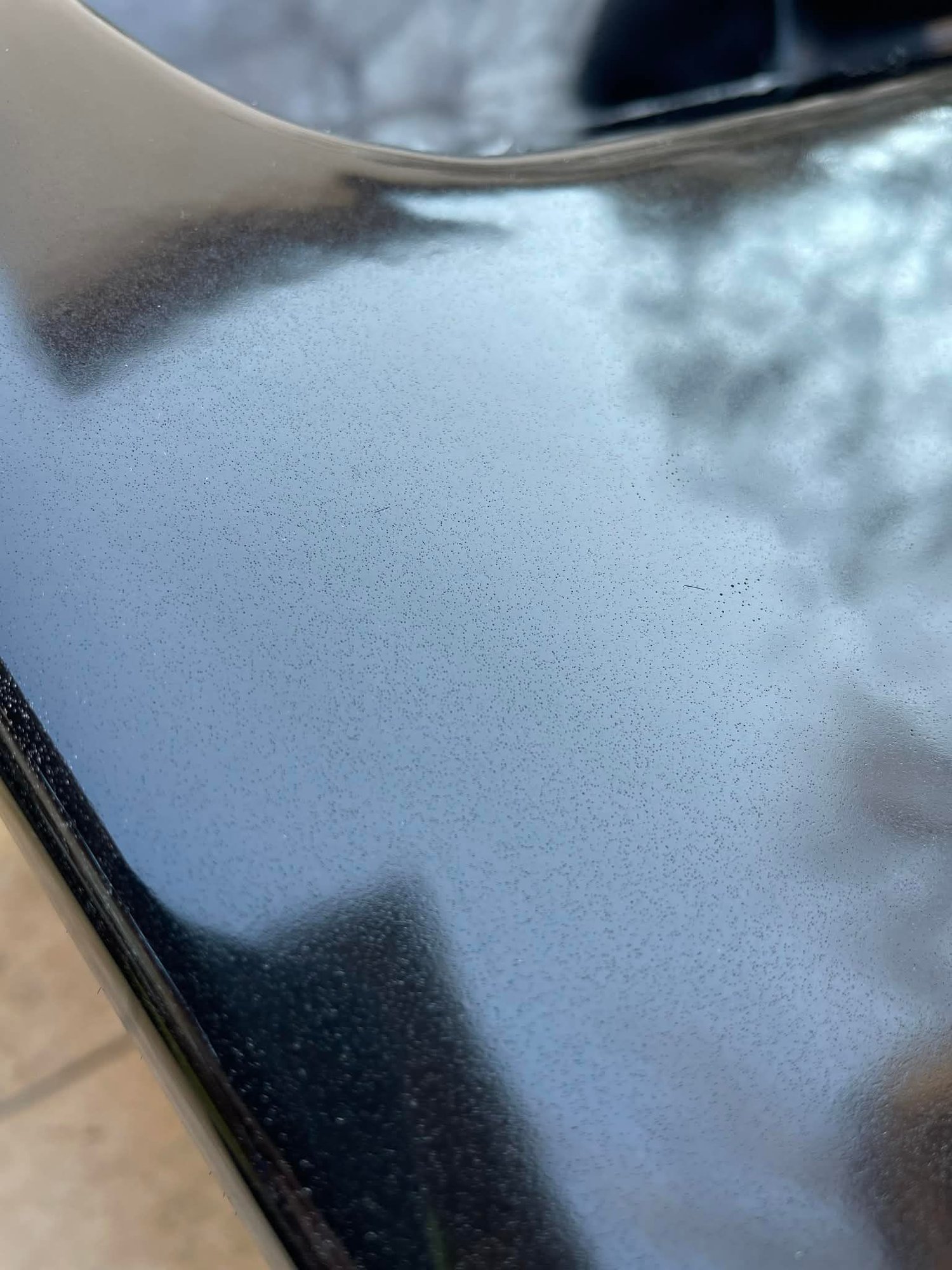
One good sign: when I hit the area with a pressure washer, the dots clean out and they’re much less visible afterwards. That makes me think it’s true porosity/pinholes that are getting loaded with compound/slurry during sanding/polishing.
I’m attaching two photos:
Photo 1 shows the clear difference where I’ve pressure washed versus where I haven’t.
Photo 2 shows the surface after it’s been cleaned out.
Is there an alternative way to fix it? I don't feel like spraying a new topcoat, I don't have a paint booth, and since I've never done it before, the end result probably won't be very good. I was thinking about trying a ceramic coating to help mask it and keep it cleaner, but I’m not sure if it going to fill the small holes.
What do you think?

I don’t really want to keep going more aggressive with sanding because I don’t know the gelcoat thickness and I’m worried I could make it worse or start getting close to the laminate, especially on edges/high spots.
One good sign: when I hit the area with a pressure washer, the dots clean out and they’re much less visible afterwards. That makes me think it’s true porosity/pinholes that are getting loaded with compound/slurry during sanding/polishing.
I’m attaching two photos:
Photo 1 shows the clear difference where I’ve pressure washed versus where I haven’t.
Photo 2 shows the surface after it’s been cleaned out.
Is there an alternative way to fix it? I don't feel like spraying a new topcoat, I don't have a paint booth, and since I've never done it before, the end result probably won't be very good. I was thinking about trying a ceramic coating to help mask it and keep it cleaner, but I’m not sure if it going to fill the small holes.
What do you think?
03-09-2026 | 01:49 PM
#8
Were doomed!
Joined: Oct 2000
Posts: 7,099
Likes: 1,397
From: Chicago, IL
yeah that last pic def looks like porosity...bigger question is what caused it? I doubt the boat left the factory like that! Wonder if it sat uncovered under some pine tree dripping sap all over it?? Strange. Only thing i can see working to cure this is a few layers of clear coat.
__________________
-Wally
Money can't buy happiness, but it can buy horsepower. And I've never seen a sad person hauling a$$!
-Wally
Money can't buy happiness, but it can buy horsepower. And I've never seen a sad person hauling a$$!
03-11-2026 | 11:55 AM
#9
Registered

Joined: Dec 2013
Posts: 517
Likes: 129
From: houston texas
black gelcoat is full of pigmants to make the color
more pigmants than any other color
so if over kick it or heat/humidity temps are up when spraying porosity can happen
when spray in mold it can get porous when curing from the fast dry/heat curing
when gelcoat is sprayed in a mold all the wax goes towards the mold/top,,,,
as why comes out slick/shiny when pulled from a good mold
but thev inner area of the coat gets hotter and can get porous
so when sand off the top wax area then u see all the pin holes
made molds and built parts from molds for many yrs
and when using black gotta have proper mix of additive and not high heat/humid weather
and takes longer to dry/cure than other colors from all the pigments
finacky gelcoat color
as stated can spray more black,clear,ect over it
but 1nce porous like that no simple fix
more pigmants than any other color
so if over kick it or heat/humidity temps are up when spraying porosity can happen
when spray in mold it can get porous when curing from the fast dry/heat curing
when gelcoat is sprayed in a mold all the wax goes towards the mold/top,,,,
as why comes out slick/shiny when pulled from a good mold
but thev inner area of the coat gets hotter and can get porous
so when sand off the top wax area then u see all the pin holes
made molds and built parts from molds for many yrs
and when using black gotta have proper mix of additive and not high heat/humid weather
and takes longer to dry/cure than other colors from all the pigments
finacky gelcoat color
as stated can spray more black,clear,ect over it
but 1nce porous like that no simple fix
Last edited by johnmiffco; 03-11-2026 at 12:03 PM.


