



Rinsing the engine
 05-26-2022 | 07:12 AM
#1
Thread Starter
Registered
Joined: Feb 2022
Posts: 17
Likes: 11
 Rinsing the engine
Hi, I have just purchased a Chris Craft 245 Limited with a 2012 Mercury 525 engine. It is always used in salt water. I was wondering if it would be a good idea to wash rinse the engine bay with a handheld pump to wash off any salt residue which might start building up from the humid air. Then spray it with a corrosion inhibitor.
I used to do this every time I was out with my jetski and after 6 years the engine looked like new. No signs of corrosion at all and never had any issues with belts slipping or splitting due to the corrosion inhibitor.
Any thoughts on this please?
I used to do this every time I was out with my jetski and after 6 years the engine looked like new. No signs of corrosion at all and never had any issues with belts slipping or splitting due to the corrosion inhibitor.
Any thoughts on this please?
 05-26-2022 | 07:38 AM
#2

Were doomed!


Joined: Oct 2000
Posts: 7,100
Likes: 1,397
From: Chicago, IL
Its not a problem to do that. I used to spray down the engine on my old scarab after we came back from FL and sprayed it down with T-9 boeshield.
I used a product called Salt-away...
Just don't soak the alternator...indirect splashing is ok......obviously cover the spark arrestor so nothing gets down into the engine...and either cover the distributor with a plastic bag or try and stay away from it as much as possible with the spray. And depending on what you have for valve cover plugs you can either tape them over to keep water out or just steer clear of them. Start the engine afterwards on the hose and let it warm up (or in a fresh water lake) ....then when its cooled a bit spray it down.
I used a product called Salt-away...
Just don't soak the alternator...indirect splashing is ok......obviously cover the spark arrestor so nothing gets down into the engine...and either cover the distributor with a plastic bag or try and stay away from it as much as possible with the spray. And depending on what you have for valve cover plugs you can either tape them over to keep water out or just steer clear of them. Start the engine afterwards on the hose and let it warm up (or in a fresh water lake) ....then when its cooled a bit spray it down.
__________________
-Wally
Money can't buy happiness, but it can buy horsepower. And I've never seen a sad person hauling a$$!
-Wally
Money can't buy happiness, but it can buy horsepower. And I've never seen a sad person hauling a$$!
05-26-2022 | 07:39 AM
#3
Registered
Joined: Jul 2009
Posts: 765
Likes: 291
From: USA, PA
I've not really seen any build up on an inboard boat engine. I run in salt water and have had several boats, and the engine bay is (of a well working boat) usually spotless. a PWC engine is much closer to the water line with a much higher chance of water getting into the engine area.
I think you'd just be more likely to cause issues with rinsing a boat engine. I don't know the temps where you are, but usually when you winterize a boat, you can spray down corrosion inhibitor 1x a year.
I think you'd just be more likely to cause issues with rinsing a boat engine. I don't know the temps where you are, but usually when you winterize a boat, you can spray down corrosion inhibitor 1x a year.
05-26-2022 | 07:50 AM
#4
Registered


Joined: Aug 2007
Posts: 1,422
Likes: 1,062
From: Orlando, FL
Depending on the size and location of engine room vents, it's possible to get some salt spray where you'd rather it wasn't. After a few uses you will see the whitish buildup and then those are the areas to rinse or wipe down after a run. Unless you have a raw water leak you shouldn't have to aggressively wash away salt after every use.
All of the stock Merc wiring connections have a degree of water resistance but it's still best to avoid a direct high pressure spray at them. A gentle rinse should not cause any problems if allowed to dry thoroughly.
I cover pretty much everything in the engine room with Fluid Film / Boeshield / etc to avoid salt exposure. If I have to work on it it wipes away easily and then reapply afterwards.
All of the stock Merc wiring connections have a degree of water resistance but it's still best to avoid a direct high pressure spray at them. A gentle rinse should not cause any problems if allowed to dry thoroughly.
I cover pretty much everything in the engine room with Fluid Film / Boeshield / etc to avoid salt exposure. If I have to work on it it wipes away easily and then reapply afterwards.
05-26-2022 | 09:27 AM
#5
Thread Starter
Registered
Joined: Feb 2022
Posts: 17
Likes: 11
Thanks for the input!
I was planning on doing it maybe once a month, not after each ride. We have hot weather here in summer (around 35C) and winters are quite mild as well as I am located in Malta. I will be using it for around 3 months so based on what you told me it shouldn't be an absolute necessity.
I will see how it goes and will take it on from there.
I was planning on doing it maybe once a month, not after each ride. We have hot weather here in summer (around 35C) and winters are quite mild as well as I am located in Malta. I will be using it for around 3 months so based on what you told me it shouldn't be an absolute necessity.
I will see how it goes and will take it on from there.
Last edited by Griff; 01-12-2026 at 02:43 PM.
05-26-2022 | 09:57 AM
#6

Platinum Member

Joined: Feb 2001
Posts: 4,303
Likes: 1,459
From: Virginia Beach
I used Gibbs on my stuff after a rinse. It worked really well especially on exposed aluminum (blower parts that were not painted, valve covers, exhaust). It’s easy to make a mess though; I’d apply sparingly.



 05-26-2022 | 12:54 PM
#8
Registered
Joined: Oct 2000
Posts: 1,095
Likes: 59
From: Deland, Fl
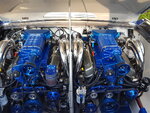
After washing, I take electric leaf blower and dry everything. Then drown it with WD 40 or something like that.
I run engine on garden house to flush salt out, then shut off, dove soap skwirt in hose at house. Then restart watch bubbles come out. Brings the pH to 7.6.
I run engine on garden house to flush salt out, then shut off, dove soap skwirt in hose at house. Then restart watch bubbles come out. Brings the pH to 7.6.

