


Milky blowby from valve covers
 07-05-2015 | 04:03 PM
#1
Thread Starter
Registered

Joined: Aug 2003
Posts: 477
Likes: 1
From: Catawba Island, Ohio
 Milky blowby from valve covers
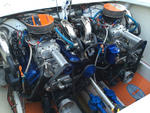
One of my engines is producing a good amount of milky blow-by from the valve cover breathers. Oil in the pan looks perfect. Running Oil T-stats and have no problem keeping 190-225 oil temp. Not running any water T-stats and engine temp never breaks 100.
My Thoughts: With cold lake water (65 degrees) and no real engine temperature, condensation is building and mixing with oil in the valve covers then being blown out the breathers. However if this were true it would be happening on both engines. Perhaps i have some excessive crankcase pressure on this engine? Besides worn piston rings, is there any other logical reasons for one engine to produce more blow-by than the other. Or another logical reason for milky blow-by, with the oil in the pan looking perfect??

My Thoughts: With cold lake water (65 degrees) and no real engine temperature, condensation is building and mixing with oil in the valve covers then being blown out the breathers. However if this were true it would be happening on both engines. Perhaps i have some excessive crankcase pressure on this engine? Besides worn piston rings, is there any other logical reasons for one engine to produce more blow-by than the other. Or another logical reason for milky blow-by, with the oil in the pan looking perfect??
 07-05-2015 | 06:22 PM
#3

Registered
Joined: Jan 2002
Posts: 4,612
Likes: 7
From: ALTO, MI
You have a leak... That is way more than condensation. Condensation on the valve cover would be just a lite coating NOT the milkshake you have there. Do you have an intercooler if not pressure test the exhaust first. Next step is head gasket.
07-05-2015 | 09:05 PM
#7

Registered
Joined: Nov 2001
Posts: 3,393
Likes: 6
From: IBX
I would take a close look at the intake, could be cracked or just leaking massively at the gasket. Also I am wondering how you are determining the oil looks perfect? If you are looking at it on the dipstick it will often look fine because water would sit on the bottom of the pan and oil would be on top, so you cant really tell by the dipstick. Need to look at the oil in the filter.
07-06-2015 | 05:56 AM
#8

Gold Member

Joined: Oct 2005
Posts: 11,688
Likes: 216
From: Olmsted Falls,Ohio Marblehead,Oh
true but he would have raised oil level if water was entering...
it is easy to get condensation in Lake Erie I do early in season, this time of year and oil temps above 180 you really don't get it... I see no condensation now that's its warmer out and I don't have water stats...
can you look in oil fill cap hole and see condensation ??
it is easy to get condensation in Lake Erie I do early in season, this time of year and oil temps above 180 you really don't get it... I see no condensation now that's its warmer out and I don't have water stats...
can you look in oil fill cap hole and see condensation ??
I would take a close look at the intake, could be cracked or just leaking massively at the gasket. Also I am wondering how you are determining the oil looks perfect? If you are looking at it on the dipstick it will often look fine because water would sit on the bottom of the pan and oil would be on top, so you cant really tell by the dipstick. Need to look at the oil in the filter.
07-06-2015 | 12:40 PM
#9
Thread Starter
Registered
Joined: Aug 2003
Posts: 477
Likes: 1
From: Catawba Island, Ohio
Just went out for a ride and got oil up to 220 no problem, water temp never broke 100.
Shutdown and pulled dipstick, no water in the oil. if there was water id assume it to be mixed up after a run.
I don't see any milk or condensation when i pull the fill cap.
The more i think about it, even if an intercooler was leaking, I'm not sure how it would ingest water without sucking it through the engine, in which case it would be in the pan as well.
Shutdown and pulled dipstick, no water in the oil. if there was water id assume it to be mixed up after a run.
I don't see any milk or condensation when i pull the fill cap.
The more i think about it, even if an intercooler was leaking, I'm not sure how it would ingest water without sucking it through the engine, in which case it would be in the pan as well.
07-06-2015 | 01:24 PM
#10
Registered

Joined: Aug 2012
Posts: 2,301
Likes: 404
From: Collierville, TN and Pickwick Lake
Is the milkshake under one valve cover or both? The reason I'm asking is I had a restriction in the water passages on one head a few years back and because of that most of the cooling water was taking the path of least resistance and over cooling the opposite head thus causing condensation on the one side. This would only apply if you're running a crossover.

