


Fountain 47, 2372cid single engine diesel

 01-27-2023 | 02:58 AM
#182
Thread Starter
Registered

Joined: Jan 2010
Posts: 346
Likes: 877
From: Finland

Thank you! It's sad that project is going on so slow but it will change after next summer.
I have simulate engine by Borg Warner match bot and show results here soon. It's look very impressive, bit there are some serious problems to solve.
I have simulate engine by Borg Warner match bot and show results here soon. It's look very impressive, bit there are some serious problems to solve.
02-01-2023 | 12:52 AM
#183
Registered
Joined: Jun 2010
Posts: 1,395
Likes: 930
From: LBC, OH
Beautiful drives. I'll happily try a pair when ya get some extra time.. 
Sorry I didn't get around to swapping the drive direction on Voodoo yet. But it's on my agenda, right after we fire ringing the blocks and put those back in the hull. What I learned from LOTO, besides take a support team next year, is the boat performed quite differently in fresh water with cav-plate dives than it did with the W's a year before on same props. Drive aeration tubes need to be at least 3" diameter, no matter how close they are cut to the props. As where in saltwater, was never an issue.
What worked in salt water couple days before, at first seemed all wrong in fresh. Ability to get on plane being most notable. However the slip numbers must have been considerably better in the fresh water based off speedo recall vs max observed RPM's. The boat felt faster with them spinning in now, so will be interesting to compare spinning out in fresh. Actually I'm just happy they spin all day without issue.. Finally allowed us time to debug the engines and transmission further.
Keep up the great work.
Sorry I didn't get around to swapping the drive direction on Voodoo yet. But it's on my agenda, right after we fire ringing the blocks and put those back in the hull. What I learned from LOTO, besides take a support team next year, is the boat performed quite differently in fresh water with cav-plate dives than it did with the W's a year before on same props. Drive aeration tubes need to be at least 3" diameter, no matter how close they are cut to the props. As where in saltwater, was never an issue.
What worked in salt water couple days before, at first seemed all wrong in fresh. Ability to get on plane being most notable. However the slip numbers must have been considerably better in the fresh water based off speedo recall vs max observed RPM's. The boat felt faster with them spinning in now, so will be interesting to compare spinning out in fresh. Actually I'm just happy they spin all day without issue.. Finally allowed us time to debug the engines and transmission further.
Keep up the great work.

 02-01-2023 | 01:40 PM
#185
Thread Starter
Registered
Joined: Jan 2010
Posts: 346
Likes: 877
From: Finland
Water density between salt and fresh water are interesting, more drag but more lift. Kidturbo, I never tought that little change in water density makes so much difference. Running in or out should be bigger thing because working prop area are different.
I try manufacture complete drive package that contain extension box, drive, steering cylinder and trim cylinder. It's straight fit replace bravo drive, but extension box can be made cover any earlier drive hole. So you need turn engines flywheel to bow direction and make drop box after transmission. 2 speed powerglide or lenco could be nice choice in front of the medium size diesel engine, I can manufacture drop box also. Let's see first if drives can handle Transmash torque, they can survive anything else too...
Kidturbo, did you ever simulate your engines? Borgwarner match bot seems to be good software. I did some calculations....

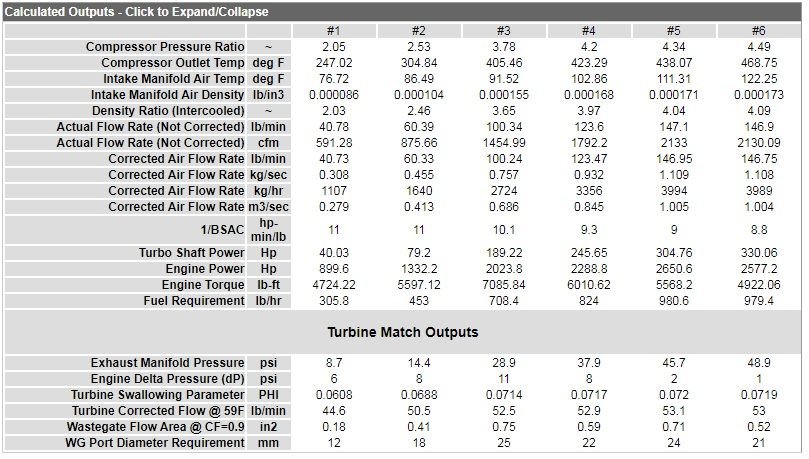

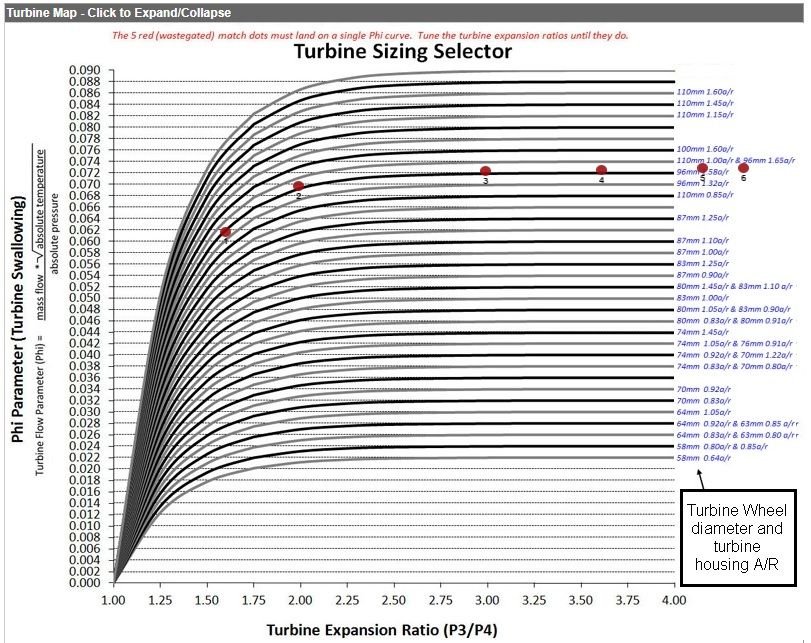
This calculation is made to stock transmash engine, just turbos, coolers and new modified Bosch fuel system. Intake ports in cylinder heads are 125mm x 55mm at manifold surface but heads doesn't flow ever near CFM that displacement require so volumetric efficiency goes low when RPM raise. No benefits to turn over 2500rpm.
I set limits to tune engine:
-delta P are positive, so boost is bigger than turbine drive pressure
-continuous EGT stay below 1300F
-AFR 18 or leaner
-max rpm is 2500, main bearings destroy or block split after that because crank have no counter weights, yet
It should make over 2500hp so all limits are on safe side. First engine improvements should be make good seat, valve and port job... there are 48 port total, sounds like CNC porting or neck pain.
I try manufacture complete drive package that contain extension box, drive, steering cylinder and trim cylinder. It's straight fit replace bravo drive, but extension box can be made cover any earlier drive hole. So you need turn engines flywheel to bow direction and make drop box after transmission. 2 speed powerglide or lenco could be nice choice in front of the medium size diesel engine, I can manufacture drop box also. Let's see first if drives can handle Transmash torque, they can survive anything else too...
Kidturbo, did you ever simulate your engines? Borgwarner match bot seems to be good software. I did some calculations....
This calculation is made to stock transmash engine, just turbos, coolers and new modified Bosch fuel system. Intake ports in cylinder heads are 125mm x 55mm at manifold surface but heads doesn't flow ever near CFM that displacement require so volumetric efficiency goes low when RPM raise. No benefits to turn over 2500rpm.
I set limits to tune engine:
-delta P are positive, so boost is bigger than turbine drive pressure
-continuous EGT stay below 1300F
-AFR 18 or leaner
-max rpm is 2500, main bearings destroy or block split after that because crank have no counter weights, yet
It should make over 2500hp so all limits are on safe side. First engine improvements should be make good seat, valve and port job... there are 48 port total, sounds like CNC porting or neck pain.
Last edited by ksalmine; 02-01-2023 at 02:02 PM.
02-01-2023 | 01:57 PM
#186
Thread Starter
Registered
Joined: Jan 2010
Posts: 346
Likes: 877
From: Finland
I have chinese Holset HX80 copy turbos so turbine and compressor map are not right compared to calculation but they can leads the way. HX80 copy compressors are 92/135mm so they should make pretty good pressure. Turbine wheels are 120/96mm that are not good combination to compressors, I fear that they make too much drive pressure to turn big compressors. I need run datalog and propably change different size wheels, bigger wheels is possible to fit in these huge housings. If heads flow can improved, turbo sizing goes different way again. Mass air flow goes up and pressure down or if pressure keeps same and MAF up, it would make some serious power...
It takes 300hp/turbo to turn compressors, there are reason HX80 turbine shaft are 16mm thick!
It takes 300hp/turbo to turn compressors, there are reason HX80 turbine shaft are 16mm thick!
02-01-2023 | 04:21 PM
#187
Registered
Joined: Jun 2010
Posts: 1,395
Likes: 930
From: LBC, OH
One would think that's end of the story, as should be. However what we missed this time was the low end of the map. Starting all our dyno pulls at around 2500rpm, torque curve is flat line all the way to 4200r. Super... We settled on a 1.06AR and 76mm wheel to land us in that 1000hp target. All looked right.... In the boat, she won't spin above 1400R without the 2sp transmissions. Maybe would with 25 pitch props, but not 34's And even with the added 1.50 gear reduction of low, they start to spool at about 1400, climb to 1700rpm and 15psi, and then hit a wall until those props come free. Again we had overshot on size, cause on the dyno we pulled em boosted basckwards down to 2000r, but never tried getting over the Rpm loaded from idle.. The high $$$ compressor housing adjustable MAP grove setup seemed to help elevate this issue, but showed to be a bigger reliability issue as well noted in that other thread.
Conclusion, compound turbos setups are used for good reasons.. Sometimes it's just not possible to achieve what your seeking any other way. And is reason most modern diesels have gone to electronic adjustable turbine housings over waste gates. In our case, no VGT option was available at the time, nor did we think we needed it on the dyno. Looking back, the added complexity of compounds is probably worth the risk. My easy fix, short of new Electric Spool assisted turbos, a shot of Nitrous on standby for failure to launch... So will run the simulator with all our known variables and see where the bot says we currently land.
02-01-2023 | 06:56 PM
#189
Registered
Joined: Jun 2010
Posts: 1,395
Likes: 930
From: LBC, OH
Correctly sized for the application, I agree they offer advantages. More so in high hp gassers. However as of lately I've had the opportunity to examine some low rpm 12L-16L diesels from Detroit, Cummins, and Cat. The single S475 seems to be preferred unit on 5-600hp mechanical injection with twice the cubes. My experience with big single or sequentials, it's harder to correctly map a wide RPM range and small displacement. Unless you add a spool helper, like a SC. Compounding solves that issue, with easier plumbing..
02-02-2023 | 08:26 PM
#190
Registered

Joined: Jan 2006
Posts: 3,873
Likes: 803
From: St. Pete Beach, FL
Correctly sized for the application, I agree they offer advantages. More so in high hp gassers. However as of lately I've had the opportunity to examine some low rpm 12L-16L diesels from Detroit, Cummins, and Cat. The single S475 seems to be preferred unit on 5-600hp mechanical injection with twice the cubes. My experience with big single or sequentials, it's harder to correctly map a wide RPM range and small displacement. Unless you add a spool helper, like a SC. Compounding solves that issue, with easier plumbing..
C32B 2433hp does it with 3 turbos.
There hasn’t been a factory compound setup I remember seeing.
Another solution might be to increase displacement and try to run a VGT.

