


Am i doing it right ? Idle mixtire
 11-27-2021 | 05:30 PM
#1
Thread Starter
Registered

Joined: May 2009
Posts: 1,942
Likes: 527
 Am i doing it right ? Idle mixtire
Thanks in advance, for any and all input.
Ran the boat about 2 1/2 hours today, little more than 1 1/2 between 3100 - 3500 rpm range. Some idle thru 2500, some idle twice to wot and 1 hole shot until the tach was at 4400 then i backed off and kept it there 30 seconds.
I pulled back because the voltmeter tack reads 650 but the boat tack reads 800, so if its 150 ish all the way thru then at 4400 its 45/4600 ish
any way afterwards i hooked up the vacuum gauge and played with the idle mixture screws 1 at a time 1/8-1/4 turns at a time and the gauge would move within a second or two then i'd turn it again to get the highest number, 1 side at a time.
when it seemed its highest i shut down took off the vacuum restarted and idled stop screw back down to 650.
port idle mix screw started at 5/8 open from light seat.
starb idle mix screw started at 3/8 open from light seat.
highest vacuum with port in another 1/4-5/16 turn and starb in another 3/16-- or heavy 1/8 turn.
3 questions,
1 can i run the boat to wot with the voltmeter tach hooked up
2 am i adjusting at the right rpm 800 (it seemed smoother around 850)
3 should i double check the hoses for vacuum leaks and retry (3 hoses jammed together to make it hook up)
https://youtu.be/6FRd2nJzVyo
Ran the boat about 2 1/2 hours today, little more than 1 1/2 between 3100 - 3500 rpm range. Some idle thru 2500, some idle twice to wot and 1 hole shot until the tach was at 4400 then i backed off and kept it there 30 seconds.
I pulled back because the voltmeter tack reads 650 but the boat tack reads 800, so if its 150 ish all the way thru then at 4400 its 45/4600 ish
any way afterwards i hooked up the vacuum gauge and played with the idle mixture screws 1 at a time 1/8-1/4 turns at a time and the gauge would move within a second or two then i'd turn it again to get the highest number, 1 side at a time.
when it seemed its highest i shut down took off the vacuum restarted and idled stop screw back down to 650.
port idle mix screw started at 5/8 open from light seat.
starb idle mix screw started at 3/8 open from light seat.
highest vacuum with port in another 1/4-5/16 turn and starb in another 3/16-- or heavy 1/8 turn.
3 questions,
1 can i run the boat to wot with the voltmeter tach hooked up
2 am i adjusting at the right rpm 800 (it seemed smoother around 850)
3 should i double check the hoses for vacuum leaks and retry (3 hoses jammed together to make it hook up)
https://youtu.be/6FRd2nJzVyo
Last edited by outonsafari; 11-27-2021 at 05:36 PM.

 11-28-2021 | 09:28 PM
#3
Registered

Joined: Nov 2004
Posts: 14,183
Likes: 3,735
From: On A Dirt Floor
Alot of times, best idle in gear is 1/8-1/4 turn (out) richer with the primary idle mixture screws than the best in neutral settings.
All motors are different .
“Your motor is telling you what it wants. Are you listening ?” - Darrin Morgan
btw: 850 is okay in neutral. Don’t try to go higher.
All motors are different .
“Your motor is telling you what it wants. Are you listening ?” - Darrin Morgan
btw: 850 is okay in neutral. Don’t try to go higher.
Last edited by SB; 11-29-2021 at 07:25 PM.

 11-29-2021 | 06:07 PM
#4

Platinum Member

Joined: Sep 2001
Posts: 5,769
Likes: 151
From: tn
What carb? What are the motors? Are they modified? What intakes are you running?
There's all sorts of things we need to know.
Basically, though, all carbs have an idle mix screw on the primary venturis. Some also have mix screws on the secondary venturis (4-corner idle, it is called).
If your carb is clean and has no orifice or jetting obstructions, and if the float is properly adjusted, and you have no vacuum leaks anywhere in the system, then your right and left idle mix screw should be set to match its brother on the same carb. Motor to motor, if all things are similar, the screws will usually be within a half turn of each other, but it is not abnormal for the starboard motor to end up liking a slightly different screw setting.
Motors with time on them can have cylinder imbalances or small vacuum leaks around intake manifold that will affect one or two cylinders more than the others at idle. This can contribute to one "side" of a motor wanting a different screw setting than the other side (which should tip you off to a problem). Vacuum leaks respond to starting fluid or other butane propellant in a can when you shoot it on top of a vacuum leak. When you are doing sensitive jetting changes, always double check to see if you can find a vacuum leak that way. sometimes little cracks pop up in the rubber hoses, too.
If the throttle plates in your carb's secondaries are not evenly sealing, this can also throw off idle screw settings side to side. If you have had the throttle plates off of the shaft at some point in time, you have to adjust them so that they both completely seal at the same point (with the secondary throttle stop screw backed up) before you tighten the screws. Same again on the primary side.
most boats with a Quadrajet or Weber style Mercruiser carb will like the screws about 1/8 turn richer than best neutral idle vacuum. The motors tolerate shifting in and out of gear a little better that way.
If you have a modified motor with a non-stock cam, then there are other things to consider - like ignition advance curves. You motor may prefer more initial timing around idle (to bring up dynamic pressure at idle due to the additional overlap of the cam) - but this will require a lesser total advance in the module to keep from over advancing at higher rpm.
A mild 330hp 454 or similar will idle down to 600 with no problems. If you are running a high pitched prop, that may not be a fast enough idle to prevent stalling, but you don't want to run an idle any faster than where your boat will reliably shift in and out of gear during normal operation. Shifting at higher rpm is always harder on the outdrive. If you run an inboard transmission (such as on a TRS drive), then it isn't nearly as big of a deal - the clutches in the transmission are much more tolerant of a "speedier" shift than the cogs, cones, dogs in an outdrive.
If you had a good vacuum gauge hooked up (preferably to an unported source, or the intake manifold itself), then watching the needle at and around idle will tell you a lot about the condition of things in the motor. At slow idle, you want to see even pulses that all look the same. As you speed up the motor, you want to watch for any erratic or unsteady needle. An erratic needle can be the result of a broken valvespring, or a wiped cam lobe or broken rocker or bent valve. Just adding that because any time I have a vacuum gauge hooked up, I run the whole diagnostic range just for the heck of it. Sometimes you can catch things before you notice a performance problem.
for your tachometer, you need to figure out how far off your in-dash tach is. Recreational boat tachometers are not the more reliable units out there, especially if you boat around any salt. The multi-switch on the back of the tach is notorious for getting corrosion in the contacts that affect operation. A phone strobe app is surprisingly good for strobing a motor. Put a good white stripe on your balancer pulley where you can get a good look at it while running. Load up a phone strobe tachometer. Run the motor up to an indicated 3,000 rpm on your dash tach. set your phone strobe on 2,500 and make sure it's not too bright in the engine compartment. Aim your phone at the pulley and start bumping up the strobe rpm a little at a time until the mark starts becoming a repeatable line instead of random. When your strobe matches your engine speed you will have the mark locked in one place. Take a note of what your engine rpm is at an indicated 3,000. Do it again at 1,500. Do it at idle. Make notes of the difference, and this is your calibration factor.
There's all sorts of things we need to know.
Basically, though, all carbs have an idle mix screw on the primary venturis. Some also have mix screws on the secondary venturis (4-corner idle, it is called).
If your carb is clean and has no orifice or jetting obstructions, and if the float is properly adjusted, and you have no vacuum leaks anywhere in the system, then your right and left idle mix screw should be set to match its brother on the same carb. Motor to motor, if all things are similar, the screws will usually be within a half turn of each other, but it is not abnormal for the starboard motor to end up liking a slightly different screw setting.
Motors with time on them can have cylinder imbalances or small vacuum leaks around intake manifold that will affect one or two cylinders more than the others at idle. This can contribute to one "side" of a motor wanting a different screw setting than the other side (which should tip you off to a problem). Vacuum leaks respond to starting fluid or other butane propellant in a can when you shoot it on top of a vacuum leak. When you are doing sensitive jetting changes, always double check to see if you can find a vacuum leak that way. sometimes little cracks pop up in the rubber hoses, too.
If the throttle plates in your carb's secondaries are not evenly sealing, this can also throw off idle screw settings side to side. If you have had the throttle plates off of the shaft at some point in time, you have to adjust them so that they both completely seal at the same point (with the secondary throttle stop screw backed up) before you tighten the screws. Same again on the primary side.
most boats with a Quadrajet or Weber style Mercruiser carb will like the screws about 1/8 turn richer than best neutral idle vacuum. The motors tolerate shifting in and out of gear a little better that way.
If you have a modified motor with a non-stock cam, then there are other things to consider - like ignition advance curves. You motor may prefer more initial timing around idle (to bring up dynamic pressure at idle due to the additional overlap of the cam) - but this will require a lesser total advance in the module to keep from over advancing at higher rpm.
A mild 330hp 454 or similar will idle down to 600 with no problems. If you are running a high pitched prop, that may not be a fast enough idle to prevent stalling, but you don't want to run an idle any faster than where your boat will reliably shift in and out of gear during normal operation. Shifting at higher rpm is always harder on the outdrive. If you run an inboard transmission (such as on a TRS drive), then it isn't nearly as big of a deal - the clutches in the transmission are much more tolerant of a "speedier" shift than the cogs, cones, dogs in an outdrive.
If you had a good vacuum gauge hooked up (preferably to an unported source, or the intake manifold itself), then watching the needle at and around idle will tell you a lot about the condition of things in the motor. At slow idle, you want to see even pulses that all look the same. As you speed up the motor, you want to watch for any erratic or unsteady needle. An erratic needle can be the result of a broken valvespring, or a wiped cam lobe or broken rocker or bent valve. Just adding that because any time I have a vacuum gauge hooked up, I run the whole diagnostic range just for the heck of it. Sometimes you can catch things before you notice a performance problem.
for your tachometer, you need to figure out how far off your in-dash tach is. Recreational boat tachometers are not the more reliable units out there, especially if you boat around any salt. The multi-switch on the back of the tach is notorious for getting corrosion in the contacts that affect operation. A phone strobe app is surprisingly good for strobing a motor. Put a good white stripe on your balancer pulley where you can get a good look at it while running. Load up a phone strobe tachometer. Run the motor up to an indicated 3,000 rpm on your dash tach. set your phone strobe on 2,500 and make sure it's not too bright in the engine compartment. Aim your phone at the pulley and start bumping up the strobe rpm a little at a time until the mark starts becoming a repeatable line instead of random. When your strobe matches your engine speed you will have the mark locked in one place. Take a note of what your engine rpm is at an indicated 3,000. Do it again at 1,500. Do it at idle. Make notes of the difference, and this is your calibration factor.
11-30-2021 | 07:50 AM
#7
Thread Starter
Registered
Joined: May 2009
Posts: 1,942
Likes: 527
Yes, voltmeter tach.
1979 351w 240 hp pleasure craft marine engine, reverse rotation brand new petronix electric conversion kit, coil, wires and correct plugs,
brand new holley 4160 idle air mix screws only, vacuum secondaries not adjustable.
out of the box port idle mix was 3/8 open from light seat, starb idle mix was 5/8 open from light seat.
had soot under platform after saturday test ride but there was 1/2 hour of idle time, is why i used the vacuum and adjusted.
hole shot is great zero hesitation, runs like an injected engine.
Out of box idle mix screws are marked, i can always go back, i can re adjust in water in gear.
first time hooking up vacuum and turning idle mix screws, it's kinda overhelming because i don't know what i'm and it's actually doing
thanks guys, i really appreciate the feedback
1979 351w 240 hp pleasure craft marine engine, reverse rotation brand new petronix electric conversion kit, coil, wires and correct plugs,
brand new holley 4160 idle air mix screws only, vacuum secondaries not adjustable.
out of the box port idle mix was 3/8 open from light seat, starb idle mix was 5/8 open from light seat.
had soot under platform after saturday test ride but there was 1/2 hour of idle time, is why i used the vacuum and adjusted.
hole shot is great zero hesitation, runs like an injected engine.
Out of box idle mix screws are marked, i can always go back, i can re adjust in water in gear.
first time hooking up vacuum and turning idle mix screws, it's kinda overhelming because i don't know what i'm and it's actually doing
thanks guys, i really appreciate the feedback
 11-30-2021 | 01:04 PM
#9
Registered
Joined: Nov 2003
Posts: 1,118
Likes: 693
i have done many fords the holley is the worst carb the best is eldebrock 1409 we use that for all the fishing charter boats that idle for an extended period we also cut the dist in half and use the delco est on top because it idles with a lot of timing and prolonged idling loves that!! the flywheel coupler also last much longer
12-01-2021 | 05:23 PM
#10
Thread Starter
Registered
Joined: May 2009
Posts: 1,942
Likes: 527

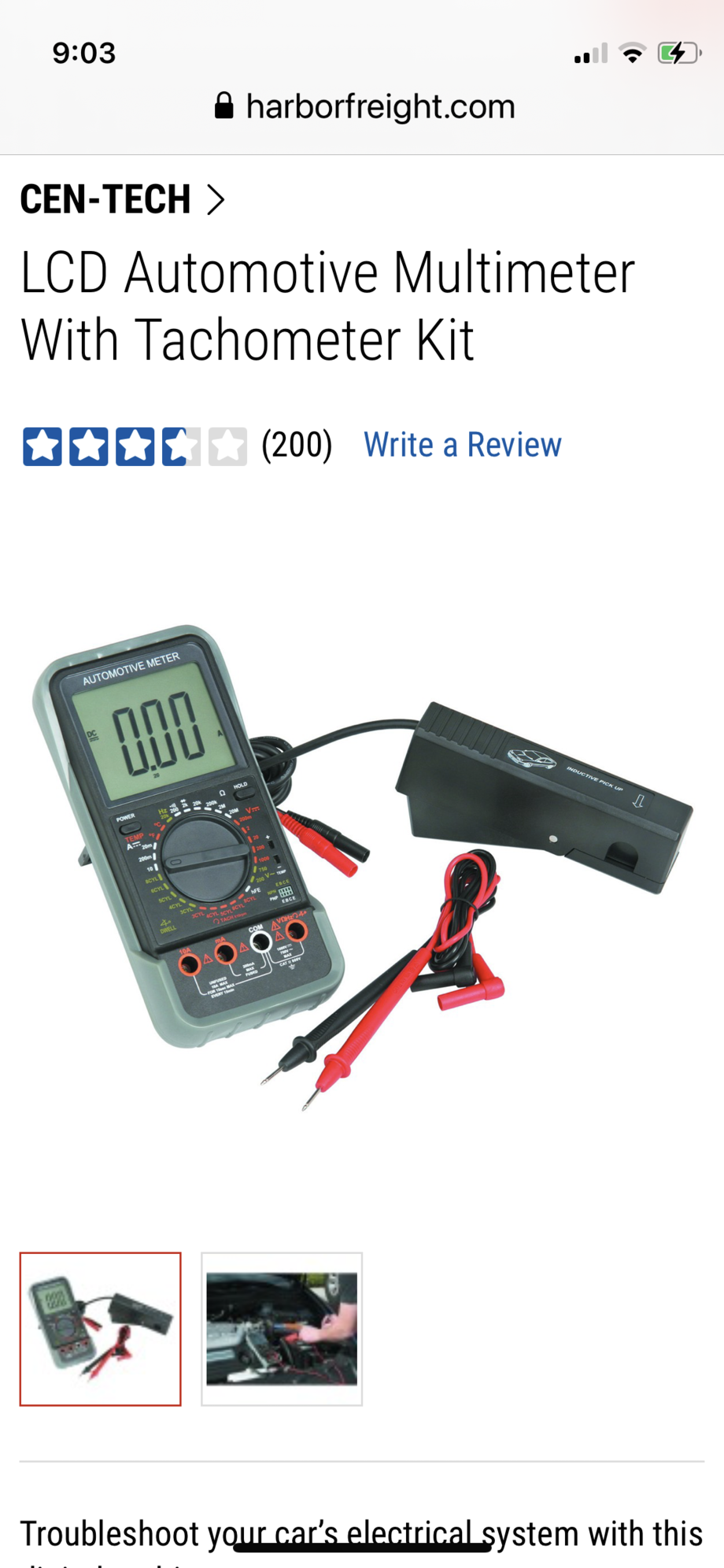
thats my volt meter on left set to tach, it only reads 3 numbers, 850 rpms would read 085.
3500 rpms would read 350.
next week maybe i'll hook up the vacuum and and try monkeying around with it in the water.
As long as it doesn't destroy itself and continies to run and hole shot real good i'll be happy

