


Trim Tab removal, how to remove and reseal
 02-11-2025 | 10:20 PM
#1
Thread Starter
Registered
Joined: Jan 2024
Posts: 45
Likes: 17
From: So Cal
 Trim Tab removal, how to remove and reseal
The trim tabs on my new boat are starting to peel. I’d like to remove them and have them hard anodized and then powder over the anodize.
however I’ve never had to unbolt any thing off a transom before and I’m unsure what I might be getting myself into.
There looks to be a bead of some kind of sealant running along edge of the trim tab mount on the transom. Is this how they are supposed to be sealed?
What is the proper way to seal them back up once I reinstall them?
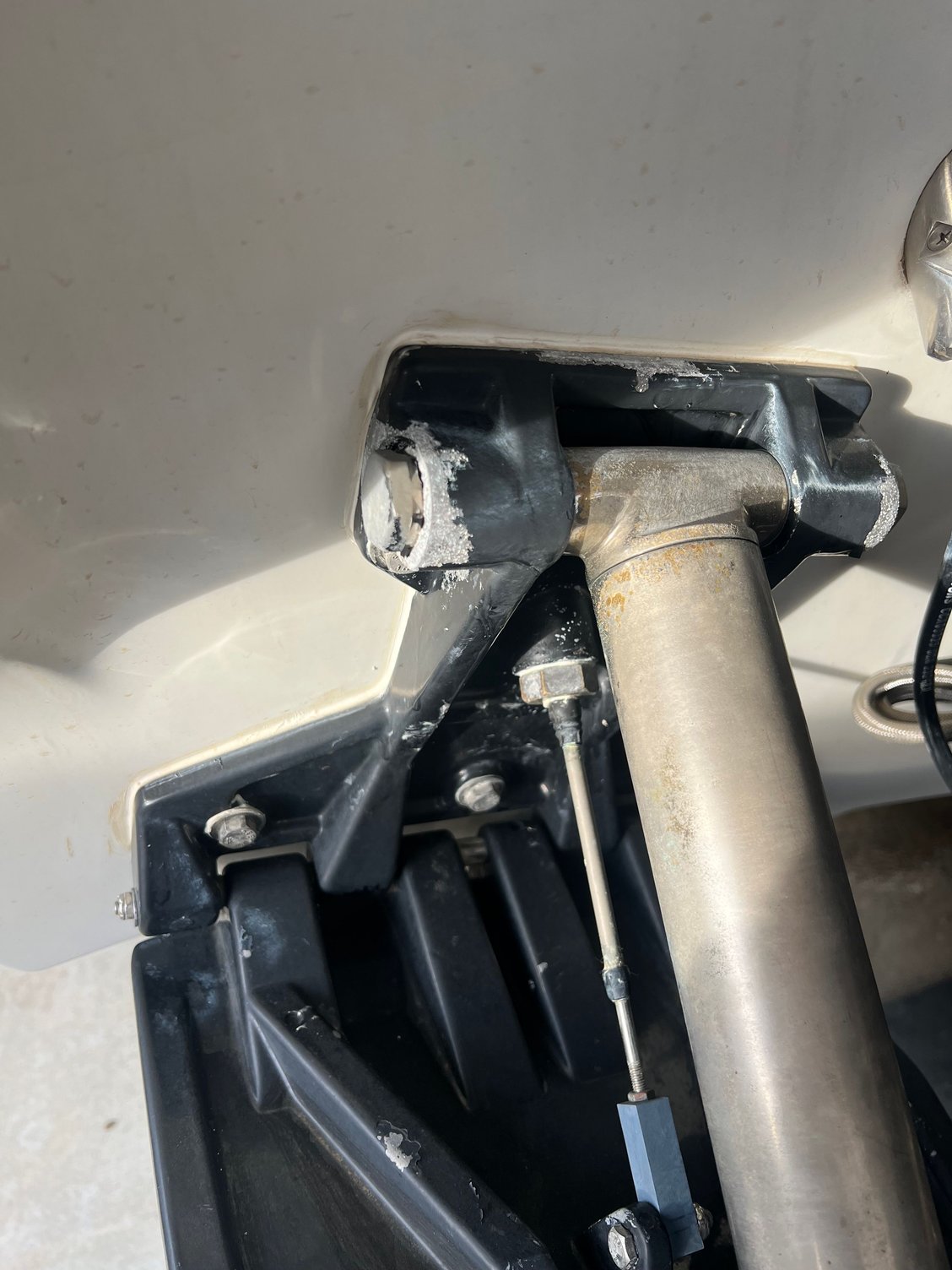
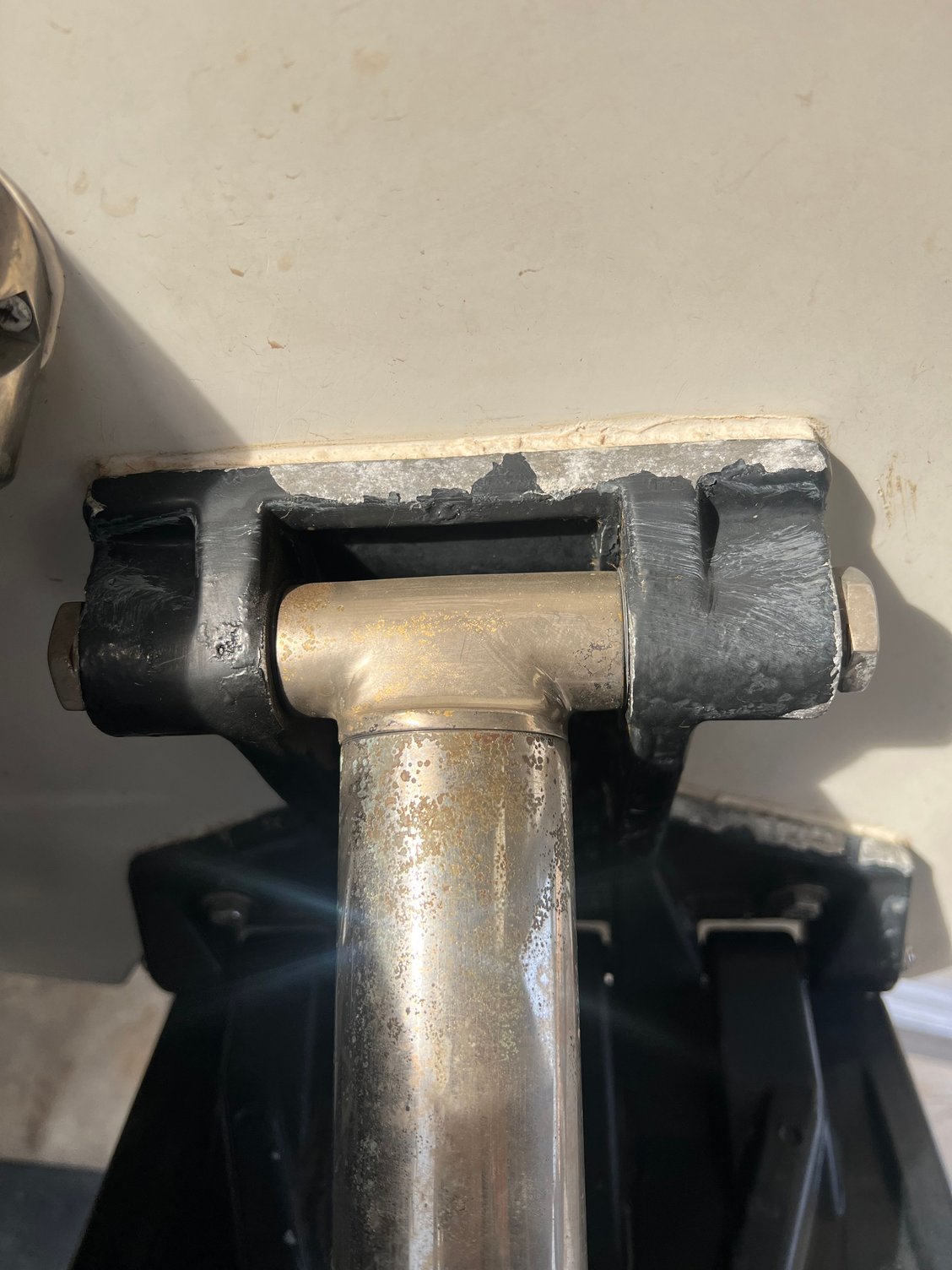
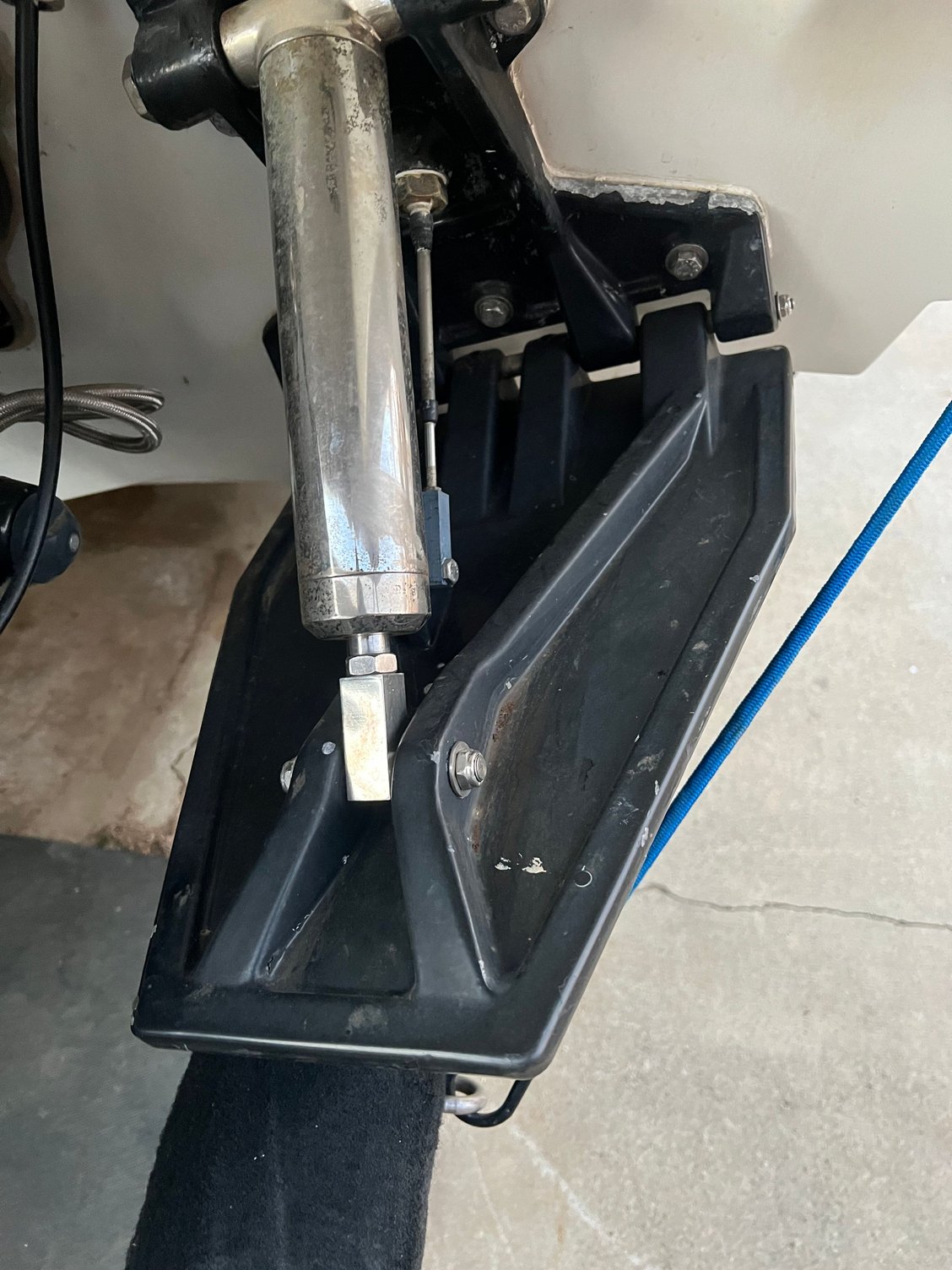
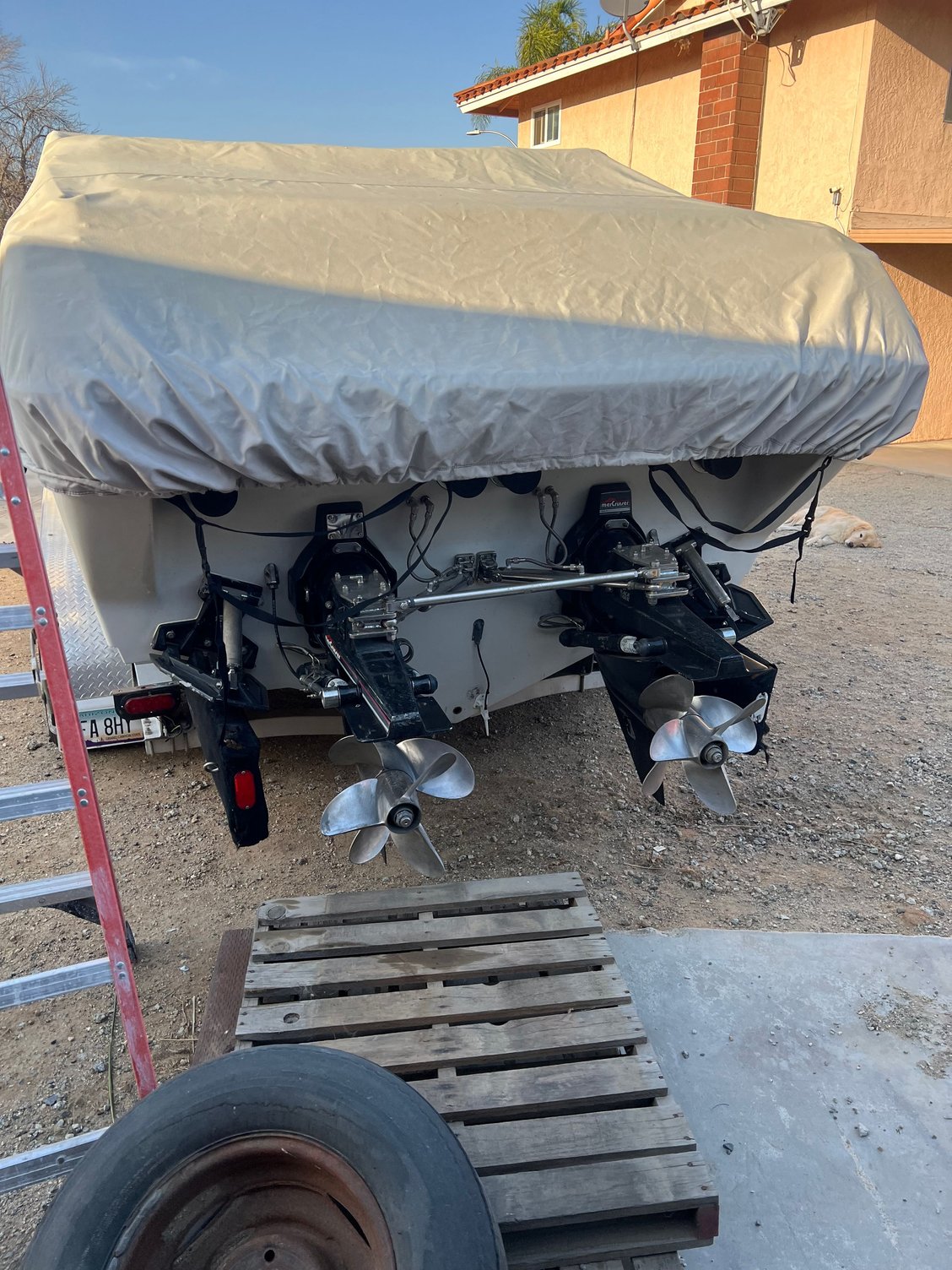
however I’ve never had to unbolt any thing off a transom before and I’m unsure what I might be getting myself into.
There looks to be a bead of some kind of sealant running along edge of the trim tab mount on the transom. Is this how they are supposed to be sealed?
What is the proper way to seal them back up once I reinstall them?
 02-12-2025 | 08:13 AM
#2
Registered

Joined: Sep 2002
Posts: 2,096
Likes: 178
From: King george, Virginia/Potomac River
Patience and beer.
It can depend on what and how much was used. 3M 4200 is meant to be removed at some point, 3M 5200 is not.
When I did mine I used long construction wood shims, a combination of putty knives/scrapers and trowel like spreaders. Visit Lowes or Home Depot and look around the concrete and drywall tools. Think chisel, something you can hammer on - stiff and thin - 1' to 2" wide worked the best. Avoid anything that isn't metal all the way through the handle. I hammered in the putty knife/scraper and then hammered in a wood shim next to it. Repeat in a different spot. On my boat, I believe someone had the tabs off and used 5200. It was spread on the tab mount like icing on a cake and I had to find tools that were long to get deep in between the two surfaces. Don't try to pry them off, it may pull the gel coat off. I taped around the the tab mount to prevent scratching the gel. There are scratches under the mount, but they are hidden by reinstallation. With the drives and other obstacles, angles for the hammer and chisel become tough.
3M makes a 5200 remover, but I didn't try it. I wasn't sure if it get in between the two surfaces.
Good luck
It can depend on what and how much was used. 3M 4200 is meant to be removed at some point, 3M 5200 is not.
When I did mine I used long construction wood shims, a combination of putty knives/scrapers and trowel like spreaders. Visit Lowes or Home Depot and look around the concrete and drywall tools. Think chisel, something you can hammer on - stiff and thin - 1' to 2" wide worked the best. Avoid anything that isn't metal all the way through the handle. I hammered in the putty knife/scraper and then hammered in a wood shim next to it. Repeat in a different spot. On my boat, I believe someone had the tabs off and used 5200. It was spread on the tab mount like icing on a cake and I had to find tools that were long to get deep in between the two surfaces. Don't try to pry them off, it may pull the gel coat off. I taped around the the tab mount to prevent scratching the gel. There are scratches under the mount, but they are hidden by reinstallation. With the drives and other obstacles, angles for the hammer and chisel become tough.
3M makes a 5200 remover, but I didn't try it. I wasn't sure if it get in between the two surfaces.
Good luck
Last edited by Shah Mat; 02-12-2025 at 08:15 AM.
02-12-2025 | 08:50 AM
#3
Registered


Joined: Oct 2000
Posts: 1,535
Likes: 617
From: Lake Ozark, MO USA
They will come off just like Shah said, but likely there will be some gel damage. There are marine epoxies that the marine paint guys are using now days, that will repair the damage and you can prime and paint over to seal before reinstallation. While off, be sure to check for transom wetness, because all that work will be futile if it is wet, If you reinstall on a wet transom all the body work will fail when your torque down the tabs. You cold media blast in place and use a very good, hard paint to refinsh them It is a lot of work. I am in the final phase of rebuilding a boat bilge and transom with a friend. It takes a long time to repair, clean, paint and reinstall all the stuff in there. Go to a local marina or boat repair center and find out what they are using for spot repair. I don't know what that stuff is, but I have seen the results. Guy put it on like bondo over damaged get, you could see the glass, faired it out. It dries so fast, you have to mix it right there and use it immediately. DA it down and shoot primer, then paint. It is a flawless finish.
02-13-2025 | 12:53 AM
#4

Charter Member # 55


Joined: Oct 2000
Posts: 20,285
Likes: 2,526
From: Omaha/LOTO


 02-13-2025 | 03:57 PM
#7

Offshoreonly Advertiser
Joined: Mar 2001
Posts: 2,518
Likes: 284
From: Pompano Beach FL, USA
Deserves the Nobel Boat Prize
i just made that up
__________________
Marc
www.mercruiserparts.com
www.go-fast.com
www.bammarine.com
www.cyborgtransmissions.com
It's not alive -www.BoatStuffExpress.com - temporarily retired
Marc
www.mercruiserparts.com
www.go-fast.com
www.bammarine.com
www.cyborgtransmissions.com
It's not alive -www.BoatStuffExpress.com - temporarily retired
02-14-2025 | 12:14 PM
#8
Registered
Joined: Oct 2024
Posts: 96
Likes: 39
From: York Haven, PA
Just a comment on the anodizing... I'm not sure what grade of aluminum they are made of, but your anodize "guy" may be able to give your more insight... But not all cast aluminums will anodize very well due to porosity and silicon and copper content. If they can't anodize them, you might look into a conversion coating (trivalent).. Gives a really good base for paint as an alternative to anodizing.
02-14-2025 | 01:34 PM
#9

artselectricinc.com

Joined: Dec 2000
Posts: 703
Likes: 27
From: Longview, WA, USA
I've done this task more than a few times over the years.
One thing I can add to the above is the careful use of a heat gun. Just be careful that you don't get the gelcoat too hot
and be patient. Work your wedges in and wait a bit before pounding them in further.
Also: I have not had great luck recoating K-planes if the boat is kept in the water. I've tried all types of paint, pirimers, and powdercoating.
Lately, I don't do anything other than touching up the corroded areas and leaving as much original paint as possible.
Steve
One thing I can add to the above is the careful use of a heat gun. Just be careful that you don't get the gelcoat too hot
and be patient. Work your wedges in and wait a bit before pounding them in further.
Also: I have not had great luck recoating K-planes if the boat is kept in the water. I've tried all types of paint, pirimers, and powdercoating.
Lately, I don't do anything other than touching up the corroded areas and leaving as much original paint as possible.
Steve
02-15-2025 | 07:33 PM
#10
Thread Starter
Registered
Joined: Jan 2024
Posts: 45
Likes: 17
From: So Cal
I've done this task more than a few times over the years.
One thing I can add to the above is the careful use of a heat gun. Just be careful that you don't get the gelcoat too hot
and be patient. Work your wedges in and wait a bit before pounding them in further.
Also: I have not had great luck recoating K-planes if the boat is kept in the water. I've tried all types of paint, pirimers, and powdercoating.
Lately, I don't do anything other than touching up the corroded areas and leaving as much original paint as possible.
Steve
One thing I can add to the above is the careful use of a heat gun. Just be careful that you don't get the gelcoat too hot
and be patient. Work your wedges in and wait a bit before pounding them in further.
Also: I have not had great luck recoating K-planes if the boat is kept in the water. I've tried all types of paint, pirimers, and powdercoating.
Lately, I don't do anything other than touching up the corroded areas and leaving as much original paint as possible.
Steve
I was thinking of just touching up the tabs with paint but figured I would do it “right” and pull them off and have them completely reflated. I do need to investigate if these will anodize or not.


