


New to the Baja World!!! Have ????'s
 08-13-2012 | 01:48 AM
#51
Thread Starter
Registered
Joined: Aug 2012
Posts: 48
Likes: 0
From: Hollandale, Mississippi
 Drysump Engine
Can someone elaborate for me please on the difference between a dry sump engine and lets say a stock 496 HO engine.... Are the two engines interchangeable without a huge cost factor??? What im asking is if you have a stock 496 425 HP HO motor can you put a lets say 509 drysump 900 HP engine to replace the 496.. If so What are the advantages and disadvantages???? Any help out there on this would be greatly appreciated.. Thanks
 08-13-2012 | 01:31 PM
#52
Registered
Joined: Jul 2006
Posts: 2,034
Likes: 1
From: Oshawa, Ontario, Canada

A dry sump engine basically has no "oil pan" It uses a simple cover with no sump. The advantage is [at least in automotive applications] is you are able to set the motor lower in the chassis. I am not sure how that would benefit a boat, other than hatch clearance. Once again, in an "car" environment its easier to check bearings and stuff in the bottom end of the motor, you dont have 9 quarts of oil to deal with, its more like pulling off a valve cover, there IS gonna be oil there, but, not gallons of it.
The benefit to the dry sump set up is as long as you have engine RPM, you have pressurized oil going to the motor, sometimes under EXTREME braking/cornering the oil pickup in a "regular" oil pan sump can become uncovered, causing oil to become aerated, and causing oil pressure to fluctuate.
The way a dry sump works:
There is a round container that acts as a resevior [think of it as a "remote oil pan"] from there you plumb 3, 4, 5 sometimes even 6 "scavenge lines" These lines use vacuum to scavenge oil from various locations in the motor. There is one line that is a "pressure" line, it directs pressurized oil TO the motor. The dry sump tank also has "baffles" inside it to eliminate any aeration of the oil, and you usually have a large remote oil filter, which means blocking off your stock oil filter.
The pressurized oil is delivered by a pump, driven off a crank mandrel, there is NO internal oil pump. Another benefit is you can use a drill to "prime" the system to eliminate dry starting, you can also use a glue on heater to "warm" the oil in the sump before you start a cold motor. This is generally done on "race" motors, I am not sure how beneficial it would be in a "regular" marine application. The other advantage is you can eliminate the distibutor/oil pump thats driven off the cam and move the Distrubutor to the the front of the engine and drive it off the belt drive, this is done because sometimes [usually on BIG alum block motors] the block will distort enough to cause the timing to fluctuate [we are talking a couple of tenthts of a degree] with the distributor moved up front there is no drag from the oil pump or deflection from the cam gear. Again, this is NOT gonna be even noticeable on a "regular" motor/application
As for disadvantages? Well, usually cost is the biggest, the second is packaging. All those tanks, filters, pump, and miles of lines take up quite a bit of space, those 25 Outlaws are pretty tight to begin with, so, its something to consider.
The benefit to the dry sump set up is as long as you have engine RPM, you have pressurized oil going to the motor, sometimes under EXTREME braking/cornering the oil pickup in a "regular" oil pan sump can become uncovered, causing oil to become aerated, and causing oil pressure to fluctuate.
The way a dry sump works:
There is a round container that acts as a resevior [think of it as a "remote oil pan"] from there you plumb 3, 4, 5 sometimes even 6 "scavenge lines" These lines use vacuum to scavenge oil from various locations in the motor. There is one line that is a "pressure" line, it directs pressurized oil TO the motor. The dry sump tank also has "baffles" inside it to eliminate any aeration of the oil, and you usually have a large remote oil filter, which means blocking off your stock oil filter.
The pressurized oil is delivered by a pump, driven off a crank mandrel, there is NO internal oil pump. Another benefit is you can use a drill to "prime" the system to eliminate dry starting, you can also use a glue on heater to "warm" the oil in the sump before you start a cold motor. This is generally done on "race" motors, I am not sure how beneficial it would be in a "regular" marine application. The other advantage is you can eliminate the distibutor/oil pump thats driven off the cam and move the Distrubutor to the the front of the engine and drive it off the belt drive, this is done because sometimes [usually on BIG alum block motors] the block will distort enough to cause the timing to fluctuate [we are talking a couple of tenthts of a degree] with the distributor moved up front there is no drag from the oil pump or deflection from the cam gear. Again, this is NOT gonna be even noticeable on a "regular" motor/application
As for disadvantages? Well, usually cost is the biggest, the second is packaging. All those tanks, filters, pump, and miles of lines take up quite a bit of space, those 25 Outlaws are pretty tight to begin with, so, its something to consider.
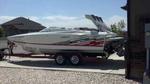

 08-14-2012 | 03:37 AM
#54
Registered
Joined: Oct 2006
Posts: 1,449
Likes: 0
From: Michigan
I think everyone has hit the nail on the head. It will take lots of money to get a 2004 25 OL to run 90. It is not just the engine but all the other "stuff" to make it reliable and safe at 90 and even then 90 is a stretch. I fhave spent an unknown dollar amount on mine to get it to go fast...<$30K on modifications and still no where close to the 90 mark. If you want a 90 MPH boat, buy one rather than make one. I had an interest at one time in a 288 Sunsation, it has a stepped hull and with my power it would easily be in the mid 80 range...get the HP to 700+ and 90 is obtainable.
Good Luck!
Good Luck!
08-14-2012 | 07:52 AM
#55
Thread Starter
Registered
Joined: Aug 2012
Posts: 48
Likes: 0
From: Hollandale, Mississippi
Man this is some good stuff... Thanks for the in depth discussion there N2OMichael and everyone elses input and advice as well... Some people talk about safety on these BAJA's at high speeds.. I know when you get up in the HP you need to change drives out and upgrade stirring.. I have been around out boards for 20 years so this is all new to me and i want to think everyone for the patience and understanding with me.. I have owned Allison boats with big HP and drag motors on them for the Past 20 years... Driving them is tricky... At certain speeds the boat will get up on pad and if you are not familiar with them then you will be banging the boat from side to side.. My question is does the BAJA boat have a pad that it rides on as well when you get it to higher speeds... I have watched some videos on you tube and seen a few people banging them from side to side.. It could have been cause they were driving and come up on some waves and stayed in the throttle..im sure it is much easier to control the Baja in that situation seeing as how it is much bigger and weighs 3000 pounds more than an Allison.. Im sure it needs to be respected just the same tho... Any input here again is greatly appreciated.. Thanks
08-14-2012 | 10:05 AM
#57
Thread Starter
Registered
Joined: Aug 2012
Posts: 48
Likes: 0
From: Hollandale, Mississippi
Can someone explain this to me!!!! Fountain and Baja boats are very similar to me.. For example both boats are similar in weight and looks but why are the Fountain boats so much faster than the baja boats with the same HP....
08-14-2012 | 10:58 AM
#58
Registered
Joined: Dec 2008
Posts: 362
Likes: 0
From: Fishers, IN
I am the one that used to own the 272 referred to earlier. I saw you replied to the thread the guy I sold it to. He just sold it to another person that is in Florida. I have read your entire thread and really think you need to decide how important going 90 mph is to you. The boats you have mentioned were not designed to go that fast and trying to make them that fast is a very frustrating and very very expensive thing to try. Don't listen to anyone that says to go x mph faster then it will cost x dollars. Before you buy anything be realistic so you don't buy something and think if I do this then it will go this mph. You are only setting yourself up for disappointment and later wishing you had the money back that you spent.
08-14-2012 | 11:53 AM
#59
Registered

Joined: Jul 2007
Posts: 93
Likes: 0
From: Peru, ny
I agree If your looking for a 90mph boat buy a cat or a stepped hull with big power, You will spend tons of money and TIME on the fracking thing to a point where you will wish you never started messing with it!! My buddys 32 sunsation SSR runs low 80s with 496ho's, get one with 700's your in the 90's, only put ya back about 250K..lol If your going to get the outlaw and need more power drop a 540 built by SHOOTER, the engines are very reliable and he can tweak them to your HP needs, good luck and get that checkbook out!
08-14-2012 | 01:27 PM
#60
Registered
Joined: Jul 2006
Posts: 2,034
Likes: 1
From: Oshawa, Ontario, Canada
Baja's straight hull and low X dimension make them easier and more predictable to drive, especially for newer boaters.
I certainly dont profess to tell ANYONE what is best for them, OR how to spend there money. But...
I would consider 2 choices:
1] Buy a stock, reliable 496HO Outlaw, it wont run 90mph, but, it WILL be quick enough to be fun, reliable, and you will enjoy it without going broke, or working on it every weekend.
2] If going 90MPH is an absolute MUST, then buy a cat, its the cheapest way to go fast, you can find outboard or sterndrive powered cats that will easily run 90MPH+ with stock, reliable power without spending Huge money, your 70K budget "should" put you into a nice Spectre Cat or similiar
The only drawback to a Cat, especially the smaller ones is the lack of cuddy space.
Just my thoughts
Michael

