


Distributer advance
 05-28-2022 | 12:01 PM
#31
Thread Starter
Registered
Joined: May 2022
Posts: 258
Likes: 90
From: Croatia

Heres a few words of experience for what your doing: thats a speedmaster distributor they sell for under 100$, IDC about the marine rated or not BUT I will say the internal module they use is a very cheap, Chinese one and if it came with its own pce coil, its garbage too. So, if you choose to run it, Id swap the module in it for a accel or dui version. Id also loctite the screws that hold rotor on . Now lets talk about the drive gear, if its the pce/speedmaster its a weird shiny bluish black and will wear fast and scallop your cam fairly quick, get rid of it and use a melonited or phosphate coated, whatever gear that matches you cam, even if cam has a iron gear.
As far as timing/timing advance, that "stock" style large cap distributor will allow about 24 degrees of advance so keep that in mind wherever you set the base, Smitty
As far as timing/timing advance, that "stock" style large cap distributor will allow about 24 degrees of advance so keep that in mind wherever you set the base, Smitty

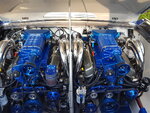

 05-28-2022 | 02:14 PM
#33
Thread Starter
Registered
Joined: May 2022
Posts: 258
Likes: 90
From: Croatia
05-28-2022 | 11:24 PM
#34

Gold Member


Joined: Jun 2006
Posts: 5,122
Likes: 967
From: Seaford, VA
These guys are all much smarter than me and I’m not sure what your budget is, but The best thing I ever did was lock my mechanical timing on my Marine MSD distributor and install the CD-1 ignition linked below to manage timing.
CD-1? Ignition System - Marine Racing Unit | Daytona Sensors?
you can build your own timing curves, have timing driven anti-stall features, etc…
And since there are some underlying tones in this thread of how awesome America is - I’ll reiterate, on the eve of Memorial Day, that America rocks and the clowns running the country aren’t indicative of most of America!!
keep reaching out - we’re here to help
CD-1? Ignition System - Marine Racing Unit | Daytona Sensors?
you can build your own timing curves, have timing driven anti-stall features, etc…
And since there are some underlying tones in this thread of how awesome America is - I’ll reiterate, on the eve of Memorial Day, that America rocks and the clowns running the country aren’t indicative of most of America!!
keep reaching out - we’re here to help
05-29-2022 | 12:42 PM
#35

Platinum Member


Joined: Sep 2001
Posts: 5,769
Likes: 151
From: tn
I skipped thru some if the posts.
1) your distributor will function fine for your boat, but you do not need to hook up anything to the vacuum advance. It is for "light load" cruising in an automobile. Picture a car going up a long fairly steep hill. At 60 mph the engine will be working pretty hard, and ignition timing should be in the 35 degree range. Now picture same car, same 60 mph, but on flat roads. The engine only needs to put out a fraction of its previous power, but is spinning the same speed. In cases like this, the fuel curve usually leans out for fuel economy, which is lazier to ignite. In these cases, in order to bring cylinder pressure up and improve fuel economy, additional ignition advance I'd useful. Up to 55 degrees of total advance is common. But under load, the engine would "ping" itself to death at 55 degrees timing.
Your boat ALWAYS is driving up the hill. It is NEVER comparable to the car on flat roads. So the vacuum advance is totally unnecessary on a boat distributor.
2) your automotive distributor is not "spark shielded" and is an explosion hazard in an enclosed marine engine compartment. Thats why there are different "car" and "marine" starters, alternators, distributors. Also marine fuel pumps have the diaphragm vent plumbed to the carb body, and marine carbs have shrouded vents and float bowl j tubes to prevent "vapor siphon".
3) unless you are running a lot of cam, you don't want to lock your mechanical advance. You want your initial to be somewhere in the 10 to 16 degree range. And you NA total would be in the in-36 range. But with boost, you have a thousand variables that might dictate a lower max advance. The ONLY way to know what that is would be to first tune your engine at 30 degrees. Get carb fueling. Etc all set to a good baseline. Use whatever your "worst case" fuel will be. If your boating area has 89 and 91 octane available. Then you need to decide whether you are gonna run 81 always or whether you're gonna run 89 sometimes. Pick one. Start making pulls on fresh plugs and increase timing 1 degree each time and reading the plug after a hard pull. When you start seeing slight speckling on the white center electrode ceramic, you've gone too far. When you stop seeing a speed/rpm increase with additional timing you've gone too far. If you detect any audible pinging at high rpm you've gone too far.
if you can get to 34 degrees without evidence listed above, Stop there.
4) measure the diameter of your balancer. Buy a $10 Moroso timing tape fir that size (a sheet usually comes with several tapes fir common sizes). In order to be accurate, you'll need to use a piston stop to locate TDC on #1 cylinder. Adjust the stop so you get pretty close to TDC from one direction, go to the stop - scribe a line on the balancer. Turn backwards until you hit the stop again. Scribe another line. Your true TDC us exactly between the two scribed lines. Do not trust the factory marks. You SHOULD end up pretty close to the factory mark but now you will be truly accurate. Install the tape with the zero right on too if your new TDC mark. Make sure you clean the balancer first. And make sure you install it with the numbers going the correct direction. It won't be very helpful if your BTDC direction is reversed.
5) if you have a boost gauge. You CAN use lower octane fuel in pinch as long as you watch the boost and stay 2 pounds ir so under your baseline.
1) your distributor will function fine for your boat, but you do not need to hook up anything to the vacuum advance. It is for "light load" cruising in an automobile. Picture a car going up a long fairly steep hill. At 60 mph the engine will be working pretty hard, and ignition timing should be in the 35 degree range. Now picture same car, same 60 mph, but on flat roads. The engine only needs to put out a fraction of its previous power, but is spinning the same speed. In cases like this, the fuel curve usually leans out for fuel economy, which is lazier to ignite. In these cases, in order to bring cylinder pressure up and improve fuel economy, additional ignition advance I'd useful. Up to 55 degrees of total advance is common. But under load, the engine would "ping" itself to death at 55 degrees timing.
Your boat ALWAYS is driving up the hill. It is NEVER comparable to the car on flat roads. So the vacuum advance is totally unnecessary on a boat distributor.
2) your automotive distributor is not "spark shielded" and is an explosion hazard in an enclosed marine engine compartment. Thats why there are different "car" and "marine" starters, alternators, distributors. Also marine fuel pumps have the diaphragm vent plumbed to the carb body, and marine carbs have shrouded vents and float bowl j tubes to prevent "vapor siphon".
3) unless you are running a lot of cam, you don't want to lock your mechanical advance. You want your initial to be somewhere in the 10 to 16 degree range. And you NA total would be in the in-36 range. But with boost, you have a thousand variables that might dictate a lower max advance. The ONLY way to know what that is would be to first tune your engine at 30 degrees. Get carb fueling. Etc all set to a good baseline. Use whatever your "worst case" fuel will be. If your boating area has 89 and 91 octane available. Then you need to decide whether you are gonna run 81 always or whether you're gonna run 89 sometimes. Pick one. Start making pulls on fresh plugs and increase timing 1 degree each time and reading the plug after a hard pull. When you start seeing slight speckling on the white center electrode ceramic, you've gone too far. When you stop seeing a speed/rpm increase with additional timing you've gone too far. If you detect any audible pinging at high rpm you've gone too far.
if you can get to 34 degrees without evidence listed above, Stop there.
4) measure the diameter of your balancer. Buy a $10 Moroso timing tape fir that size (a sheet usually comes with several tapes fir common sizes). In order to be accurate, you'll need to use a piston stop to locate TDC on #1 cylinder. Adjust the stop so you get pretty close to TDC from one direction, go to the stop - scribe a line on the balancer. Turn backwards until you hit the stop again. Scribe another line. Your true TDC us exactly between the two scribed lines. Do not trust the factory marks. You SHOULD end up pretty close to the factory mark but now you will be truly accurate. Install the tape with the zero right on too if your new TDC mark. Make sure you clean the balancer first. And make sure you install it with the numbers going the correct direction. It won't be very helpful if your BTDC direction is reversed.
5) if you have a boost gauge. You CAN use lower octane fuel in pinch as long as you watch the boost and stay 2 pounds ir so under your baseline.
05-29-2022 | 01:03 PM
#36
Thread Starter
Registered
Joined: May 2022
Posts: 258
Likes: 90
From: Croatia
I skipped thru some if the posts.
1) your distributor will function fine for your boat, but you do not need to hook up anything to the vacuum advance. It is for "light load" cruising in an automobile. Picture a car going up a long fairly steep hill. At 60 mph the engine will be working pretty hard, and ignition timing should be in the 35 degree range. Now picture same car, same 60 mph, but on flat roads. The engine only needs to put out a fraction of its previous power, but is spinning the same speed. In cases like this, the fuel curve usually leans out for fuel economy, which is lazier to ignite. In these cases, in order to bring cylinder pressure up and improve fuel economy, additional ignition advance I'd useful. Up to 55 degrees of total advance is common. But under load, the engine would "ping" itself to death at 55 degrees timing.
Your boat ALWAYS is driving up the hill. It is NEVER comparable to the car on flat roads. So the vacuum advance is totally unnecessary on a boat distributor.
2) your automotive distributor is not "spark shielded" and is an explosion hazard in an enclosed marine engine compartment. Thats why there are different "car" and "marine" starters, alternators, distributors. Also marine fuel pumps have the diaphragm vent plumbed to the carb body, and marine carbs have shrouded vents and float bowl j tubes to prevent "vapor siphon".
3) unless you are running a lot of cam, you don't want to lock your mechanical advance. You want your initial to be somewhere in the 10 to 16 degree range. And you NA total would be in the in-36 range. But with boost, you have a thousand variables that might dictate a lower max advance. The ONLY way to know what that is would be to first tune your engine at 30 degrees. Get carb fueling. Etc all set to a good baseline. Use whatever your "worst case" fuel will be. If your boating area has 89 and 91 octane available. Then you need to decide whether you are gonna run 81 always or whether you're gonna run 89 sometimes. Pick one. Start making pulls on fresh plugs and increase timing 1 degree each time and reading the plug after a hard pull. When you start seeing slight speckling on the white center electrode ceramic, you've gone too far. When you stop seeing a speed/rpm increase with additional timing you've gone too far. If you detect any audible pinging at high rpm you've gone too far.
if you can get to 34 degrees without evidence listed above, Stop there.
4) measure the diameter of your balancer. Buy a $10 Moroso timing tape fir that size (a sheet usually comes with several tapes fir common sizes). In order to be accurate, you'll need to use a piston stop to locate TDC on #1 cylinder. Adjust the stop so you get pretty close to TDC from one direction, go to the stop - scribe a line on the balancer. Turn backwards until you hit the stop again. Scribe another line. Your true TDC us exactly between the two scribed lines. Do not trust the factory marks. You SHOULD end up pretty close to the factory mark but now you will be truly accurate. Install the tape with the zero right on too if your new TDC mark. Make sure you clean the balancer first. And make sure you install it with the numbers going the correct direction. It won't be very helpful if your BTDC direction is reversed.
5) if you have a boost gauge. You CAN use lower octane fuel in pinch as long as you watch the boost and stay 2 pounds ir so under your baseline.
1) your distributor will function fine for your boat, but you do not need to hook up anything to the vacuum advance. It is for "light load" cruising in an automobile. Picture a car going up a long fairly steep hill. At 60 mph the engine will be working pretty hard, and ignition timing should be in the 35 degree range. Now picture same car, same 60 mph, but on flat roads. The engine only needs to put out a fraction of its previous power, but is spinning the same speed. In cases like this, the fuel curve usually leans out for fuel economy, which is lazier to ignite. In these cases, in order to bring cylinder pressure up and improve fuel economy, additional ignition advance I'd useful. Up to 55 degrees of total advance is common. But under load, the engine would "ping" itself to death at 55 degrees timing.
Your boat ALWAYS is driving up the hill. It is NEVER comparable to the car on flat roads. So the vacuum advance is totally unnecessary on a boat distributor.
2) your automotive distributor is not "spark shielded" and is an explosion hazard in an enclosed marine engine compartment. Thats why there are different "car" and "marine" starters, alternators, distributors. Also marine fuel pumps have the diaphragm vent plumbed to the carb body, and marine carbs have shrouded vents and float bowl j tubes to prevent "vapor siphon".
3) unless you are running a lot of cam, you don't want to lock your mechanical advance. You want your initial to be somewhere in the 10 to 16 degree range. And you NA total would be in the in-36 range. But with boost, you have a thousand variables that might dictate a lower max advance. The ONLY way to know what that is would be to first tune your engine at 30 degrees. Get carb fueling. Etc all set to a good baseline. Use whatever your "worst case" fuel will be. If your boating area has 89 and 91 octane available. Then you need to decide whether you are gonna run 81 always or whether you're gonna run 89 sometimes. Pick one. Start making pulls on fresh plugs and increase timing 1 degree each time and reading the plug after a hard pull. When you start seeing slight speckling on the white center electrode ceramic, you've gone too far. When you stop seeing a speed/rpm increase with additional timing you've gone too far. If you detect any audible pinging at high rpm you've gone too far.
if you can get to 34 degrees without evidence listed above, Stop there.
4) measure the diameter of your balancer. Buy a $10 Moroso timing tape fir that size (a sheet usually comes with several tapes fir common sizes). In order to be accurate, you'll need to use a piston stop to locate TDC on #1 cylinder. Adjust the stop so you get pretty close to TDC from one direction, go to the stop - scribe a line on the balancer. Turn backwards until you hit the stop again. Scribe another line. Your true TDC us exactly between the two scribed lines. Do not trust the factory marks. You SHOULD end up pretty close to the factory mark but now you will be truly accurate. Install the tape with the zero right on too if your new TDC mark. Make sure you clean the balancer first. And make sure you install it with the numbers going the correct direction. It won't be very helpful if your BTDC direction is reversed.
5) if you have a boost gauge. You CAN use lower octane fuel in pinch as long as you watch the boost and stay 2 pounds ir so under your baseline.
 ...im wery thankfull for this precize instruktions and time it took to write them
05-31-2022 | 09:34 AM
...im wery thankfull for this precize instruktions and time it took to write them
05-31-2022 | 09:34 AM
#37
Thread Starter
Registered
Joined: May 2022
Posts: 258
Likes: 90
From: Croatia
I skipped thru some if the posts.
1) your distributor will function fine for your boat, but you do not need to hook up anything to the vacuum advance. It is for "light load" cruising in an automobile. Picture a car going up a long fairly steep hill. At 60 mph the engine will be working pretty hard, and ignition timing should be in the 35 degree range. Now picture same car, same 60 mph, but on flat roads. The engine only needs to put out a fraction of its previous power, but is spinning the same speed. In cases like this, the fuel curve usually leans out for fuel economy, which is lazier to ignite. In these cases, in order to bring cylinder pressure up and improve fuel economy, additional ignition advance I'd useful. Up to 55 degrees of total advance is common. But under load, the engine would "ping" itself to death at 55 degrees timing.
Your boat ALWAYS is driving up the hill. It is NEVER comparable to the car on flat roads. So the vacuum advance is totally unnecessary on a boat distributor.
2) your automotive distributor is not "spark shielded" and is an explosion hazard in an enclosed marine engine compartment. Thats why there are different "car" and "marine" starters, alternators, distributors. Also marine fuel pumps have the diaphragm vent plumbed to the carb body, and marine carbs have shrouded vents and float bowl j tubes to prevent "vapor siphon".
3) unless you are running a lot of cam, you don't want to lock your mechanical advance. You want your initial to be somewhere in the 10 to 16 degree range. And you NA total would be in the in-36 range. But with boost, you have a thousand variables that might dictate a lower max advance. The ONLY way to know what that is would be to first tune your engine at 30 degrees. Get carb fueling. Etc all set to a good baseline. Use whatever your "worst case" fuel will be. If your boating area has 89 and 91 octane available. Then you need to decide whether you are gonna run 81 always or whether you're gonna run 89 sometimes. Pick one. Start making pulls on fresh plugs and increase timing 1 degree each time and reading the plug after a hard pull. When you start seeing slight speckling on the white center electrode ceramic, you've gone too far. When you stop seeing a speed/rpm increase with additional timing you've gone too far. If you detect any audible pinging at high rpm you've gone too far.
if you can get to 34 degrees without evidence listed above, Stop there.
4) measure the diameter of your balancer. Buy a $10 Moroso timing tape fir that size (a sheet usually comes with several tapes fir common sizes). In order to be accurate, you'll need to use a piston stop to locate TDC on #1 cylinder. Adjust the stop so you get pretty close to TDC from one direction, go to the stop - scribe a line on the balancer. Turn backwards until you hit the stop again. Scribe another line. Your true TDC us exactly between the two scribed lines. Do not trust the factory marks. You SHOULD end up pretty close to the factory mark but now you will be truly accurate. Install the tape with the zero right on too if your new TDC mark. Make sure you clean the balancer first. And make sure you install it with the numbers going the correct direction. It won't be very helpful if your BTDC direction is reversed.
5) if you have a boost gauge. You CAN use lower octane fuel in pinch as long as you watch the boost and stay 2 pounds ir so under your baseline.
1) your distributor will function fine for your boat, but you do not need to hook up anything to the vacuum advance. It is for "light load" cruising in an automobile. Picture a car going up a long fairly steep hill. At 60 mph the engine will be working pretty hard, and ignition timing should be in the 35 degree range. Now picture same car, same 60 mph, but on flat roads. The engine only needs to put out a fraction of its previous power, but is spinning the same speed. In cases like this, the fuel curve usually leans out for fuel economy, which is lazier to ignite. In these cases, in order to bring cylinder pressure up and improve fuel economy, additional ignition advance I'd useful. Up to 55 degrees of total advance is common. But under load, the engine would "ping" itself to death at 55 degrees timing.
Your boat ALWAYS is driving up the hill. It is NEVER comparable to the car on flat roads. So the vacuum advance is totally unnecessary on a boat distributor.
2) your automotive distributor is not "spark shielded" and is an explosion hazard in an enclosed marine engine compartment. Thats why there are different "car" and "marine" starters, alternators, distributors. Also marine fuel pumps have the diaphragm vent plumbed to the carb body, and marine carbs have shrouded vents and float bowl j tubes to prevent "vapor siphon".
3) unless you are running a lot of cam, you don't want to lock your mechanical advance. You want your initial to be somewhere in the 10 to 16 degree range. And you NA total would be in the in-36 range. But with boost, you have a thousand variables that might dictate a lower max advance. The ONLY way to know what that is would be to first tune your engine at 30 degrees. Get carb fueling. Etc all set to a good baseline. Use whatever your "worst case" fuel will be. If your boating area has 89 and 91 octane available. Then you need to decide whether you are gonna run 81 always or whether you're gonna run 89 sometimes. Pick one. Start making pulls on fresh plugs and increase timing 1 degree each time and reading the plug after a hard pull. When you start seeing slight speckling on the white center electrode ceramic, you've gone too far. When you stop seeing a speed/rpm increase with additional timing you've gone too far. If you detect any audible pinging at high rpm you've gone too far.
if you can get to 34 degrees without evidence listed above, Stop there.
4) measure the diameter of your balancer. Buy a $10 Moroso timing tape fir that size (a sheet usually comes with several tapes fir common sizes). In order to be accurate, you'll need to use a piston stop to locate TDC on #1 cylinder. Adjust the stop so you get pretty close to TDC from one direction, go to the stop - scribe a line on the balancer. Turn backwards until you hit the stop again. Scribe another line. Your true TDC us exactly between the two scribed lines. Do not trust the factory marks. You SHOULD end up pretty close to the factory mark but now you will be truly accurate. Install the tape with the zero right on too if your new TDC mark. Make sure you clean the balancer first. And make sure you install it with the numbers going the correct direction. It won't be very helpful if your BTDC direction is reversed.
5) if you have a boost gauge. You CAN use lower octane fuel in pinch as long as you watch the boost and stay 2 pounds ir so under your baseline.
05-31-2022 | 09:45 AM
#38
Thread Starter
Registered
Joined: May 2022
Posts: 258
Likes: 90
From: Croatia
05-31-2022 | 09:46 AM
#39
Thread Starter
Registered
Joined: May 2022
Posts: 258
Likes: 90
From: Croatia
You don't "need" electronic advance. But vacuum advance is not going to be the right way to get mechanical advance.
You can use weights to gain timing advance in a purely mechanical distributor. Higher rpm, weights move outwards, timing advances. Vacuum advance is a variation of mechanical advance intended for automobile use, where times of high manifold vacuum / low load (highway driving) can see increased fuel economy with changes in timing. Those conditions don't really exist in a boat.
You can use weights to gain timing advance in a purely mechanical distributor. Higher rpm, weights move outwards, timing advances. Vacuum advance is a variation of mechanical advance intended for automobile use, where times of high manifold vacuum / low load (highway driving) can see increased fuel economy with changes in timing. Those conditions don't really exist in a boat.
05-31-2022 | 09:57 AM
#40
Thread Starter
Registered
Joined: May 2022
Posts: 258
Likes: 90
From: Croatia


