


Help with my 383 stroker build
 08-08-2019 | 05:15 AM
#11
Registered


Joined: Aug 2019
Posts: 1,249
Likes: 420
From: BC

Heads bar vs complete. AFR, looks like only a $200 difference for springs, valves, retainers etc, for both heads.
What parts are they putting in their heads? Must be pretty cheap?
I put a pair of RHS Torker Iron heads bare, $250 ea Cad. They also offered a 76cc option in Iron. They quit making them, but have a few Aluminum options @72cc. About $495 US Bare, each.
I like the idea of piecing together my own valvetrain components, then you.can solve the extra valve length issue you may have etc.
When I had my Eagle crank balanced, the machinist told me that it was really a soft metal. Just an FYI.
Your cam selection is really more about where you want the TQ curve to be in the RPM. More duration moves it to the right, and gives more HP at higher RPM.
The David Vizard Book; Max Performance Chevy Small Blocks on a budget.
Engine build #8 383.
475 HP @6000
460 ft lbs tq @ 4500.
280 Comp solid roller
9.7:1
Sportsman II Heads.
He said it made over 400 ft lbs at 1500 RPM.
Obviously, there are some Marine aspects difficult to replicate. Headers and exh extraction, higher compression, and the cam is a bit aggressive.
With great flowing heads like the AFR, the cam wouldn't need to be as big. But the best part of this example, is the neck breaking 1500 RPM tq that a marine engine needs. As mentioned, the Comp 270 cam would prob be a great choice.
If you build it right, you can get 400ft lbs tq @ 1500RPM.
David
What parts are they putting in their heads? Must be pretty cheap?
I put a pair of RHS Torker Iron heads bare, $250 ea Cad. They also offered a 76cc option in Iron. They quit making them, but have a few Aluminum options @72cc. About $495 US Bare, each.
I like the idea of piecing together my own valvetrain components, then you.can solve the extra valve length issue you may have etc.
When I had my Eagle crank balanced, the machinist told me that it was really a soft metal. Just an FYI.
Your cam selection is really more about where you want the TQ curve to be in the RPM. More duration moves it to the right, and gives more HP at higher RPM.
The David Vizard Book; Max Performance Chevy Small Blocks on a budget.
Engine build #8 383.
475 HP @6000
460 ft lbs tq @ 4500.
280 Comp solid roller
9.7:1
Sportsman II Heads.
He said it made over 400 ft lbs at 1500 RPM.
Obviously, there are some Marine aspects difficult to replicate. Headers and exh extraction, higher compression, and the cam is a bit aggressive.
With great flowing heads like the AFR, the cam wouldn't need to be as big. But the best part of this example, is the neck breaking 1500 RPM tq that a marine engine needs. As mentioned, the Comp 270 cam would prob be a great choice.
If you build it right, you can get 400ft lbs tq @ 1500RPM.
David
 08-08-2019 | 08:07 AM
#12

Platinum Member


Joined: Feb 2001
Posts: 4,303
Likes: 1,459
From: Virginia Beach
I tried duplicating this build with exception of Brodix IK200 heads and a hydraulic roller (Comp XR282HR) made close to 500 HP. The IK200 heads were run as delivered with their valves, springs, and hardware (CNC chamber and porting option). My Stinger 222 ran just a hair under 80 with that 385 through an Alpha. Was a fun little boat!
08-08-2019 | 09:33 AM
#13
Registered

Joined: Nov 2004
Posts: 14,154
Likes: 3,714
From: On A Dirt Floor
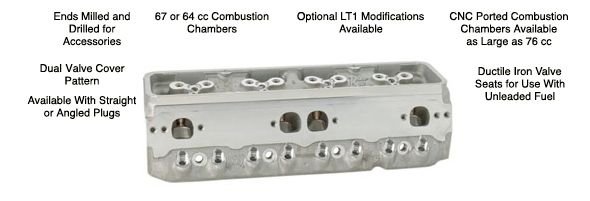
 08-08-2019 | 04:53 PM
#14
Registered
Joined: Aug 2019
Posts: 1,249
Likes: 420
From: BC
I've been toying with the LSX for a marine application, and am finding that there really isn't a lot of benefit. Certainly at the up to 500hp level, and dealing with a reliable Chevy Small block.
The 383 may be the perfect marine engine. Narrow bore, but big enough to un-shroud the valves. Fast burning chambers. Vs a BBC's larger bore area that may affect the total flame front time.
Interesting factor mechanically, there is a common held idea that longer strokes will give more tq. The reality is that for a given displacement, the energy put into the crank is the same, of it's a long vs. short stroke. The mechanical advantage you get with the extra long crank rod throw, is offset by the lower cylinder force due to less area on the piston, with a given PSI from combustion.
There are other factors though. Dwell time of the piston at TDC and BDC, and the overall piston speeds etc.
As for exhaust manifold options for a 383 that are low restriction, what is affordable?
The 383 may be the perfect marine engine. Narrow bore, but big enough to un-shroud the valves. Fast burning chambers. Vs a BBC's larger bore area that may affect the total flame front time.
Interesting factor mechanically, there is a common held idea that longer strokes will give more tq. The reality is that for a given displacement, the energy put into the crank is the same, of it's a long vs. short stroke. The mechanical advantage you get with the extra long crank rod throw, is offset by the lower cylinder force due to less area on the piston, with a given PSI from combustion.
There are other factors though. Dwell time of the piston at TDC and BDC, and the overall piston speeds etc.
As for exhaust manifold options for a 383 that are low restriction, what is affordable?
08-08-2019 | 07:14 PM
#15
Registered
Joined: Nov 2004
Posts: 14,154
Likes: 3,714
From: On A Dirt Floor
Affordable ? Depends what is called affordable, however, The GLM with longer inner pipes welded on (not an option from company, owner must have this done) have been on a handful of real fast SBC equipped small boats.
08-09-2019 | 07:19 PM
#16
Platinum Member
Joined: Feb 2001
Posts: 4,303
Likes: 1,459
From: Virginia Beach
I used the GLM manifolds (the runners are somewhat separate inside the casting) with an IMCO/Hardin riser with stainless pipes welded on to extend the pipes to the tips. Worked great/sounded great for what it was.
08-11-2019 | 09:03 AM
#17
Registered

Joined: Nov 2006
Posts: 1,313
Likes: 153
From: Tygart Lake, WV


