


Pressure test risers...
 06-22-2023 | 01:43 PM
#1
Thread Starter
Registered

Joined: Mar 2019
Posts: 1,022
Likes: 321
From: Perdido Key, Madison, NC
 Pressure test risers...
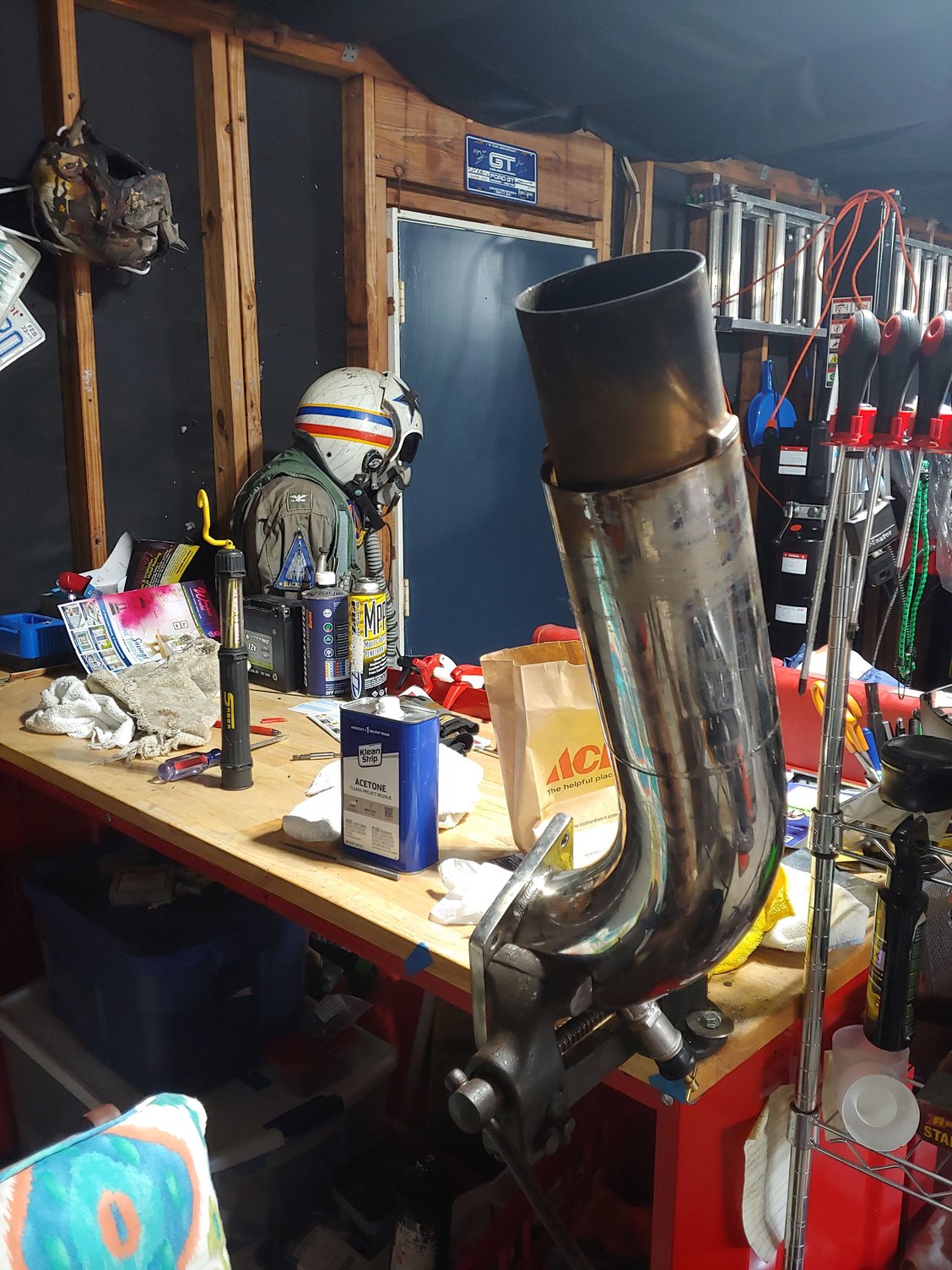
My understanding is that these (pictured) risers were pressure tested (years ago) and repaired. I MIGHT have raw water leaking into the oil/heads and want to test this component but have not found a shop that knows how to pressure test.
I have inverted the elbow and filled the outer sleeve with water (to see if it leaked into the inner pipe) but have found nothing yet (plus its is only under atmospheric pressure and room temperature)...any suggestions?

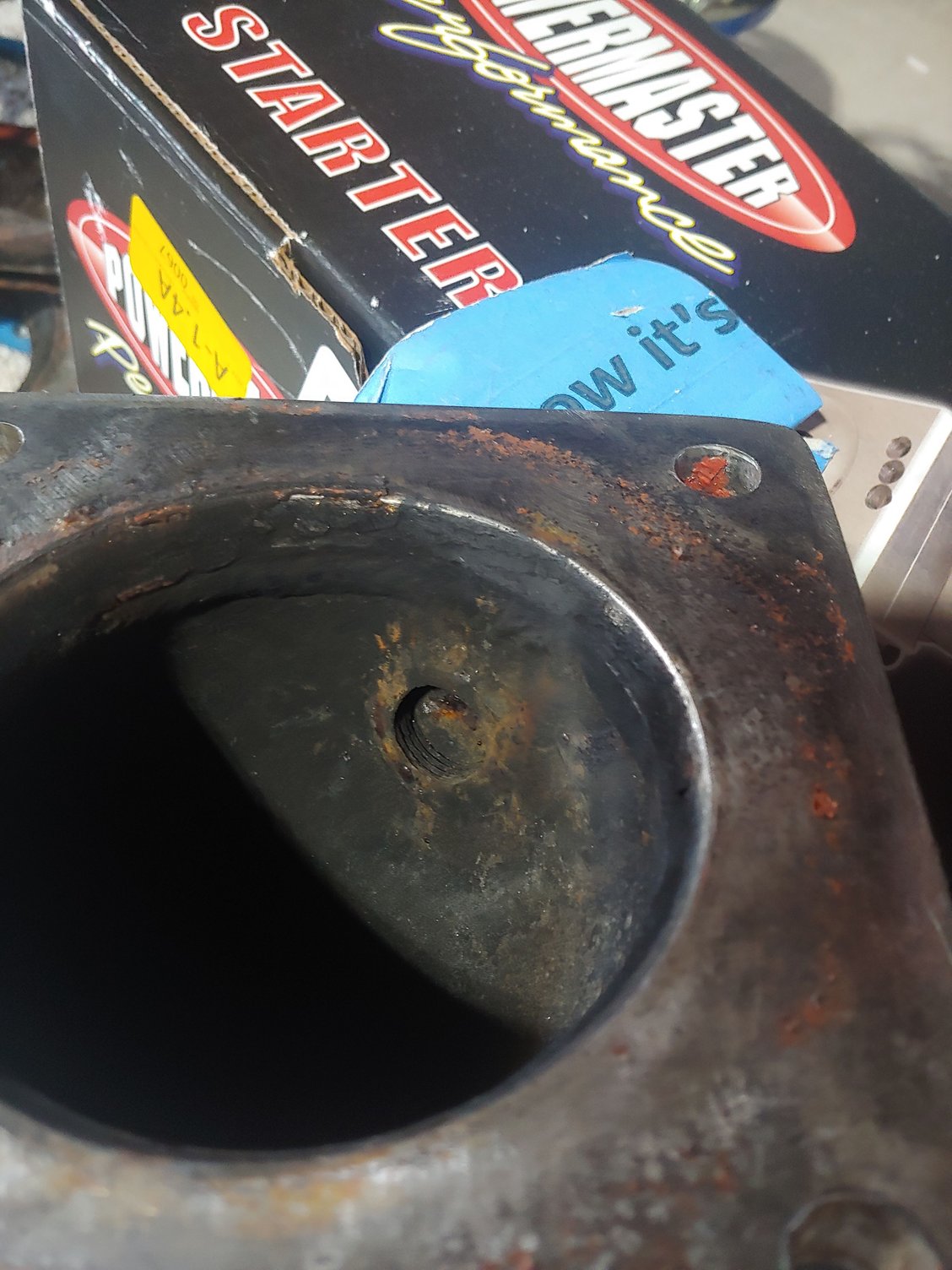
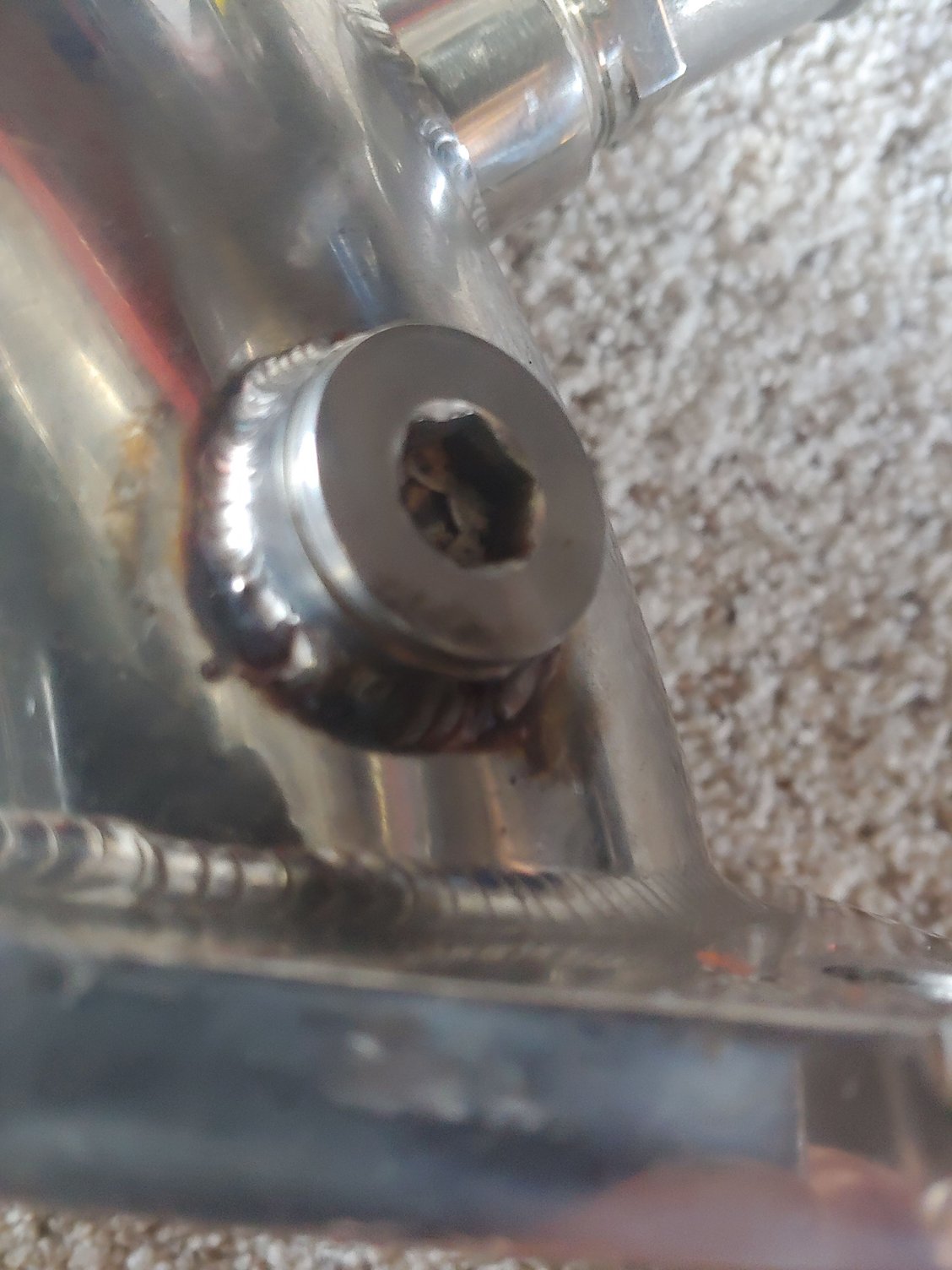
I have inverted the elbow and filled the outer sleeve with water (to see if it leaked into the inner pipe) but have found nothing yet (plus its is only under atmospheric pressure and room temperature)...any suggestions?
 06-22-2023 | 03:33 PM
#2

Platinum Member


Joined: Feb 2001
Posts: 4,303
Likes: 1,459
From: Virginia Beach
Make sure the riser is dry.
Plug the hose barb with a plug suitable for solvents, then stand the riser up on its end and fill the riser with laquer thinner. If there's a crack or pinhole, the solvent will make it through (you may have to watch it for a time).
The above is probably the easiest method without locating an industrial donut seal to seal off the two pipes at the tail end.
I thought you were going to replace the risers with the more aggressive height/drop risers from Hardin/CP Perf?
Plug the hose barb with a plug suitable for solvents, then stand the riser up on its end and fill the riser with laquer thinner. If there's a crack or pinhole, the solvent will make it through (you may have to watch it for a time).
The above is probably the easiest method without locating an industrial donut seal to seal off the two pipes at the tail end.
I thought you were going to replace the risers with the more aggressive height/drop risers from Hardin/CP Perf?
06-22-2023 | 03:37 PM
#3
Platinum Member
Joined: Feb 2001
Posts: 4,303
Likes: 1,459
From: Virginia Beach
06-22-2023 | 07:16 PM
#4
Thread Starter
Registered
Joined: Mar 2019
Posts: 1,022
Likes: 321
From: Perdido Key, Madison, NC
Make sure the riser is dry.
Plug the hose barb with a plug suitable for solvents, then stand the riser up on its end and fill the riser with laquer thinner. If there's a crack or pinhole, the solvent will make it through (you may have to watch it for a time).
The above is probably the easiest method without locating an industrial donut seal to seal off the two pipes at the tail end.
I thought you were going to replace the risers with the more aggressive height/drop risers from Hardin/CP Perf?
Plug the hose barb with a plug suitable for solvents, then stand the riser up on its end and fill the riser with laquer thinner. If there's a crack or pinhole, the solvent will make it through (you may have to watch it for a time).
The above is probably the easiest method without locating an industrial donut seal to seal off the two pipes at the tail end.
I thought you were going to replace the risers with the more aggressive height/drop risers from Hardin/CP Perf?
I am for sure going with some sort of more aggressive risers, BUT I want to determine (as best I can) what might have gone wrong. A previous owner had minor water intrusion from the same risers (that he had repaired) and that situation has manifested itself again...then I could resolve it (plus significant margin of safety for the current cams/performance) with a high rise.
However, if the water intruded from another source (oil cooler, end of exhaust reversion, too low idle rpms, too much moisture not burning off) I need to address those issues too (oil thermostat, bump idle, etc...).
I prefer not to go through this again. :-)
A bunch of triple/quad outboards around here are showing off...I need to get out there!
Last edited by F14A water jet; 06-22-2023 at 07:18 PM.
 06-23-2023 | 10:12 PM
#6

Offshoreonly Advertiser

Joined: Mar 2001
Posts: 2,518
Likes: 284
From: Pompano Beach FL, USA
We did this recently
All you need is a piece of exhaust hose, a fat o ring and some hose clamps.
O ring goes on inner pipe, hose goes over outer pipe and o ring, then tighten clamps.
Put 20 or so PSI air pressure in the water jacket and submerge the whole thing in water (or figure out how to fill the inner pipe) and look for bubbles/
All you need is a piece of exhaust hose, a fat o ring and some hose clamps.
O ring goes on inner pipe, hose goes over outer pipe and o ring, then tighten clamps.
Put 20 or so PSI air pressure in the water jacket and submerge the whole thing in water (or figure out how to fill the inner pipe) and look for bubbles/
__________________
Marc
www.mercruiserparts.com
www.go-fast.com
www.bammarine.com
www.cyborgtransmissions.com
It's not alive -www.BoatStuffExpress.com - temporarily retired
Marc
www.mercruiserparts.com
www.go-fast.com
www.bammarine.com
www.cyborgtransmissions.com
It's not alive -www.BoatStuffExpress.com - temporarily retired


