


Dash Panel Material
 05-14-2024 | 02:25 PM
#121
Thread Starter
VIP Member


Joined: Jun 2021
Posts: 3,533
Likes: 2,142
From: SW Ohio

Ryan,
Not that can readily be seen. I know what you're talking about, as I remember watching my dad swap them out on occasion on the blower motor we had in the boat I grew up on, but there's virtually no vantage point that gives a line of sight to the tops of the valve covers on this engine. Merc attached EVERYTHING to the valve covers, it would seem. Google yields no results for "mercury 496 PCV valve, which might lead you to believe there ain't none such. Since it's all congruent with the oil pan in some way (fill tube and under the valve cover), would it possibly be the elbow between the top of the oil fill tube and the vent line that leads off the side and hangs in front of the flame arrestor? It appears to be just a 90° thru hole, but I've never really looked at it all that close.
I'll climb back up there momentarily and have a closer, more deliberate look.
Thanks. Brad.
Not that can readily be seen. I know what you're talking about, as I remember watching my dad swap them out on occasion on the blower motor we had in the boat I grew up on, but there's virtually no vantage point that gives a line of sight to the tops of the valve covers on this engine. Merc attached EVERYTHING to the valve covers, it would seem. Google yields no results for "mercury 496 PCV valve, which might lead you to believe there ain't none such. Since it's all congruent with the oil pan in some way (fill tube and under the valve cover), would it possibly be the elbow between the top of the oil fill tube and the vent line that leads off the side and hangs in front of the flame arrestor? It appears to be just a 90° thru hole, but I've never really looked at it all that close.
I'll climb back up there momentarily and have a closer, more deliberate look.
Thanks. Brad.
 05-14-2024 | 03:19 PM
#122
Registered

Joined: Jun 2007
Posts: 7,330
Likes: 1,835
From: Merritt Island, FL
On the HP500EFI motors the PVC valve is in the intake Valley, covered by the intake. Not easy to see. Maybe number 4, I don't know the s/n number of yours but its a good site.
https://www.mercruiserparts.com/bam/...1936/15327/150
https://www.mercruiserparts.com/bam/...1936/15327/150
Ryan,
Not that can readily be seen. I know what you're talking about, as I remember watching my dad swap them out on occasion on the blower motor we had in the boat I grew up on, but there's virtually no vantage point that gives a line of sight to the tops of the valve covers on this engine. Merc attached EVERYTHING to the valve covers, it would seem. Google yields no results for "mercury 496 PCV valve, which might lead you to believe there ain't none such. Since it's all congruent with the oil pan in some way (fill tube and under the valve cover), would it possibly be the elbow between the top of the oil fill tube and the vent line that leads off the side and hangs in front of the flame arrestor? It appears to be just a 90° thru hole, but I've never really looked at it all that close.
I'll climb back up there momentarily and have a closer, more deliberate look.
Thanks. Brad.
Not that can readily be seen. I know what you're talking about, as I remember watching my dad swap them out on occasion on the blower motor we had in the boat I grew up on, but there's virtually no vantage point that gives a line of sight to the tops of the valve covers on this engine. Merc attached EVERYTHING to the valve covers, it would seem. Google yields no results for "mercury 496 PCV valve, which might lead you to believe there ain't none such. Since it's all congruent with the oil pan in some way (fill tube and under the valve cover), would it possibly be the elbow between the top of the oil fill tube and the vent line that leads off the side and hangs in front of the flame arrestor? It appears to be just a 90° thru hole, but I've never really looked at it all that close.
I'll climb back up there momentarily and have a closer, more deliberate look.
Thanks. Brad.
05-14-2024 | 03:26 PM
#123
Thread Starter
VIP Member
Joined: Jun 2021
Posts: 3,533
Likes: 2,142
From: SW Ohio
On the HP500EFI motors the PVC valve is in the intake Valley, covered by the intake. Not easy to see. Maybe number 4, I don't know the s/n number of yours but its a good site.
https://www.mercruiserparts.com/bam/...1936/15327/150
https://www.mercruiserparts.com/bam/...1936/15327/150
Yup. Been there many times. Great resource. But....
I can't imagine the ProCharger kit would have left a vacuum source in the intake, since it would presumably be at ~3lbs of positive pressure at WOT.
I would guess the only source for "always in vacuum" would be on the intake side of the ProCharger.
Right....? (Genuine questions)
Thanks. Brad.
05-14-2024 | 04:40 PM
#124
Thread Starter
VIP Member
Joined: Jun 2021
Posts: 3,533
Likes: 2,142
From: SW Ohio
 05-14-2024 | 04:57 PM
#126
Thread Starter
VIP Member
Joined: Jun 2021
Posts: 3,533
Likes: 2,142
From: SW Ohio
Ryan,
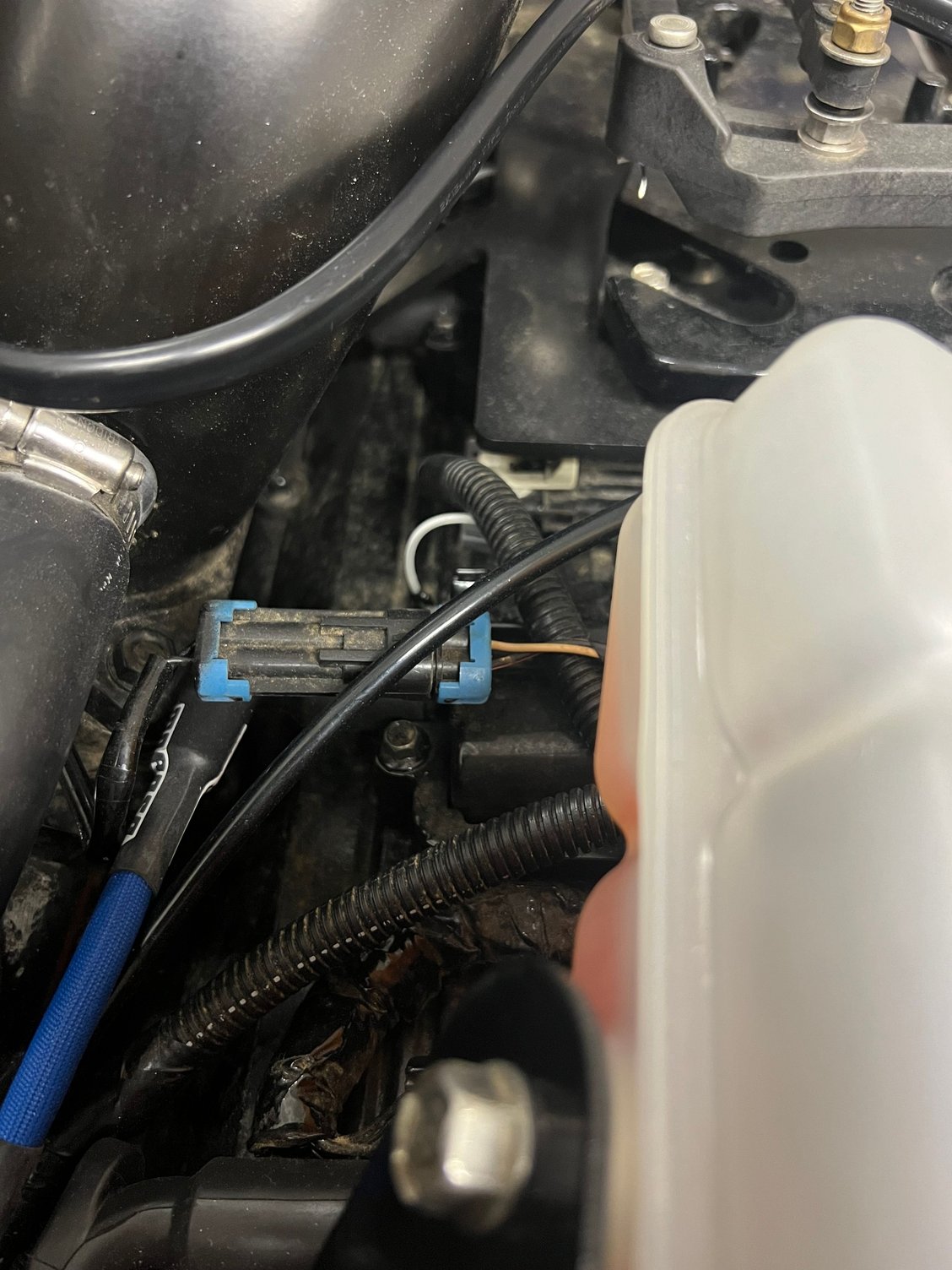
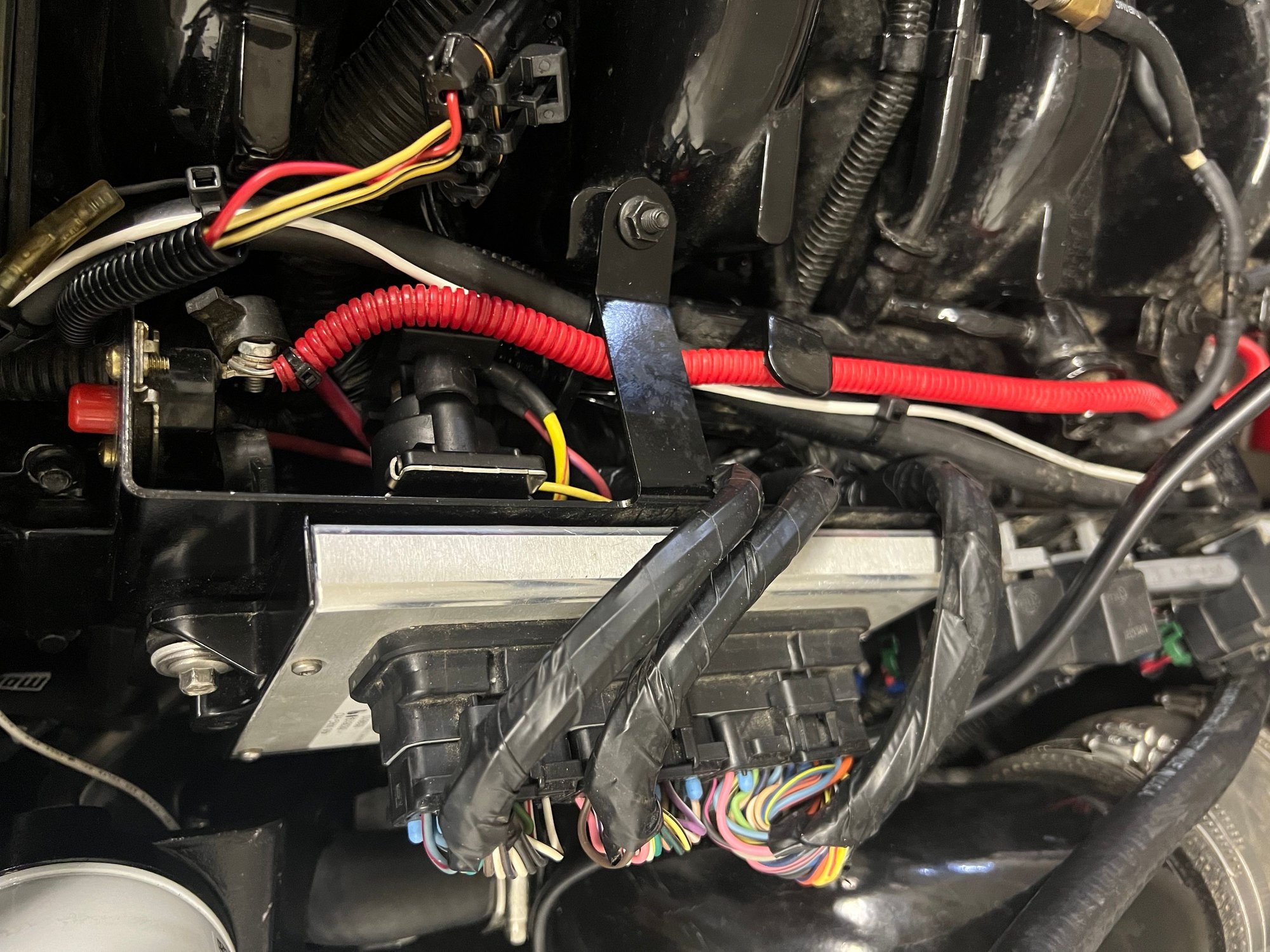
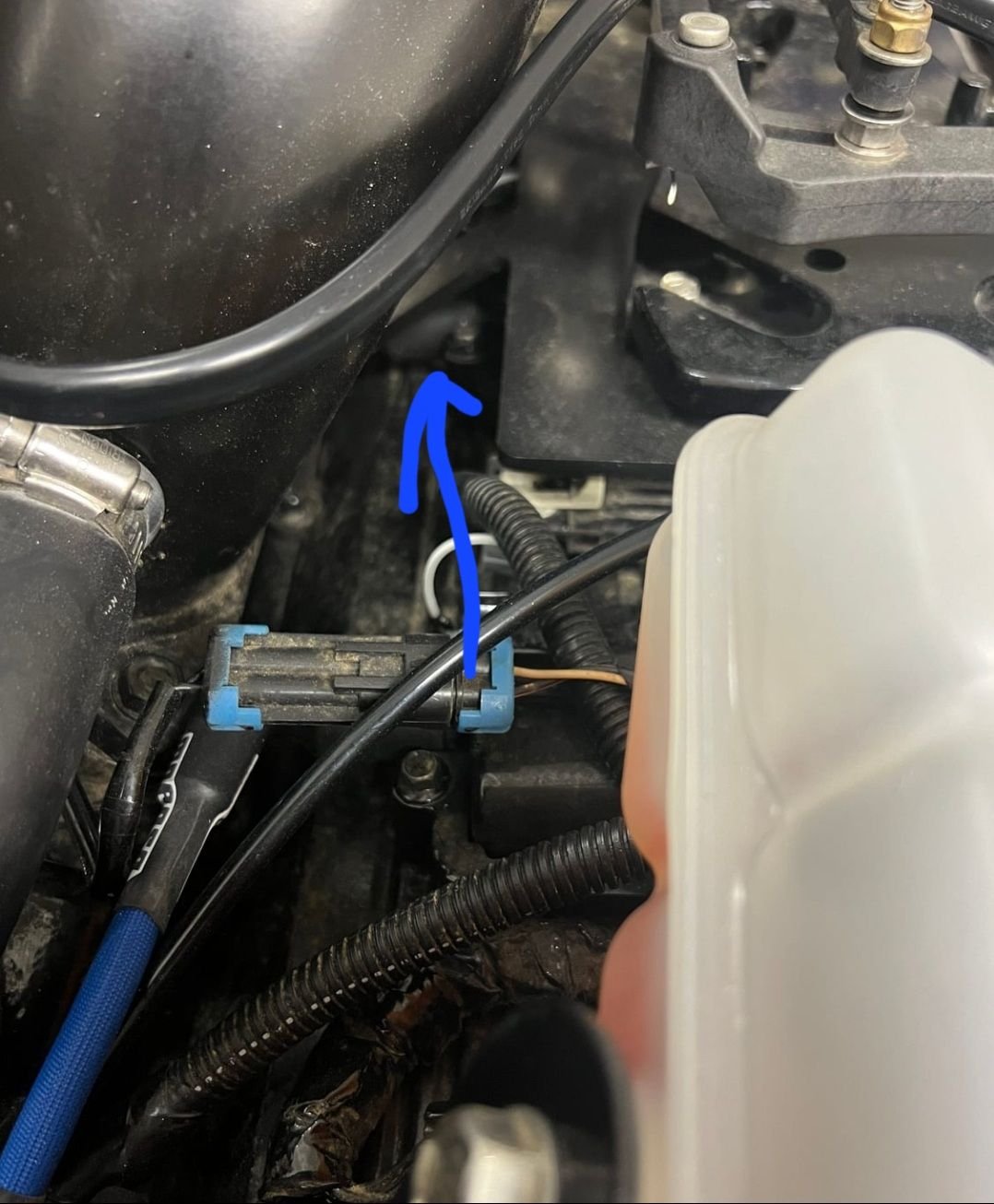
I tHiNk that's a spark plug wire, leading away from the coil pack that is mounted atop the valve cover, just like the one directly below the connecter with the blue endcaps.
I'll get a closer look and report back.
Is it safe to assume there really SHOULD be a PCV on here SOMEWHERE? And where would it draw vacuum from with this ProCharger configuration?
Thanks. Brad.
I tHiNk that's a spark plug wire, leading away from the coil pack that is mounted atop the valve cover, just like the one directly below the connecter with the blue endcaps.
I'll get a closer look and report back.
Is it safe to assume there really SHOULD be a PCV on here SOMEWHERE? And where would it draw vacuum from with this ProCharger configuration?
Thanks. Brad.
05-14-2024 | 05:04 PM
#127
Registered

Joined: Dec 2016
Posts: 587
Likes: 366
From: Portland OR
I don't think you're gonna find a PCV valve on it.
Here's some reference material I found:
The 496 engine has a built in orfice in the bottom of the intake manifold that is .080" size and when the engine is running it keeps a a slight negative pressure in the crankcase. There is a fresh air into the crankcase that pulls fresh air into the throttlebody in the throat and down an intake manifld passage into the bottom of the oil fill tube. If you take your oil fill tube cap off at idle is there a slight vacumn? There should be. Also see what the oil fill does with the cap off at 4K rpms. If your crankcase pressure (due to blowby, etc.)is high this pressure can force oil vapor back into the intake manifold and some vapor back out the flame arrestor on the throttlebody which you could smell if its doing that. Also with your motor off and flame arrestor off, open the throttle full open and look down inside the manifold intake opening and see if the inside looks moist or wet with oil, this can be a good indicator of what is possibly happening. If you see that I would suggest a compression test with a leakdown test. Stock 496's should have about 150-160 psi cranking compression in each cylinder ona cold engine.
Here's some reference material I found:
The 496 engine has a built in orfice in the bottom of the intake manifold that is .080" size and when the engine is running it keeps a a slight negative pressure in the crankcase. There is a fresh air into the crankcase that pulls fresh air into the throttlebody in the throat and down an intake manifld passage into the bottom of the oil fill tube. If you take your oil fill tube cap off at idle is there a slight vacumn? There should be. Also see what the oil fill does with the cap off at 4K rpms. If your crankcase pressure (due to blowby, etc.)is high this pressure can force oil vapor back into the intake manifold and some vapor back out the flame arrestor on the throttlebody which you could smell if its doing that. Also with your motor off and flame arrestor off, open the throttle full open and look down inside the manifold intake opening and see if the inside looks moist or wet with oil, this can be a good indicator of what is possibly happening. If you see that I would suggest a compression test with a leakdown test. Stock 496's should have about 150-160 psi cranking compression in each cylinder ona cold engine.
Last edited by 87MirageIntruder; 05-14-2024 at 05:08 PM.
 05-14-2024 | 05:24 PM
#128
Thread Starter
VIP Member
Joined: Jun 2021
Posts: 3,533
Likes: 2,142
From: SW Ohio
I don't think you're gonna find a PCV valve on it.
Here's some reference material I found:
The 496 engine has a built in orfice in the bottom of the intake manifold that is .080" size and when the engine is running it keeps a a slight negative pressure in the crankcase. There is a fresh air into the crankcase that pulls fresh air into the throttlebody in the throat and down an intake manifld passage into the bottom of the oil fill tube. If you take your oil fill tube cap off at idle is there a slight vacumn? There should be. Also see what the oil fill does with the cap off at 4K rpms. If your crankcase pressure (due to blowby, etc.)is high this pressure can force oil vapor back into the intake manifold and some vapor back out the flame arrestor on the throttlebody which you could smell if its doing that. Also with your motor off and flame arrestor off, open the throttle full open and look down inside the manifold intake opening and see if the inside looks moist or wet with oil, this can be a good indicator of what is possibly happening. If you see that I would suggest a compression test with a leakdown test. Stock 496's should have about 150-160 psi cranking compression in each cylinder ona cold engine.
Here's some reference material I found:
The 496 engine has a built in orfice in the bottom of the intake manifold that is .080" size and when the engine is running it keeps a a slight negative pressure in the crankcase. There is a fresh air into the crankcase that pulls fresh air into the throttlebody in the throat and down an intake manifld passage into the bottom of the oil fill tube. If you take your oil fill tube cap off at idle is there a slight vacumn? There should be. Also see what the oil fill does with the cap off at 4K rpms. If your crankcase pressure (due to blowby, etc.)is high this pressure can force oil vapor back into the intake manifold and some vapor back out the flame arrestor on the throttlebody which you could smell if its doing that. Also with your motor off and flame arrestor off, open the throttle full open and look down inside the manifold intake opening and see if the inside looks moist or wet with oil, this can be a good indicator of what is possibly happening. If you see that I would suggest a compression test with a leakdown test. Stock 496's should have about 150-160 psi cranking compression in each cylinder ona cold engine.
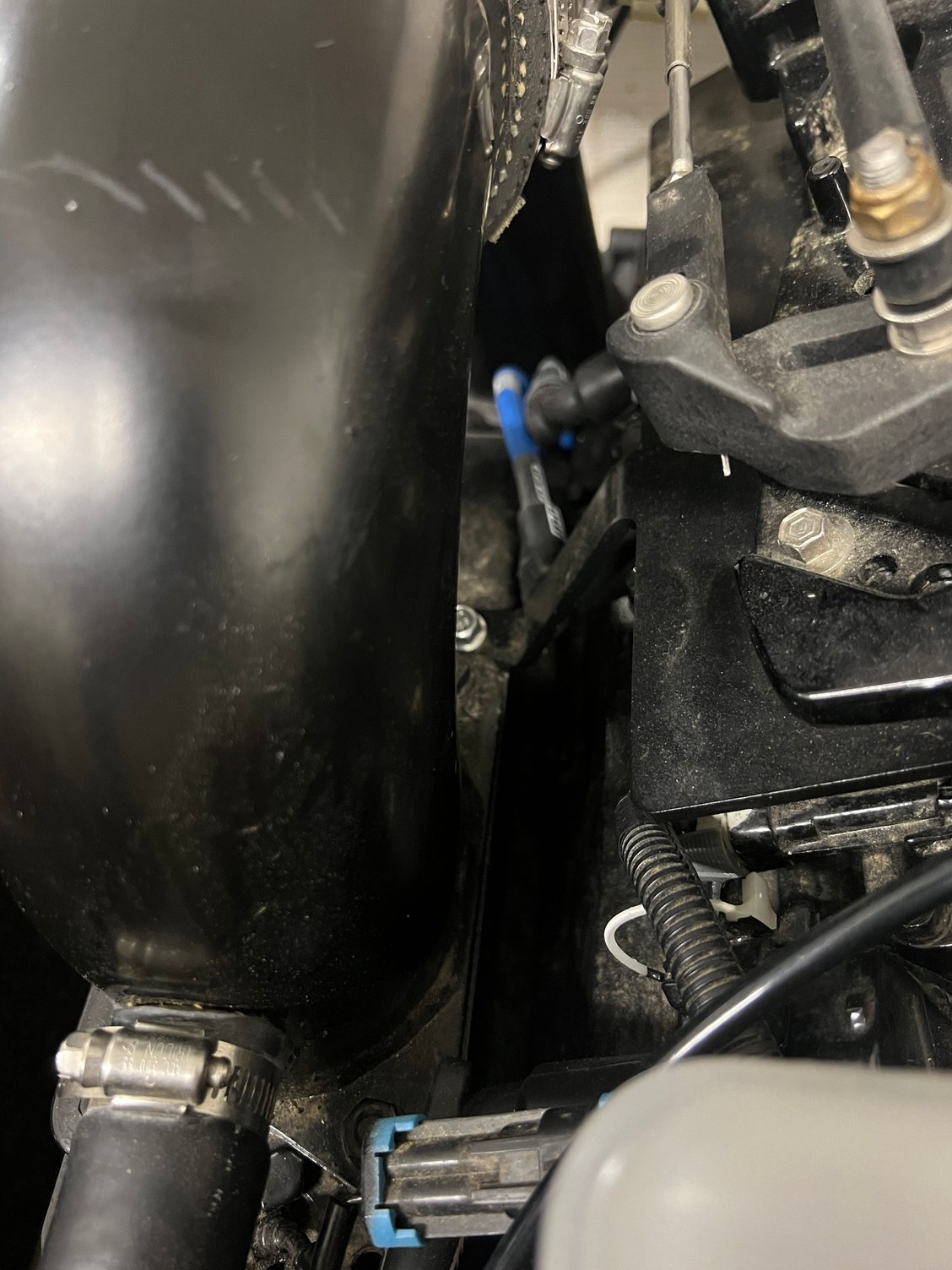
So, is that .080” hole at positive pressure when the boost gauge is showing positive manifold pressure? There are some funky vacuum lines up there that were part of the ProCharger install. I’ll have to go to the install manual and see what it says about it. Surely they (ProCharger) would have addressed this.
I’m planning to elongate the intake of the ProCharger, so it’s not drawing air from under the engine. Would adding a bung to this intake tube create enough vacuum to accomplish what I need? Thinking about attaching the filler cap vent tube to this. Yes/no?
Thanks. Brad.
 05-17-2024 | 03:42 PM
#130
Thread Starter
VIP Member
Joined: Jun 2021
Posts: 3,533
Likes: 2,142
From: SW Ohio
Guys,
So, an update....
Went out yesterday. Basically, dropped launched the boat, cruised across the lake, putting the stick on the firewall for a bit to test a new-to-me prop, dropped anchor for several hours at one of the popular anchoring spots (very small lake), then cruised back, intentionally staying out of the throttle, keeping it out of any boost condition. Had oil on top of the dipstick after screaming across the lake (saw about 5300RPM). Cleaned off the top of the dipstick. Did not have oil after cruising back across the lake.
Is the oil just a product of that little weephole between the intake manifold and the crankcase, originally intended to induce a vacuum to the crankcase?
Thanks. Brad.
So, an update....
Went out yesterday. Basically, dropped launched the boat, cruised across the lake, putting the stick on the firewall for a bit to test a new-to-me prop, dropped anchor for several hours at one of the popular anchoring spots (very small lake), then cruised back, intentionally staying out of the throttle, keeping it out of any boost condition. Had oil on top of the dipstick after screaming across the lake (saw about 5300RPM). Cleaned off the top of the dipstick. Did not have oil after cruising back across the lake.
Is the oil just a product of that little weephole between the intake manifold and the crankcase, originally intended to induce a vacuum to the crankcase?
Thanks. Brad.

