


New engine will not throttle up past 1500 RPMs


 03-13-2026 | 08:19 AM
#12
Thread Starter
Registered
Joined: Mar 2026
Posts: 7
Likes: 0
From: Jacksonville

After setting number 1 cylinder on TDC install distributor with in the number 1 firing position. Making sure when fully inserted it is still in alignment. This is the first thing my mobile mechanic checked.

 03-13-2026 | 04:20 PM
#16
Registered

Joined: Nov 2004
Posts: 14,068
Likes: 3,667
From: On A Dirt Floor
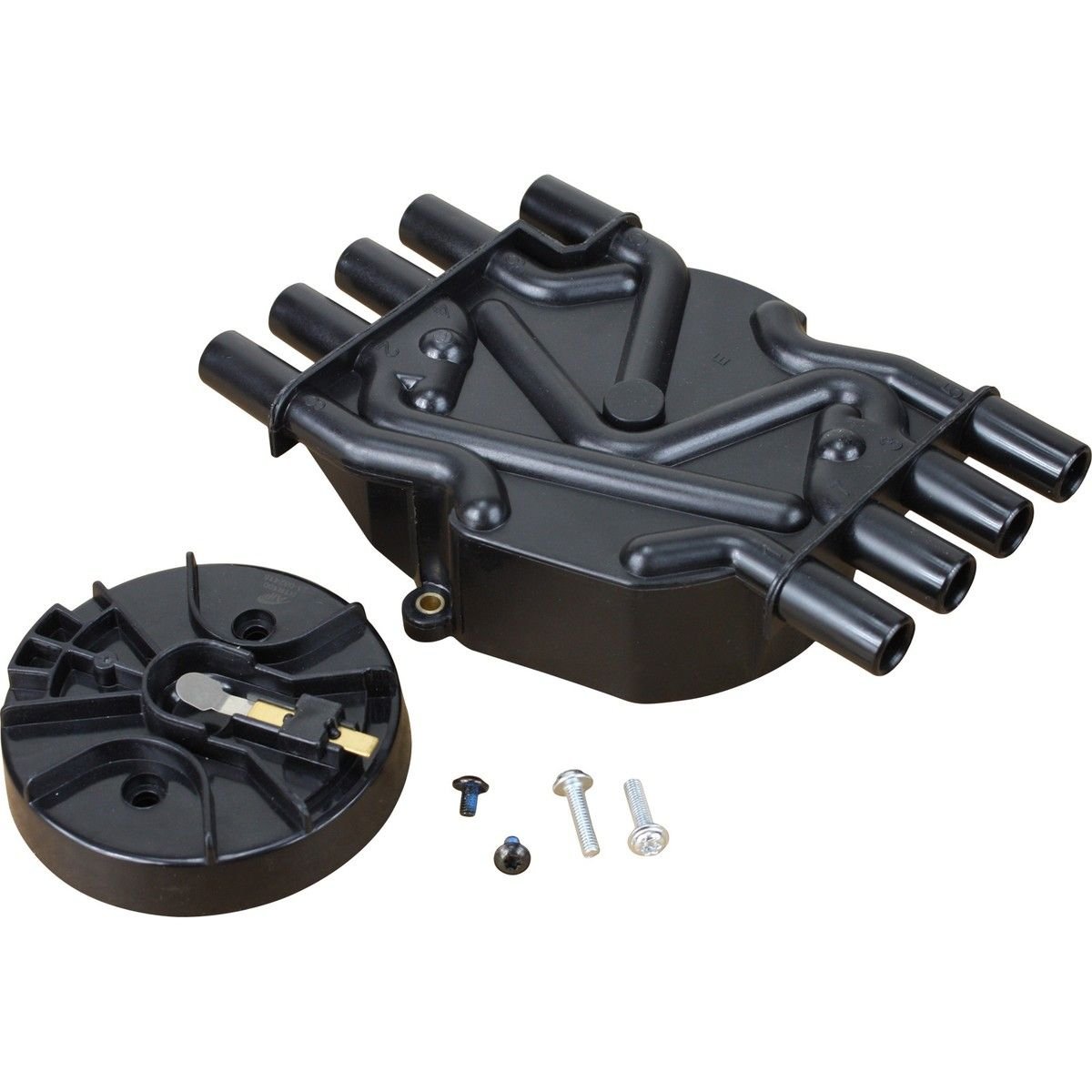
This pic is the flat/‘crab’ style
 03-13-2026 | 10:02 PM
#19
Registered
Joined: Jan 2006
Posts: 3,598
Likes: 1,167
From: taxachusetts
do you still have your old spark plug wires?if so,put them back on and see if it revs up.I had a 350 that did something similar,turned out the spark plug wires were not seating in the cap,put old wires back in and up on plane we went.just a thought.
03-14-2026 | 07:02 AM
#20
VIP Member


Joined: Jun 2021
Posts: 3,459
Likes: 2,089
From: SW Ohio
So after losing my first engine with 700 hrs because of 2 bad injectors I install a rebuilt 350 mag MPI long block. With all original peripherals from the old engine.
Original Engine Serial Number M350MPIB3 W042371
On first start up the engine idols perfectly. But when trying to throttle up anything over 1500 to 2000 rpms the runs rough surging drastically.
So first had mobile marine mechanic out with mercruiser computer he had no answer to the problem.
So another mechanic came out and suggested to disconnect the TPS and wow the engine throttled up with no hesitation. I replaced and check voltages at the new TPS and checked out fine. Yet the engine still will not throttle up.
Things that have been completed
1 New cap and rotor
2 New oil pressure switch
3 Plug wires tested and verified firing order
4 New Plugs
5 Monitored fuel pressure 40PSI
6) All injectors tested
7 Checked compression all 90 psi low but engine has only run for maybe 1 hr so I hope break-in will improve compression.
Questions
1 Thinking it is electrical problem
2 The TPS must be seen by the ECM or it would not run better when disconnected
3 Could it be a bad map sensor? I tried disconnection map sensor and it started but immediately stalled
4 Could it be a bad ECM?
5 Does the TPS need some sort of calibration for ECM to see it properly like in some cars?
6 Could a rebuild be far enough off where the original ECM can't run it properly?
Thank for any Ideas
Joe
Original Engine Serial Number M350MPIB3 W042371
On first start up the engine idols perfectly. But when trying to throttle up anything over 1500 to 2000 rpms the runs rough surging drastically.
So first had mobile marine mechanic out with mercruiser computer he had no answer to the problem.
So another mechanic came out and suggested to disconnect the TPS and wow the engine throttled up with no hesitation. I replaced and check voltages at the new TPS and checked out fine. Yet the engine still will not throttle up.
Things that have been completed
1 New cap and rotor
2 New oil pressure switch
3 Plug wires tested and verified firing order
4 New Plugs
5 Monitored fuel pressure 40PSI
6) All injectors tested
7 Checked compression all 90 psi low but engine has only run for maybe 1 hr so I hope break-in will improve compression.
Questions
1 Thinking it is electrical problem
2 The TPS must be seen by the ECM or it would not run better when disconnected
3 Could it be a bad map sensor? I tried disconnection map sensor and it started but immediately stalled
4 Could it be a bad ECM?
5 Does the TPS need some sort of calibration for ECM to see it properly like in some cars?
6 Could a rebuild be far enough off where the original ECM can't run it properly?
Thank for any Ideas
Joe
When you try and throttle up, what does your exhaust output look like...?
Understand first that the TPS is essentially nothing more than a movement indicator. It does not tell the ECM what speed you want to be running, but rather, when you want to change speeds. The ECM commands fuel based on MAP and RPM. When you shove the throttle forward, the throttle blade opens, providing more air while the RPM and MAP remain essentially the same (for conversation's sake), so the AFR must be corrected momentarily with a shot of extra fuel. So, the TPS commands "acceleration enrichment". I'm going to assume the same process, in reverse, occurs when you back off the throttle (I am a total layman, who has learned a few tidbits through osmosis, being in proximity of an EFI genius working on my engine's tune).
So, after rebuilding my 496 last winter, where I replaced the PCM555 with a Holley HP, we noticed a drastic increase in fuel consumption. As in, WAY more than any predicted gains in HP we expected from the various improvements we implemented during the rebuild to have incurred. Having full access to the tune via Holley software, the tuner was able to discover a LOT of electrical noise coming from the TPS, which was triggering acceleration enrichment, pretty much constantly. This was the primary culprit for the excessive fuel consumption, as well as some minor behavior gremlins we couldn't seem to tune out. After installing a new TPS, the problem initially seemed to be resolved, but then it returned. Not as bad as before, but still remained. The tuner pulled the connecter and discovered the retainer/locator sleeve on the connecter had been lost, so the connecter, while firmly clicked into place, was not securely tight; it could be wiggled. After correcting this issue (spliced in a new connector over the winter, while we had the engine out again to address a coolant leak and swap a cam, etc, etc...), and after first fire this year, the electrical noise is gone.
Long way around to get back to your engine's behavior gremlin going away when you disconnect the TPS.... In many cases a bad signal is far worse than no signal at all. Without the TPS, the ECM is just going off the fuel table, and it's just winging it through throttle changes. But a TPS throwing a bunch of noise will cause your accelerator pumps to have a field day. Ensure all connections are positive and secure and see if you can find a way of detecting said electrical noise. On the Holley, it was easy. The tuner could just look at a graph of the TPS signal output. It should have been a nearly flat line that smoothly followed my throttle sweeps. Instead, it looked like a crackhead's EKG. This sounds a LOT like where you are.
Something to chew on.
Thanks. Brad.

