


454 initial timing questons
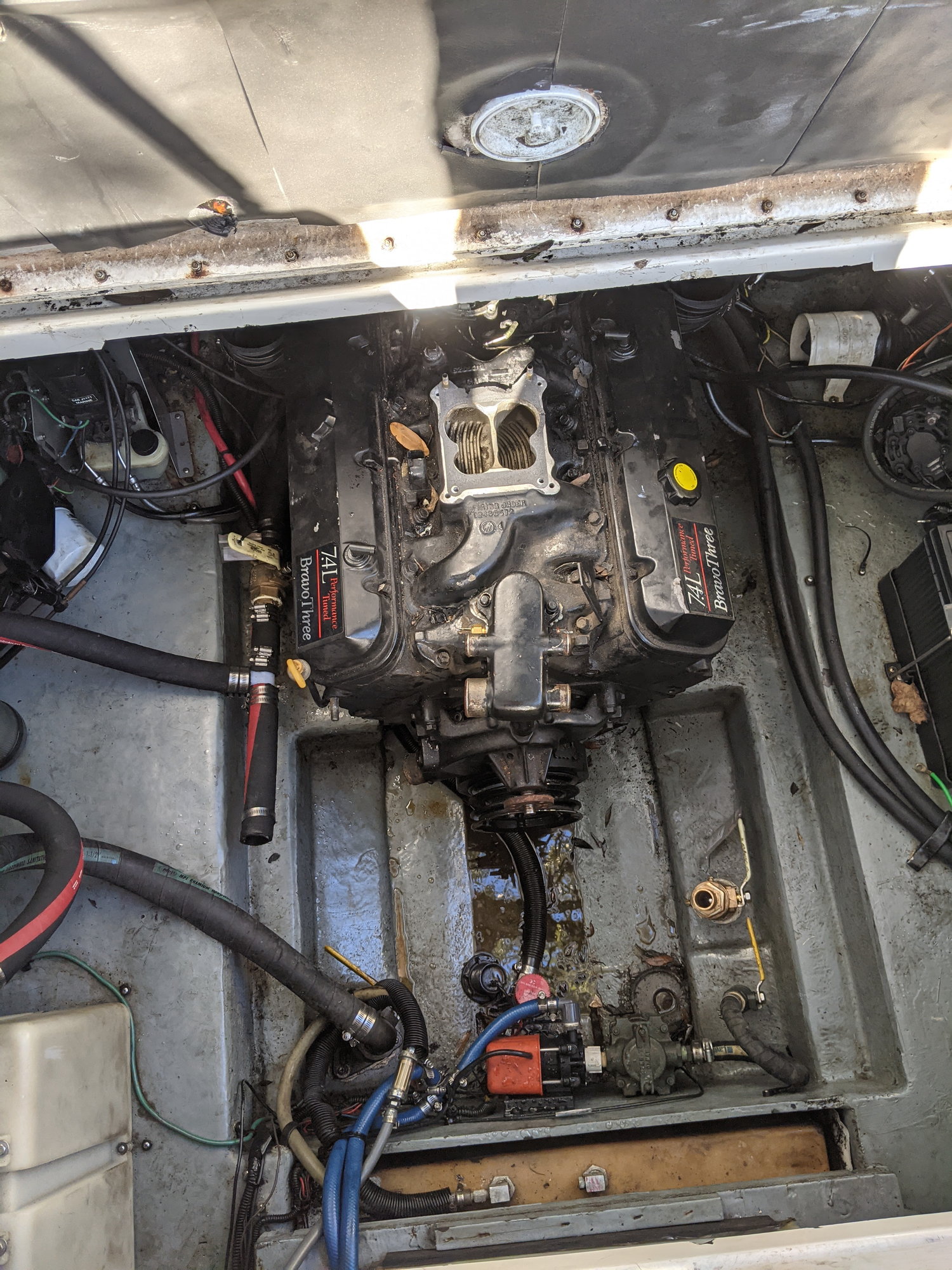

 02-22-2022 | 11:11 AM
#32

Platinum Member


Joined: Dec 2001
Posts: 2,127
Likes: 171
From: St. Clair Shores, MI

approach this problem in steps.
1st verify that the TDC on the balancer is truly TDC, unless you have a brand new balancer. I've had a situation on a boat where setting timing according to the balancer, the engine would not idle unless I cranked up timing. I think the balancer had slipped on. the boat I was working on.
2nd. the carb should run on the isle circuit just fine. Adjust the carb idle mixture screws 2 turns out and set the idle screw as close to closed as possible. Like Smitty said, your dieseling problem is because the primary blades are too far open.
3rd, once you can get the boat to idle on the idle circuit, then do a final verification of timing. 34-36 total above 4000 rpm. you may have to turn up the idle speed screw
initally though.
4th once timing is set work on getting the engine to idle with the least amount of primary blades being open. Youll have to play with the idle mixture screws and the idle speed screw some.
SIDE NOTE: spray carb cleaner around the throttle shafts. If the rpms change drastically, your throttle shafts may be worn out, causing the vacuum leak. When they are adjusting timing, are they using a timing light AND a vacuum gauge?
1st verify that the TDC on the balancer is truly TDC, unless you have a brand new balancer. I've had a situation on a boat where setting timing according to the balancer, the engine would not idle unless I cranked up timing. I think the balancer had slipped on. the boat I was working on.
2nd. the carb should run on the isle circuit just fine. Adjust the carb idle mixture screws 2 turns out and set the idle screw as close to closed as possible. Like Smitty said, your dieseling problem is because the primary blades are too far open.
3rd, once you can get the boat to idle on the idle circuit, then do a final verification of timing. 34-36 total above 4000 rpm. you may have to turn up the idle speed screw
initally though.
4th once timing is set work on getting the engine to idle with the least amount of primary blades being open. Youll have to play with the idle mixture screws and the idle speed screw some.
SIDE NOTE: spray carb cleaner around the throttle shafts. If the rpms change drastically, your throttle shafts may be worn out, causing the vacuum leak. When they are adjusting timing, are they using a timing light AND a vacuum gauge?
 02-22-2022 | 11:39 AM
#33
Thread Starter
Registered
Joined: Sep 2021
Posts: 74
Likes: 9
approach this problem in steps.
1st verify that the TDC on the balancer is truly TDC, unless you have a brand new balancer. I've had a situation on a boat where setting timing according to the balancer, the engine would not idle unless I cranked up timing. I think the balancer had slipped on. the boat I was working on.
2nd. the carb should run on the isle circuit just fine. Adjust the carb idle mixture screws 2 turns out and set the idle screw as close to closed as possible. Like Smitty said, your dieseling problem is because the primary blades are too far open.
3rd, once you can get the boat to idle on the idle circuit, then do a final verification of timing. 34-36 total above 4000 rpm. you may have to turn up the idle speed screw
initally though.
4th once timing is set work on getting the engine to idle with the least amount of primary blades being open. Youll have to play with the idle mixture screws and the idle speed screw some.
SIDE NOTE: spray carb cleaner around the throttle shafts. If the rpms change drastically, your throttle shafts may be worn out, causing the vacuum leak. When they are adjusting timing, are they using a timing light AND a vacuum gauge?
1st verify that the TDC on the balancer is truly TDC, unless you have a brand new balancer. I've had a situation on a boat where setting timing according to the balancer, the engine would not idle unless I cranked up timing. I think the balancer had slipped on. the boat I was working on.
2nd. the carb should run on the isle circuit just fine. Adjust the carb idle mixture screws 2 turns out and set the idle screw as close to closed as possible. Like Smitty said, your dieseling problem is because the primary blades are too far open.
3rd, once you can get the boat to idle on the idle circuit, then do a final verification of timing. 34-36 total above 4000 rpm. you may have to turn up the idle speed screw
initally though.
4th once timing is set work on getting the engine to idle with the least amount of primary blades being open. Youll have to play with the idle mixture screws and the idle speed screw some.
SIDE NOTE: spray carb cleaner around the throttle shafts. If the rpms change drastically, your throttle shafts may be worn out, causing the vacuum leak. When they are adjusting timing, are they using a timing light AND a vacuum gauge?
 02-22-2022 | 11:59 AM
#35
Thread Starter
Registered
Joined: Sep 2021
Posts: 74
Likes: 9
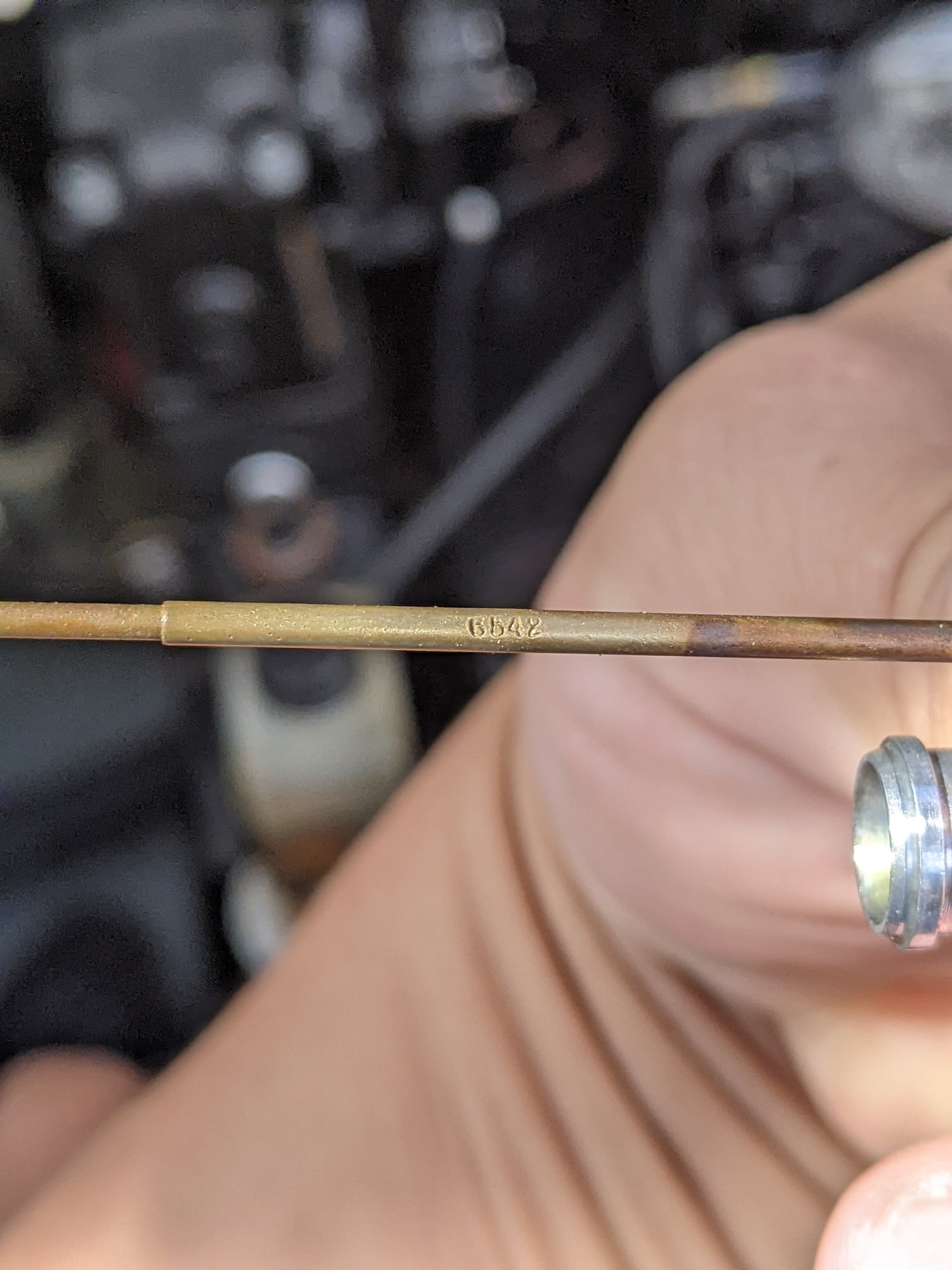

Here is the metering rod that's in it. Looks to be marked 6542 which isn't anywhere on the chart. I know the chart isn't the end all be all though. I am going to put a pair of the 7347 in as that is the closest to stock. Looking up spring color codes now
 02-22-2022 | 12:23 PM
#38
Registered
Joined: Nov 2004
Posts: 14,172
Likes: 3,729
From: On A Dirt Floor
Is this one of those merc 454’s with rectangular port intake manifolds installed on ovsl potrt heads ? If so, what intake gasket was used ?
Those gray marine fuel lines are for outboard engines only. Not rated for enclosed engine compartments. Plus, many of the aftermarket replacements (especially , but not limited to,, Atwood) inner liners dissolve and gum up restricting line and everything past it.
Those glass fuel filters are not coast guard legal, and not even good for cars. Never really a good design from when they where invented.
Those gray marine fuel lines are for outboard engines only. Not rated for enclosed engine compartments. Plus, many of the aftermarket replacements (especially , but not limited to,, Atwood) inner liners dissolve and gum up restricting line and everything past it.
Those glass fuel filters are not coast guard legal, and not even good for cars. Never really a good design from when they where invented.
02-22-2022 | 01:41 PM
#40
Thread Starter
Registered
Joined: Sep 2021
Posts: 74
Likes: 9
Is this one of those merc 454’s with rectangular port intake manifolds installed on ovsl potrt heads ? If so, what intake gasket was used ?
Those gray marine fuel lines are for outboard engines only. Not rated for enclosed engine compartments. Plus, many of the aftermarket replacements (especially , but not limited to,, Atwood) inner liners dissolve and gum up restricting line and everything past it.
Those glass fuel filters are not coast guard legal, and not even good for cars. Never really a good design from when they where invented.
Those gray marine fuel lines are for outboard engines only. Not rated for enclosed engine compartments. Plus, many of the aftermarket replacements (especially , but not limited to,, Atwood) inner liners dissolve and gum up restricting line and everything past it.
Those glass fuel filters are not coast guard legal, and not even good for cars. Never really a good design from when they where invented.

