



Turbo vs Supercharger
 12-12-2013 | 01:54 PM
#91
Registered
Joined: Aug 2007
Posts: 373
Likes: 1

One of the last things I did before leaving the turbo design field was to make veriable geometry turbine exhaust.
This had been attempted for years with little if any improvement. The first run with one of these on a semi before programming the eletronic control unit of the turbo saw boost at idle. It also about doubled the rigs fuel economy.
The eletronc control unit could be set up to add boost were the power curve naturally dipped, dial in low end, top end, cruse situations. It could learn a drives style and anticipate it.
This had been attempted for years with little if any improvement. The first run with one of these on a semi before programming the eletronic control unit of the turbo saw boost at idle. It also about doubled the rigs fuel economy.
The eletronc control unit could be set up to add boost were the power curve naturally dipped, dial in low end, top end, cruse situations. It could learn a drives style and anticipate it.
 12-12-2013 | 02:02 PM
#92
Charter Member


Joined: Apr 2000
Posts: 285
Likes: 0
From: Draper, Utah
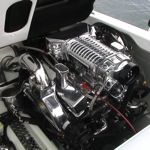
Dustin's new Quad rotor motors in his OL SV43 have electronic boost controllers. He can manage boost levels at any load or RPM. They idle like a stock merc motor and make killer power. Not sure I agree with Blower motors needing more maintenance then turbo motors. My old 502 with Whipple went over 600 hours, that was a stock 502 with pretty big boost.
[ATTACH=CONFIG]514103[/ATTACH][ATTACH=CONFIG]514104[/ATTACH]
[ATTACH=CONFIG]514103[/ATTACH][ATTACH=CONFIG]514104[/ATTACH]
12-12-2013 | 02:14 PM
#93
Charter Member
Joined: Apr 2000
Posts: 285
Likes: 0
From: Draper, Utah
Dustins new motors can be bought from Teague with a warranty. They make a hair more power then the Merc 1350 on pump gas (They can make much more on race gas) and have instant throttle response when on and off the sticks. Huge TQ on the bottom to spin those big props and super efficient. Anyone looking for big power should seriously consider these monsters.
Plus these things just look bada$$
MP
[ATTACH=CONFIG]514105[/ATTACH]
Plus these things just look bada$$
MP
[ATTACH=CONFIG]514105[/ATTACH]
12-12-2013 | 02:26 PM
#94
VIP Member


Joined: Jan 2002
Posts: 2,999
Likes: 112
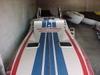
Dustin's new Quad rotor motors in his OL SV43 have electronic boost controllers. He can manage boost levels at any load or RPM. They idle like a stock merc motor and make killer power. Not sure I agree with Blower motors needing more maintenance then turbo motors. My old 502 with Whipple went over 600 hours, that was a stock 502 with pretty big boost.
[ATTACH=CONFIG]514103[/ATTACH][ATTACH=CONFIG]514104[/ATTACH]
[ATTACH=CONFIG]514103[/ATTACH][ATTACH=CONFIG]514104[/ATTACH]
Nice Engines,....Not Poking the Bear, just curious how much Boost You ran on your Engines with Pretty Big Boost?
Here is Earhart's Variable Boost in the Fly with Turbos.
Jon
__________________
12-12-2013 | 02:38 PM
#95
Charter Member
Joined: Apr 2000
Posts: 285
Likes: 0
From: Draper, Utah
I am not a Turbo expert or engine expert for that matter. I have only owned one turbo motor and that was a Sand Car with a Turbo Mazda Rotory motor, that was a wicked set up. I just know that of all my Supercharged motors they have ran great and were super efficient. Not knocking Turbos, I actually love the Sound of a waste gate LOL
I am just excited about what Whipple and Teague have accomplished with this latest project.
MP
12-12-2013 | 05:51 PM
#96
VIP Member
Joined: Jan 2002
Posts: 2,999
Likes: 112
12-13-2013 | 08:21 AM
#97
Registered

Joined: Jun 2009
Posts: 9,989
Likes: 6,483
From: Chicago
Dustin's new Quad rotor motors in his OL SV43 have electronic boost controllers. He can manage boost levels at any load or RPM. They idle like a stock merc motor and make killer power. Not sure I agree with Blower motors needing more maintenance then turbo motors. My old 502 with Whipple went over 600 hours, that was a stock 502 with pretty big boost.
[ATTACH=CONFIG]514103[/ATTACH][ATTACH=CONFIG]514104[/ATTACH]
[ATTACH=CONFIG]514103[/ATTACH][ATTACH=CONFIG]514104[/ATTACH]
12-20-2013 | 08:38 PM
#98

Registered
Joined: Oct 2000
Posts: 1,436
Likes: 5
From: Fresno, CA, 93722, USA
I think there are a couple of things missing from the discussion which surprises me, because this forum is a hell of a lot smarter than me... But the turbo vs. charger idea is a lot older than just the last decade. As plenty of the guys have mentioned with Old late 70's/early 80's Merc Turbo's, Gentry, Gale/Banks, etc. Each system has their pro's and their cons.
Supercharger on small displacement engines
PRO'S:
Immediate down low torque (gets the boat on plane)
Consistent tq curve
unmuffled exhaust and blower whine
Easy to tune due to consistency
CON'S:
Poor fuel efficiency
Higher rebuild rate than comparable turbo app
More internal wear due to constant boost
Compressor surge (can sound cool, but often hurts driveability/docking
Turbo on small engine
PRO'S:
Great fuel efficiency due to low boost at lower RPM's
Ability to make much exponentially more power than NA
Less parasitic loss than a belt driven charger (yes there is SOME loss)
Generally quieter
External Blow off valves sounds SAHWEET
CON'S:
Low rpm lacks planing tq
Generally quieter
Tough to water cool effectively (thus far)
Tougher to tune
High RPM for a long period of time can be disastrous (this applies somewhat to chargers as well)
Exhaust Gas Temperature (EGT) management is an issue for high RPM apps
Big displacement motors are a different ball game entirely. Often times they have the exhaust pressure to spool turbo's almost immediately and even if they do not, the big cubes provide the tq down low to get a boat moving. They still are tougher to tune(not a real big deal for modern tech and shops like chief, Mercury, etc), and also to cool. Plus the ultra high RPM of the compressor wheel combined with EGT's, creates issues of it's own. But this doesn't inherently give the advantage to Superchargers. As many have discussed, their linear tq curve, tunability, and killer sound are all big pro's. The constant boost puts more wear on the motor, hurts fuel economy, and seems to require a bit more maintenance. So there are challenges either way. One mistake made earlier in this thread, was comparing boat and car motors. Boat motors run at a constant rate and full drag so to speak (brain fart, can't think of the proper term), were as car motors can cruise more efficiently due to less drag (air vs. water). Once you throttle a motor below full boost, you get into fuel saving territory, and when you want the power, mash the loud pedal and voila!
My theory on the Merc 1350 & 1650's, is that the motor presents not only an ultra high HP package, it does it in almost a luxury manner. Slighter quieter due to turbo's, less engine wear due to varying boost, neat package due to extensive engineering, slim MPG advantage, warranty, etc. One thing I failed to mention, is that turbo's seem, to me, to do a slightly better job of making power with more mild cams. This creates an ease of driveability and docking that many big cube/hp blower motors seem to lack. Okay I'm done now haha
Supercharger on small displacement engines
PRO'S:
Immediate down low torque (gets the boat on plane)
Consistent tq curve
unmuffled exhaust and blower whine
Easy to tune due to consistency
CON'S:
Poor fuel efficiency
Higher rebuild rate than comparable turbo app
More internal wear due to constant boost
Compressor surge (can sound cool, but often hurts driveability/docking
Turbo on small engine
PRO'S:
Great fuel efficiency due to low boost at lower RPM's
Ability to make much exponentially more power than NA
Less parasitic loss than a belt driven charger (yes there is SOME loss)
Generally quieter
External Blow off valves sounds SAHWEET
CON'S:
Low rpm lacks planing tq
Generally quieter
Tough to water cool effectively (thus far)
Tougher to tune
High RPM for a long period of time can be disastrous (this applies somewhat to chargers as well)
Exhaust Gas Temperature (EGT) management is an issue for high RPM apps
Big displacement motors are a different ball game entirely. Often times they have the exhaust pressure to spool turbo's almost immediately and even if they do not, the big cubes provide the tq down low to get a boat moving. They still are tougher to tune(not a real big deal for modern tech and shops like chief, Mercury, etc), and also to cool. Plus the ultra high RPM of the compressor wheel combined with EGT's, creates issues of it's own. But this doesn't inherently give the advantage to Superchargers. As many have discussed, their linear tq curve, tunability, and killer sound are all big pro's. The constant boost puts more wear on the motor, hurts fuel economy, and seems to require a bit more maintenance. So there are challenges either way. One mistake made earlier in this thread, was comparing boat and car motors. Boat motors run at a constant rate and full drag so to speak (brain fart, can't think of the proper term), were as car motors can cruise more efficiently due to less drag (air vs. water). Once you throttle a motor below full boost, you get into fuel saving territory, and when you want the power, mash the loud pedal and voila!
My theory on the Merc 1350 & 1650's, is that the motor presents not only an ultra high HP package, it does it in almost a luxury manner. Slighter quieter due to turbo's, less engine wear due to varying boost, neat package due to extensive engineering, slim MPG advantage, warranty, etc. One thing I failed to mention, is that turbo's seem, to me, to do a slightly better job of making power with more mild cams. This creates an ease of driveability and docking that many big cube/hp blower motors seem to lack. Okay I'm done now haha
As for boost all the time? Do you know how much boost the 1350's run at lower RPM to get the boats on plane, cruise and accelerate? 28psi. Does that sound like low boost? How about the 1650, 40psi! While that's not needed for all boats, it shows what has to be done with that setup to meet the torque curve they wanted, which is certainly impressive. But, do you know how much power can be made with a supercharger at that boost level?
So the harder on the engine theory is not really accurate. What major advantage the turbo has is that they don't typically require as an aggressive camshafts. Therefore, valve train life can be extended in theory. But turbo's always have higher exhaust temps, especially with backpressure. The high temps is no friend to engine components and exhaust. But Mercury's extended life on the 1350's is due to the overhead cam cylinder heads, not the turbos. I think we all know the benefits of the DOHC concept, smaller, mild camshafts and basic valve train.
It really doesn't matter what engine you have, if you have a 12,000lb boat running 100mph, it takes a certain amount of power to go a certain speed. Therefore, its about engine efficiency at that point, something the superchargers (modern SC's) do quite well. Turbo's really shine at very high boost levels, 20+psi. But because the turbo's are water cooled, they lose significant energy, thus lower efficiency. If anyone actually thinks that we can't supercharge the 1350 long block and make the exact same power with same reliability is extremely in accurate. Of course, cams would ideally be changed to open the exhaust valve some, but 1350 is easily attainable. Also, to note, if you've ever been in a boat with 1.21 gears with 40 pitch props, the amount of torque required at 1500rpm is extremely significant.
12-20-2013 | 08:47 PM
#99
Registered
Joined: Oct 2000
Posts: 1,436
Likes: 5
From: Fresno, CA, 93722, USA
While variable boost on the fly is possible with computer programming we did, its not ideal for many since that requires different octane levels. Giving some customers a boost switch would not be the most ideal thing from a liability standpoint LOL. Certainly cool though.
It was also important to keep everything working with all the factory gauges, controls, scanners, sensors, etc that are readily available. With the boost control setup for 91 octane, they have a constant 13.5-14.5psi of boost from 1500-7000rpm @ WOT. They valve only needs to open when power drops below the desired, or boost is being overshot. Therefore the motor can make the same power at 3000 feet as well as sea level.
It was also important to keep everything working with all the factory gauges, controls, scanners, sensors, etc that are readily available. With the boost control setup for 91 octane, they have a constant 13.5-14.5psi of boost from 1500-7000rpm @ WOT. They valve only needs to open when power drops below the desired, or boost is being overshot. Therefore the motor can make the same power at 3000 feet as well as sea level.
12-20-2013 | 09:18 PM
#100
Registered
Joined: Jan 2007
Posts: 319
Likes: 1
From: New York
Dustin's new Quad rotor motors in his OL SV43 have electronic boost controllers. He can manage boost levels at any load or RPM. They idle like a stock merc motor and make killer power. Not sure I agree with Blower motors needing more maintenance then turbo motors. My old 502 with Whipple went over 600 hours, that was a stock 502 with pretty big boost.
[ATTACH=CONFIG]514103[/ATTACH][ATTACH=CONFIG]514104[/ATTACH]
[ATTACH=CONFIG]514103[/ATTACH][ATTACH=CONFIG]514104[/ATTACH]

