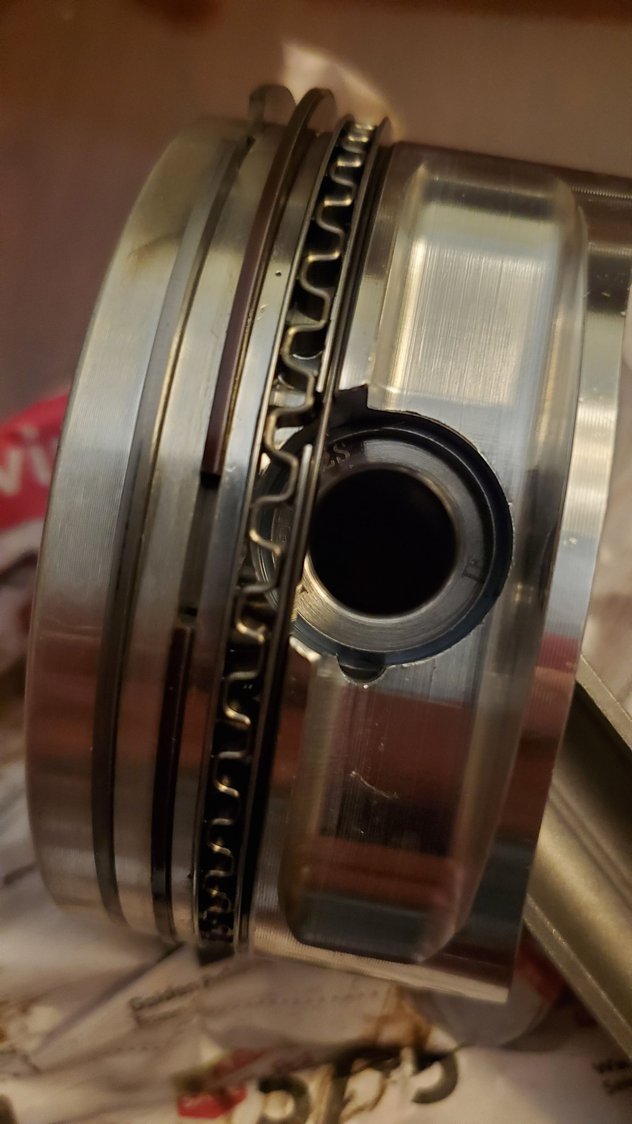
Need help with excessive oil getting into cylinders on new build

 10-20-2020 | 01:05 PM
#52
Registered

Joined: Feb 2013
Posts: 1,459
Likes: 391

Might be worth contacting Trickflow and see if they have any experience with this situation and/or any suggestions. Maybe oil drainback holes could be enlarged??
Only way I can think of to verify if valve covers are flooding would be to drill a witness hole into a sacrificial set of valve covers above the level of the drainback holes. If you want to get fancy, install a clear tube between holes drilled at top and bottom of valve cover so oil level inside valve cover could be monitored (sightgauge). Unfortunately, you would have to put it all back together to try.
Just had another hair brained idea. What if breather filters on valve covers got plugged up somehow (paper element getting oil soaked)? With no pcv sys installed, press would build up in crankcase/valve covers helping push oil past valve guide seals. Some serious spitballing now.
Only way I can think of to verify if valve covers are flooding would be to drill a witness hole into a sacrificial set of valve covers above the level of the drainback holes. If you want to get fancy, install a clear tube between holes drilled at top and bottom of valve cover so oil level inside valve cover could be monitored (sightgauge). Unfortunately, you would have to put it all back together to try.
Just had another hair brained idea. What if breather filters on valve covers got plugged up somehow (paper element getting oil soaked)? With no pcv sys installed, press would build up in crankcase/valve covers helping push oil past valve guide seals. Some serious spitballing now.
10-20-2020 | 05:28 PM
#54
Thread Starter
Registered
Joined: Oct 2012
Posts: 2,232
Likes: 537
Might be worth contacting Trickflow and see if they have any experience with this situation and/or any suggestions. Maybe oil drainback holes could be enlarged??
Only way I can think of to verify if valve covers are flooding would be to drill a witness hole into a sacrificial set of valve covers above the level of the drainback holes. If you want to get fancy, install a clear tube between holes drilled at top and bottom of valve cover so oil level inside valve cover could be monitored (sightgauge). Unfortunately, you would have to put it all back together to try.
Just had another hair brained idea. What if breather filters on valve covers got plugged up somehow (paper element getting oil soaked)? With no pcv sys installed, press would build up in crankcase/valve covers helping push oil past valve guide seals. Some serious spitballing now.
Only way I can think of to verify if valve covers are flooding would be to drill a witness hole into a sacrificial set of valve covers above the level of the drainback holes. If you want to get fancy, install a clear tube between holes drilled at top and bottom of valve cover so oil level inside valve cover could be monitored (sightgauge). Unfortunately, you would have to put it all back together to try.
Just had another hair brained idea. What if breather filters on valve covers got plugged up somehow (paper element getting oil soaked)? With no pcv sys installed, press would build up in crankcase/valve covers helping push oil past valve guide seals. Some serious spitballing now.
I thought about excessive pressure under covers. I have 2 decent sized K&N breathers. I'll post pictures later. Again same breathers from working engine.
I do appreciate everyone's input.
10-20-2020 | 09:13 PM
#56
Registered
Joined: Feb 2013
Posts: 1,459
Likes: 391
My thoughts on the breather filters are that I believe they are designed to filter relatively clean dry air under hood into the crankcase. Without a pcv sys they would be flowing backwards.
I had similar filters on my street bike that were washable and after they dried, you would add some filter oil to them. I remember they don't like to get wet (with water). I'd have to put plastic bags over them at the car wash.
This makes me wonder if oil mist mixed with water vapor (condensation) might plug them up. Once the condensation dried, they would flow again. It also might take time to plug up, so no issues for a while, then bam, they plug up again. Once again, another thing to check after its back together.
Were these filters installed on the orig "no issues" build?
If so,, disregard this post.
I had similar filters on my street bike that were washable and after they dried, you would add some filter oil to them. I remember they don't like to get wet (with water). I'd have to put plastic bags over them at the car wash.
This makes me wonder if oil mist mixed with water vapor (condensation) might plug them up. Once the condensation dried, they would flow again. It also might take time to plug up, so no issues for a while, then bam, they plug up again. Once again, another thing to check after its back together.
Were these filters installed on the orig "no issues" build?
If so,, disregard this post.
10-20-2020 | 09:41 PM
#57
Thread Starter
Registered
Joined: Oct 2012
Posts: 2,232
Likes: 537
My thoughts on the breather filters are that I believe they are designed to filter relatively clean dry air under hood into the crankcase. Without a pcv sys they would be flowing backwards.
I had similar filters on my street bike that were washable and after they dried, you would add some filter oil to them. I remember they don't like to get wet (with water). I'd have to put plastic bags over them at the car wash.
This makes me wonder if oil mist mixed with water vapor (condensation) might plug them up. Once the condensation dried, they would flow again. It also might take time to plug up, so no issues for a while, then bam, they plug up again. Once again, another thing to check after its back together.
Were these filters installed on the orig "no issues" build?
If so,, disregard this post.
I had similar filters on my street bike that were washable and after they dried, you would add some filter oil to them. I remember they don't like to get wet (with water). I'd have to put plastic bags over them at the car wash.
This makes me wonder if oil mist mixed with water vapor (condensation) might plug them up. Once the condensation dried, they would flow again. It also might take time to plug up, so no issues for a while, then bam, they plug up again. Once again, another thing to check after its back together.
Were these filters installed on the orig "no issues" build?
If so,, disregard this post.
 10-20-2020 | 09:56 PM
#58
Thread Starter
Registered
Joined: Oct 2012
Posts: 2,232
Likes: 537
Checked valve seals again. Seals appear to seal very well on the valves. Don't think oil is getting past them, at least to the extent in the cylinders.
By looking at the oil in the the exhaust ports, would it be possible "IF" the "excessive" oil was coming from the rings or intake ports, could it swirl or get pulled around the exhaust port hump and look wet like in the picture? Kind of like rain getting pulled to the edge of a wing of an air plane.
Thoughts?
Also look how much oil is in the combustion chamber? All 8 similar. Don't think oil is coming from exhaust port. Again this build had dyno time, 30 street miles (no boost) and 30-45 minutes of total idle time.
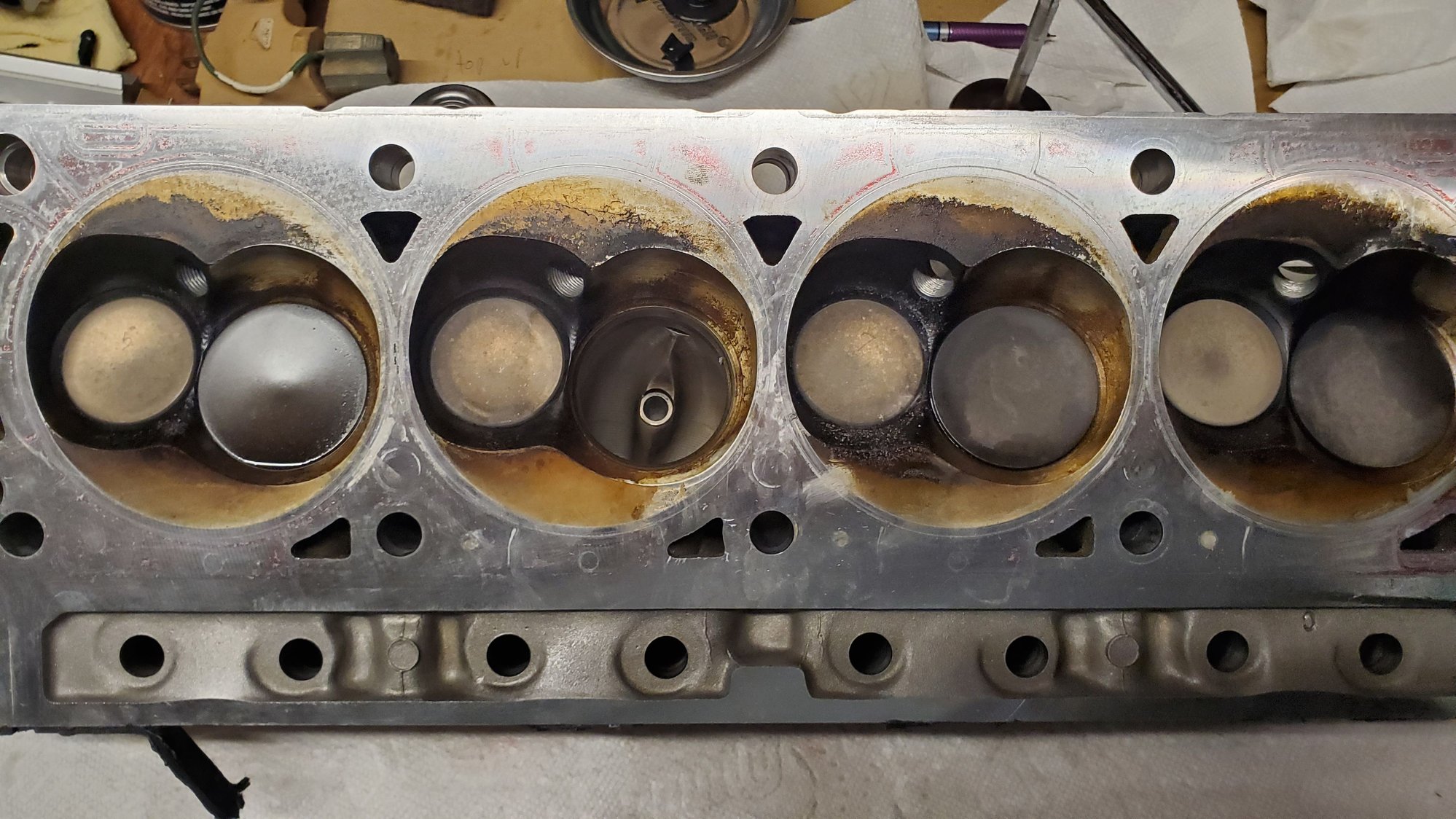
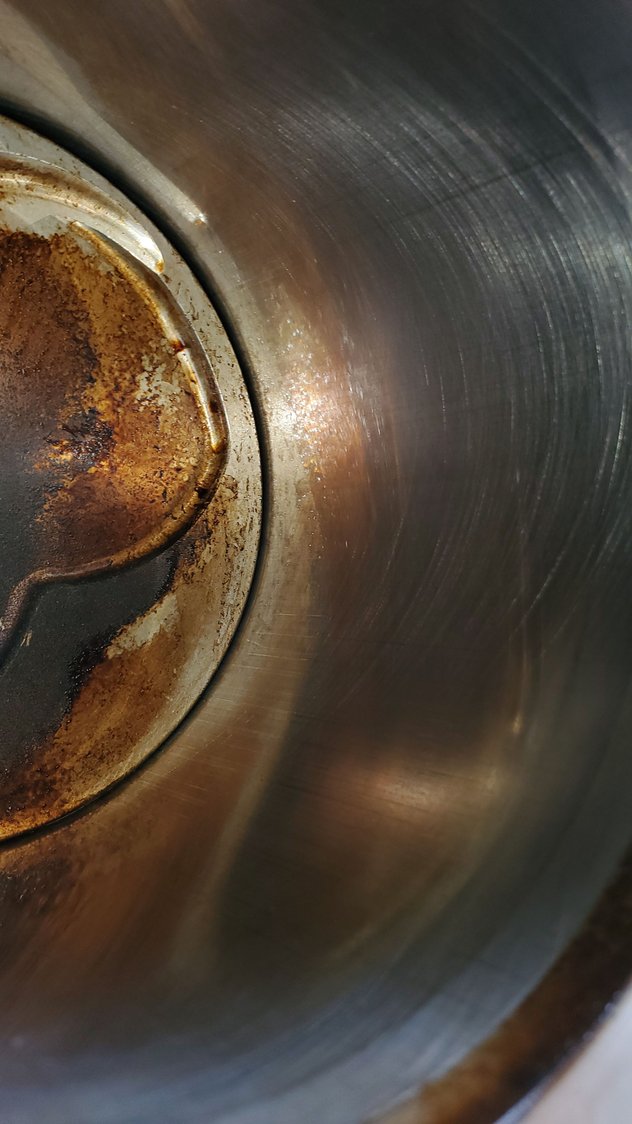
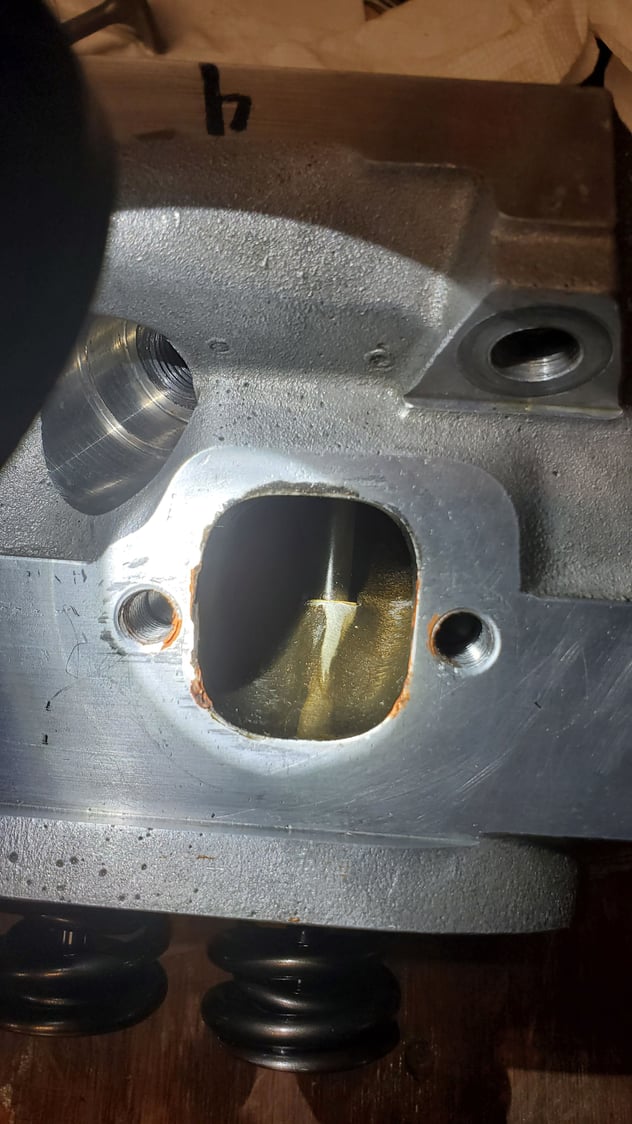
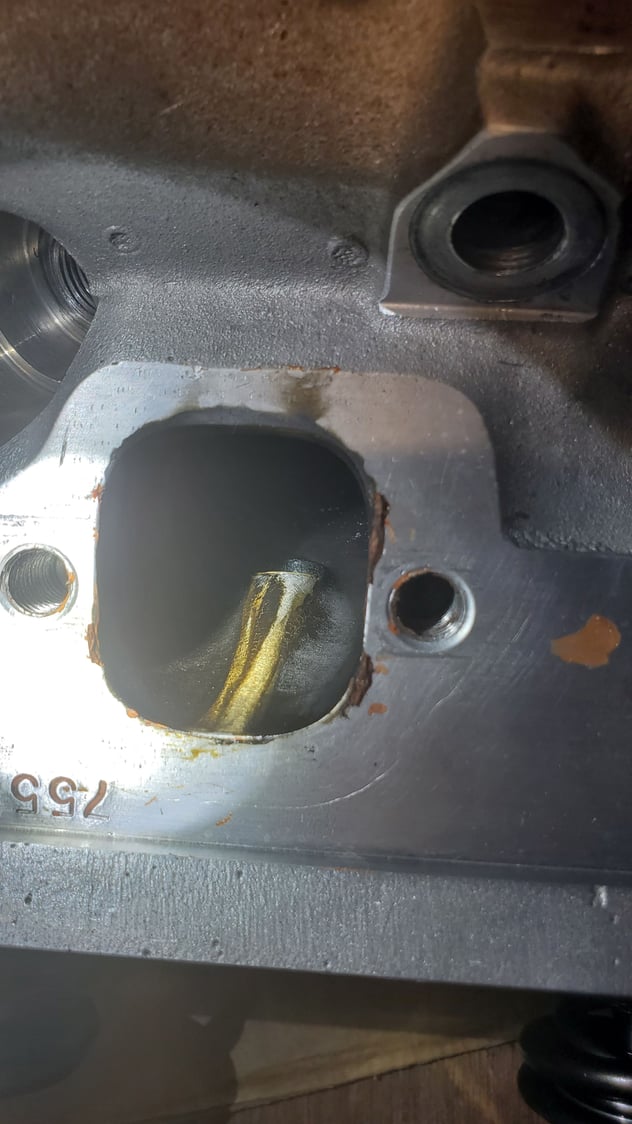
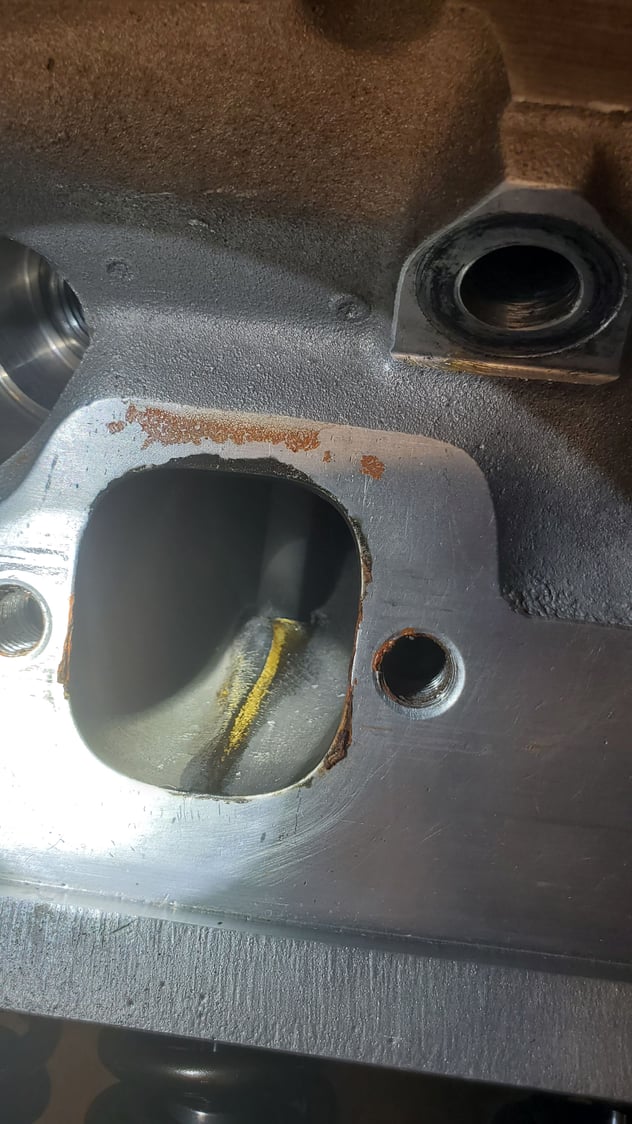
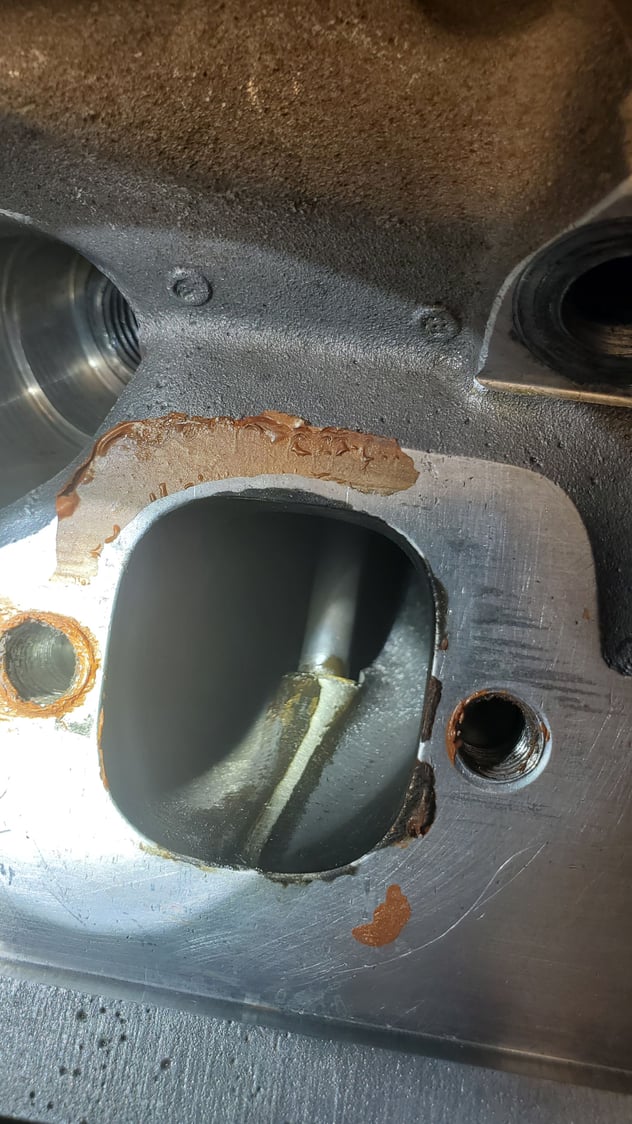
By looking at the oil in the the exhaust ports, would it be possible "IF" the "excessive" oil was coming from the rings or intake ports, could it swirl or get pulled around the exhaust port hump and look wet like in the picture? Kind of like rain getting pulled to the edge of a wing of an air plane.
Thoughts?
Also look how much oil is in the combustion chamber? All 8 similar. Don't think oil is coming from exhaust port. Again this build had dyno time, 30 street miles (no boost) and 30-45 minutes of total idle time.
Last edited by underpsi68; 10-20-2020 at 10:10 PM.
10-21-2020 | 07:35 AM
#59
Registered

Joined: Aug 2010
Posts: 2,228
Likes: 547
From: Cape Coral FL
A couple of questions. Is this a long stroke or long connecting rod engine where the wrist pin is up in the oil ring? Who is doing the short block assembly? Are the rings being lubricated on assy? I know that I will catch some heat for this, but most rings these days should be installed completely dry for proper ring seating.
This is a good friend of mine and he is Mr. SBF. Give him a call and I am sure that he can get to the bottom of it. His name is Ray, tell him that Joe sent you
https://www.rrmotorsports.net/
This is a good friend of mine and he is Mr. SBF. Give him a call and I am sure that he can get to the bottom of it. His name is Ray, tell him that Joe sent you
https://www.rrmotorsports.net/
10-21-2020 | 09:00 AM
#60
Thread Starter
Registered
Joined: Oct 2012
Posts: 2,232
Likes: 537
A couple of questions. Is this a long stroke or long connecting rod engine where the wrist pin is up in the oil ring? Who is doing the short block assembly? Are the rings being lubricated on assy? I know that I will catch some heat for this, but most rings these days should be installed completely dry for proper ring seating.
This is a good friend of mine and he is Mr. SBF. Give him a call and I am sure that he can get to the bottom of it. His name is Ray, tell him that Joe sent you
https://www.rrmotorsports.net/
This is a good friend of mine and he is Mr. SBF. Give him a call and I am sure that he can get to the bottom of it. His name is Ray, tell him that Joe sent you
https://www.rrmotorsports.net/
Very reputable builder built first 2 short blocks, than the last 2 long blocks a he wanted to dyno engine before it left his shop. I'm glad I didn't build it because everyone would have been pointing fingers at me. This next time I am building it. I can't do any worse?? Lol
I believe builder uses very light tranny fluid on rings because it burns right off. I have heard of some putting together dry.
Joe i sent you a pm. Thanks