


Am I Missing Something?
 12-11-2021 | 06:06 PM
#1

Thread Starter
Fast Singles Club


Joined: Oct 2011
Posts: 4,042
Likes: 491
From: Raystown Lake , Pa.
 Am I Missing Something?
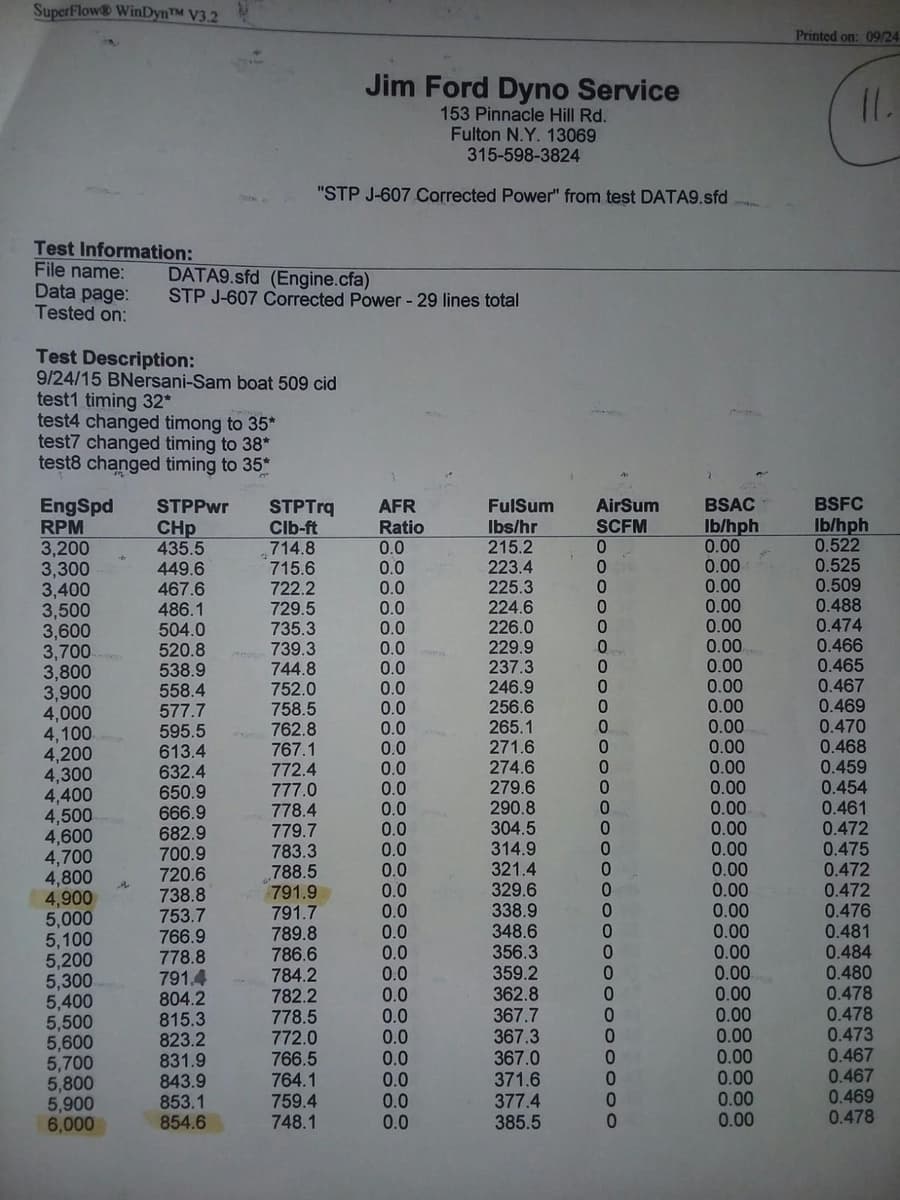
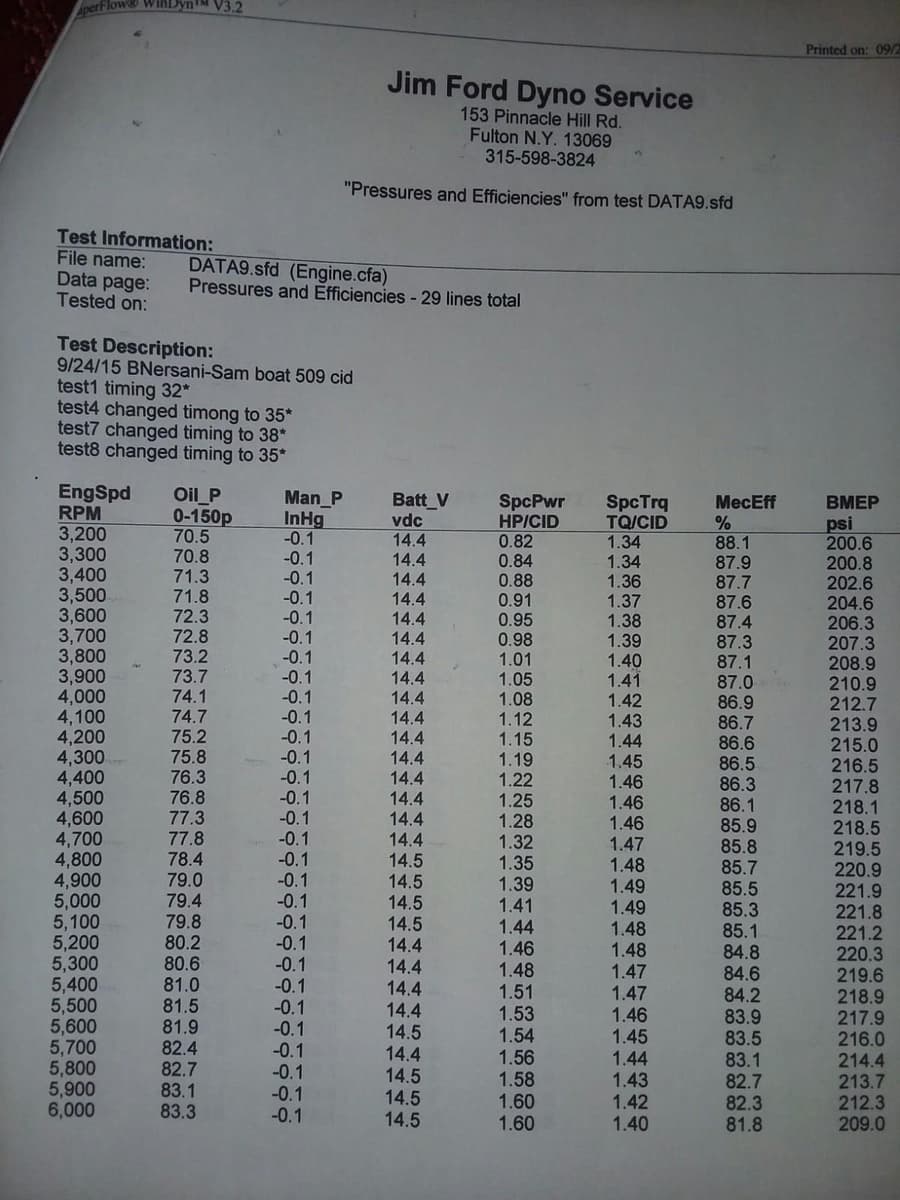
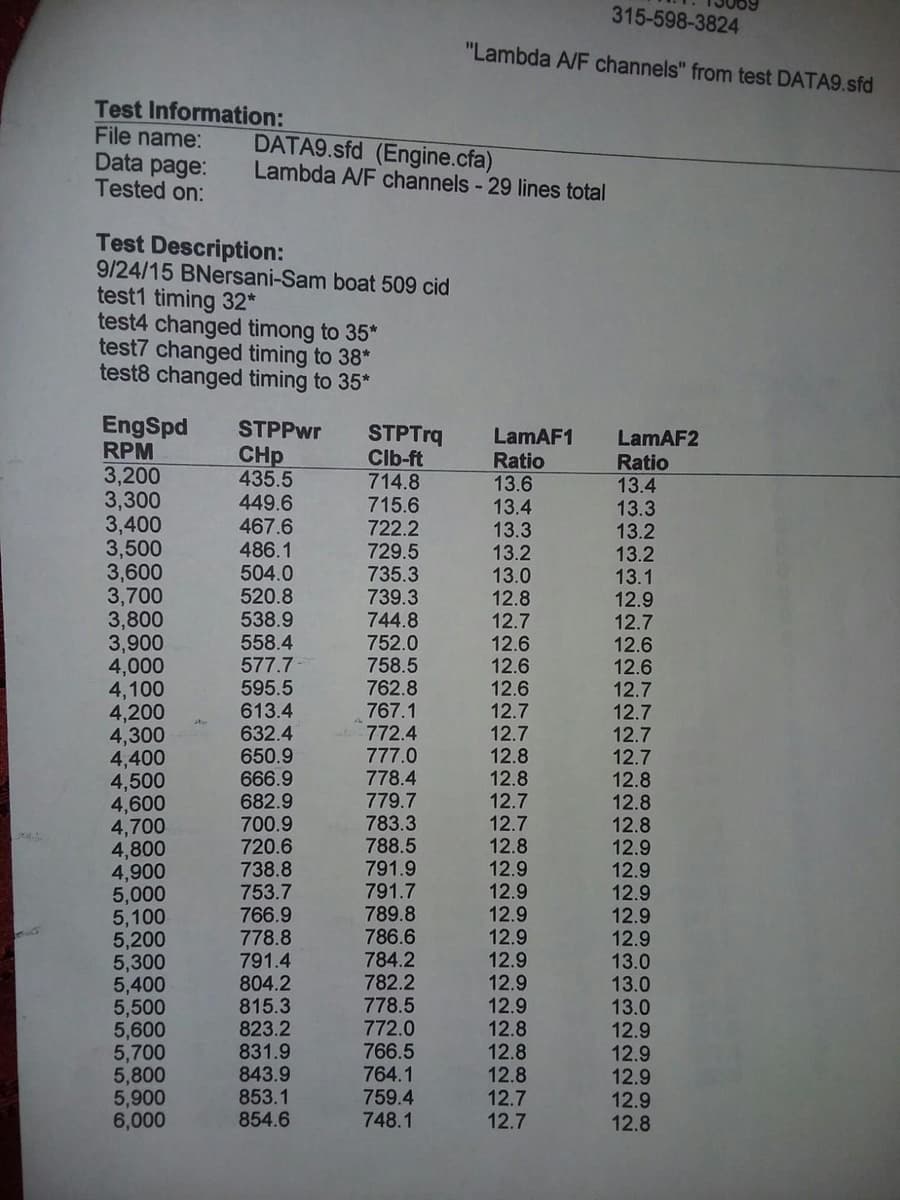
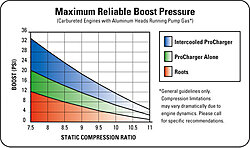
My 8.55:1 static compression plus 8# of boost is a no go according to this chart Griff posted. Dyno chart says my blown 509ci made 855hp@6000 on 91 octane. This only makes sense if I use the dynamic cr which is 6.83:1 and that would allow the 8# boost figure. I have written down a final compression ratio 10.8 from one of my conversations with either BM or Jim Bersani. Am I correct in assuming that the dynamic cr is to be used or should I bore scope my pistons for damage? Engine has 8 dyno runs.
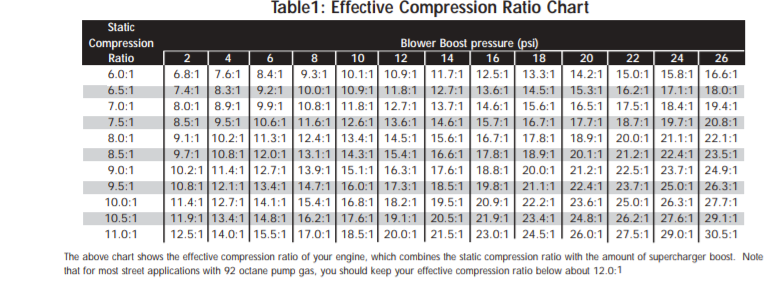
For reference:
https://www.gofastmath.com/Compressi...tio_Calculator
For reference:
https://www.gofastmath.com/Compressi...tio_Calculator
Last edited by the deep; 12-11-2021 at 06:16 PM.
 12-11-2021 | 06:58 PM
#2
Registered

Joined: Jun 2009
Posts: 9,989
Likes: 6,484
From: Chicago
There`s many things to consider when it comes to Effective Compression ratio. It`s a general idea chart
I found the limits of my combo and if I had your set up I`d run boostane to be on the safe side .
I found the limits of my combo and if I had your set up I`d run boostane to be on the safe side .
12-11-2021 | 07:02 PM
#3
Registered
Joined: Sep 2013
Posts: 2,320
Likes: 1,040
From: Wisconsin
I don’t know if I’d take that chart for gospel. Im running around 8-9lbs boost on my 525s with 8.75 static compression. Intercooler is constantly fed cool water but that wouldn’t drop two points of compression. I need to look up the calculation again.
12-11-2021 | 09:58 PM
#4

Platinum Member


Joined: Jun 2004
Posts: 7,321
Likes: 1,039
From: frankenmuth michigan
Guess it depends if your filling your boat at marinas with 89 or with 93 on land. I build and dyno motors as part of my business, quite a few have whipple 2.3's and 3.3s where your going to run out of blower. On THOSE motors I ALWAYS shoot for 8.8-1 base, sometimes 9-1 base if its a 2.3 whipple. My own personal boat I used to have I ran 8.4-1 540 with procharger, thru the years each refresh I turned it up higher and higher. I was running 12-13 psi on 8.4-1 at 1000/1050 hp on 93, 13-14 psi on 80% 93/20& 110 at 1100 when I really wanted to push it. I freshened that motor every 3 to 4 years, around 100 to 120 hours. Never melted a piston, never tuned it into the 12s under boost, Used a basic efi , Mefi, nothing fancy. When I DID start doing my own tuning in 06 or 08, I found a certain dyno operator I had PREVIOUSLY paid to tune it left the ONLY safety it has, a knock sensor, turned OFF and was like that for a year.
Tune to a safe AFR #, watch for KR if its efi, I wouldnt hesitate to run 8 lbs boost on 8.55-1, dont turn timing to a crazy high number, dont lean it out into 12s under boost, Smitty
Tune to a safe AFR #, watch for KR if its efi, I wouldnt hesitate to run 8 lbs boost on 8.55-1, dont turn timing to a crazy high number, dont lean it out into 12s under boost, Smitty
 12-11-2021 | 10:34 PM
#5
Registered
Joined: Oct 2012
Posts: 2,239
Likes: 541
When I started playing with centrifugal blowers almost 30 yes ago, my old school machine shop looked up my 9:1 compression in the "chart". It was either 2 or 3lbs on 93 octane!!! I politely said ok, np. Picked up my parts and hit it with 12lbs for years!!! Lol.

 12-13-2021 | 12:40 PM
#9
Thread Starter
Fast Singles Club
Joined: Oct 2011
Posts: 4,042
Likes: 491
From: Raystown Lake , Pa.
From an article in the RPM Outlet. According to this I'm on the money, just need to tame the AFR a bit. Something in my favor is a light boat, I'm thinking this engine will hardly notice there's a 25' cat attached to it.
For carbureted motors, the rules are slightly different. Carburetors deliver the vast majority of fuel in a liquid state, and as this raw fuel atomizes from liquid to gas, a chemical state change actually occurs. Due to this endothermic reaction, which draws heat and cools the incoming air, a carbureted motor can safely handle more boost than a comparable EFI/TPI motor. For carbureted engines with compression ratios of 9:1 or less and boost levels in the 8-14 psi range, pump gasoline works very well. Compression ratios of 10:1 and higher require lower boost levels, higher octane fuel, intercooling, or some combination of the above. Compression ratios in the 7or 8:1 range can usually handle 12-20 psi on pump gasoline.
For carbureted motors, the rules are slightly different. Carburetors deliver the vast majority of fuel in a liquid state, and as this raw fuel atomizes from liquid to gas, a chemical state change actually occurs. Due to this endothermic reaction, which draws heat and cools the incoming air, a carbureted motor can safely handle more boost than a comparable EFI/TPI motor. For carbureted engines with compression ratios of 9:1 or less and boost levels in the 8-14 psi range, pump gasoline works very well. Compression ratios of 10:1 and higher require lower boost levels, higher octane fuel, intercooling, or some combination of the above. Compression ratios in the 7or 8:1 range can usually handle 12-20 psi on pump gasoline.

Last edited by the deep; 12-13-2021 at 12:49 PM.
12-13-2021 | 02:35 PM
#10
Registered
Joined: Jan 2010
Posts: 617
Likes: 144
From: syracuse ny
From an article in the RPM Outlet. According to this I'm on the money, just need to tame the AFR a bit. Something in my favor is a light boat, I'm thinking this engine will hardly notice there's a 25' cat attached to it.
For carbureted motors, the rules are slightly different. Carburetors deliver the vast majority of fuel in a liquid state, and as this raw fuel atomizes from liquid to gas, a chemical state change actually occurs. Due to this endothermic reaction, which draws heat and cools the incoming air, a carbureted motor can safely handle more boost than a comparable EFI/TPI motor. For carbureted engines with compression ratios of 9:1 or less and boost levels in the 8-14 psi range, pump gasoline works very well. Compression ratios of 10:1 and higher require lower boost levels, higher octane fuel, intercooling, or some combination of the above. Compression ratios in the 7or 8:1 range can usually handle 12-20 psi on pump gasoline.
Attachment 577248
For carbureted motors, the rules are slightly different. Carburetors deliver the vast majority of fuel in a liquid state, and as this raw fuel atomizes from liquid to gas, a chemical state change actually occurs. Due to this endothermic reaction, which draws heat and cools the incoming air, a carbureted motor can safely handle more boost than a comparable EFI/TPI motor. For carbureted engines with compression ratios of 9:1 or less and boost levels in the 8-14 psi range, pump gasoline works very well. Compression ratios of 10:1 and higher require lower boost levels, higher octane fuel, intercooling, or some combination of the above. Compression ratios in the 7or 8:1 range can usually handle 12-20 psi on pump gasoline.
Attachment 577248

