



Virus spreading at gas stations
 03-22-2020 | 01:20 PM
#21
Registered

Joined: Jul 2007
Posts: 3,337
Likes: 860

No one knows how long a person is contagious without showing symptoms but it has been identified to be within a 2 week window that a host will become symptomatic = lots of opportunity for typhoid Mary scenarios infecting people unbeknownst to the host, who in turn, infects others exponentially. The daily increases in sheer numbers point to this.

 03-22-2020 | 04:31 PM
#25
Registered
Joined: Jul 2007
Posts: 3,337
Likes: 860
... and yet there remains a faction that thinks this is nothing more than media hocus-pocus (keeping it "G") and just a ploy against trump
the first reports from Spring Break partying are that 6 students from a Fla. University are in isolation with the virus....if you have kids that went on with the party vacation - they might have brought back more than dirty socks and someone else's underwear.
the first reports from Spring Break partying are that 6 students from a Fla. University are in isolation with the virus....if you have kids that went on with the party vacation - they might have brought back more than dirty socks and someone else's underwear.
Last edited by speicher lane; 03-22-2020 at 04:48 PM.
03-22-2020 | 08:13 PM
#26
Registered
Joined: Jun 2009
Posts: 9,989
Likes: 6,484
From: Chicago
... and yet there remains a faction that thinks this is nothing more than media hocus-pocus (keeping it "G") and just a ploy against trump
the first reports from Spring Break partying are that 6 students from a Fla. University are in isolation with the virus....if you have kids that went on with the party vacation - they might have brought back more than dirty socks and someone else's underwear.
the first reports from Spring Break partying are that 6 students from a Fla. University are in isolation with the virus....if you have kids that went on with the party vacation - they might have brought back more than dirty socks and someone else's underwear.
A low probability of catching COVID-19
The World Health Organization (“WHO”) released a study on how China responded to COVID-19. Currently, this study is one of the most exhaustive pieces published on how the virus spreads.
The results of their research show that COVID-19 doesn’t spread as easily as we first thought or the media had us believe (remember people abandoned their dogs out of fear of getting infected). According to their report if you come in contact with someone who tests positive for COVID-19 you have a 1–5% chance of catching it as well. The variability is large because the infection is based on the type of contact and how long.
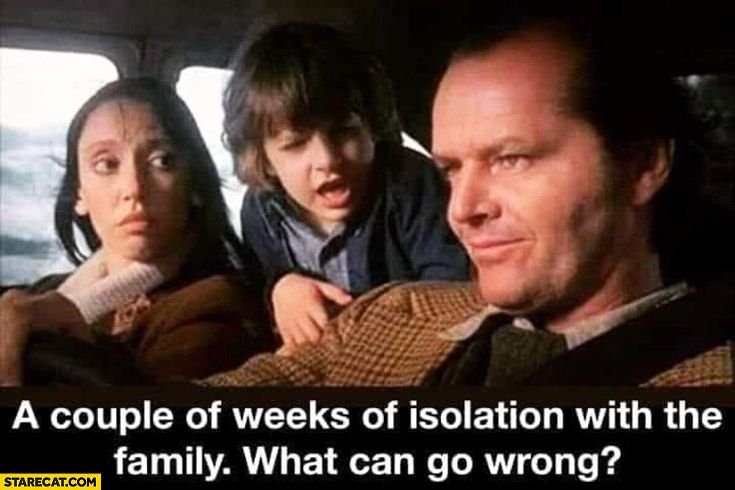
The majority of viral infections come from prolonged exposures in confined spaces with other infected individuals. Person-to-person and surface contact is by far the most common cause. From the WHO report, “When a cluster of several infected people occurred in China, it was most often (78–85%) caused by an infection within the family by droplets and other carriers of infection in close contact with an infected person.
From the CDC’s study on transmission in China and Princess Cruise outbreak -
A growing body of evidence indicates that COVID-19 transmission is facilitated in confined settings; for example, a large cluster (634 confirmed cases) of COVID-19 secondary infections occurred aboard a cruise ship in Japan, representing about one fifth of the persons aboard who were tested for the virus. This finding indicates the high transmissibility of COVID-19 in enclosed spaces
Dr. Paul Auwaerter, the Clinical Director for the Division of Infectious Diseases at Johns Hopkins University School of Medicine echoes this finding,
“If you have a COVID-19 patient in your household, your risk of developing the infection is about 10%….If you were casually exposed to the virus in the workplace (e.g., you were not locked up in conference room for six hours with someone who was infected [like a hospital]), your chance of infection is about 0.5%”
The World Health Organization (“WHO”) released a study on how China responded to COVID-19. Currently, this study is one of the most exhaustive pieces published on how the virus spreads.
The results of their research show that COVID-19 doesn’t spread as easily as we first thought or the media had us believe (remember people abandoned their dogs out of fear of getting infected). According to their report if you come in contact with someone who tests positive for COVID-19 you have a 1–5% chance of catching it as well. The variability is large because the infection is based on the type of contact and how long.
The majority of viral infections come from prolonged exposures in confined spaces with other infected individuals. Person-to-person and surface contact is by far the most common cause. From the WHO report, “When a cluster of several infected people occurred in China, it was most often (78–85%) caused by an infection within the family by droplets and other carriers of infection in close contact with an infected person.
From the CDC’s study on transmission in China and Princess Cruise outbreak -
A growing body of evidence indicates that COVID-19 transmission is facilitated in confined settings; for example, a large cluster (634 confirmed cases) of COVID-19 secondary infections occurred aboard a cruise ship in Japan, representing about one fifth of the persons aboard who were tested for the virus. This finding indicates the high transmissibility of COVID-19 in enclosed spaces
Dr. Paul Auwaerter, the Clinical Director for the Division of Infectious Diseases at Johns Hopkins University School of Medicine echoes this finding,
“If you have a COVID-19 patient in your household, your risk of developing the infection is about 10%….If you were casually exposed to the virus in the workplace (e.g., you were not locked up in conference room for six hours with someone who was infected [like a hospital]), your chance of infection is about 0.5%”

 03-23-2020 | 10:13 AM
#29

Registered

Joined: Nov 2000
Posts: 3,949
Likes: 93
From: IL...XLOTO
Illinois went on lockdown this past weekend. Only essential businesses and services remain open. Restaurants and bars closed to in house service a few weeks ago, they still have carryout. Many businesses are deemed necessary, so it isn't like everything is closed down. Essential includes liquor stores and cannabis shops. Cannabis is an interesting take on essential since it was illegal until just recently. What you don't see is people being out and about for no reason. Many stores have cut back hours, promoted specific hours for seniors, and some are limiting the amount of people in the store at any one time, plus urging people to keep reasonable distance when possible. In the end it appears most folks are taking the issue serious. There are not a lot of people out and about. As more test kits get rolled out I suspect the spike will hit big time this week. What we really don't know is how many folks have been infected the last 4-6 weeks since the testing capabilities were not available. For the states that may have lockdown in their future, one thing Illinois did wrong, in my opinion, was they announced the lockdown Friday, but didn't put the list of what will remain essential out to businesses and people until hours later. That caused some panic Friday of people rushing out to stores they might need something from in the near future. Friday afternoon had the opposite effect than they intended with many people in stores and long lines. That could have been avoided had they communicated the broad list of essential goods and services at the time they announced the shutdown.
03-23-2020 | 10:45 AM
#30
Registered
Joined: Jul 2009
Posts: 8,527
Likes: 706
From: Taunton Ma
Illinois went on lockdown this past weekend. Only essential businesses and services remain open. Restaurants and bars closed to in house service a few weeks ago, they still have carryout. Many businesses are deemed necessary, so it isn't like everything is closed down. Essential includes liquor stores and cannabis shops. Cannabis is an interesting take on essential since it was illegal until just recently. What you don't see is people being out and about for no reason. Many stores have cut back hours, promoted specific hours for seniors, and some are limiting the amount of people in the store at any one time, plus urging people to keep reasonable distance when possible. In the end it appears most folks are taking the issue serious. There are not a lot of people out and about. As more test kits get rolled out I suspect the spike will hit big time this week. What we really don't know is how many folks have been infected the last 4-6 weeks since the testing capabilities were not available. For the states that may have lockdown in their future, one thing Illinois did wrong, in my opinion, was they announced the lockdown Friday, but didn't put the list of what will remain essential out to businesses and people until hours later. That caused some panic Friday of people rushing out to stores they might need something from in the near future. Friday afternoon had the opposite effect than they intended with many people in stores and long lines. That could have been avoided had they communicated the broad list of essential goods and services at the time they announced the shutdown.

