


We hurt the 496....
 06-04-2025 | 06:13 PM
#651
Thread Starter
VIP Member


Joined: Jun 2021
Posts: 3,486
Likes: 2,115
From: SW Ohio

Agreed. And that’s always kinda been my MO on most things. Plus, I think I can get away with just eight of them, since they are so much more positive of a clamp and considerably wider than the worm gear type. At ~$15 each, that’s not that much for a “forever fix”.
Thanks. Brad.
 06-05-2025 | 06:40 AM
#652
Registered

Joined: Aug 2019
Posts: 1,220
Likes: 413
From: BC
AShipShow,
It had double hose clamps from PQ (assuming), and I replicated that when I put it back together, but I suspect the worm gear style hose clamps just aren't cutting it against the wire-wound hose. I may invest in six more of the T-bolt style and just have one per joint, as they are about an inch wide, distribute the load far more evenly, and provide WAY more clamping force. I think that will seal them more than enough with the soft-sided hose.
Thanks. Brad.
It had double hose clamps from PQ (assuming), and I replicated that when I put it back together, but I suspect the worm gear style hose clamps just aren't cutting it against the wire-wound hose. I may invest in six more of the T-bolt style and just have one per joint, as they are about an inch wide, distribute the load far more evenly, and provide WAY more clamping force. I think that will seal them more than enough with the soft-sided hose.
Thanks. Brad.
The key here is just preiodic inspection...and the "2 is 1, and 1 is none" method.
06-05-2025 | 06:57 AM
#653
Thread Starter
VIP Member
Joined: Jun 2021
Posts: 3,486
Likes: 2,115
From: SW Ohio
The worm style clamps I have now are looking like they are about to shear out completely. The "tails" are kicked off to one side. I'm thinking they are already broken on one side inside the screw housing; at least a couple of them.
You really think two are necessary with the T-bolt style clamp?
Thanks. Brad.
Last edited by Brad Christy; 06-05-2025 at 08:50 AM.
06-05-2025 | 08:36 AM
#654
Registered


Joined: Aug 2007
Posts: 1,422
Likes: 1,062
From: Orlando, FL
Tartilla,
The worm style clamps I have now are looking like they are about to shear out completely. The "tails" are kicked off to one side. I'm thinking they are already broken on one side inside the screw housing. at least a couple of them.
You really think two are necessary with the T-bolt style clamp?
Thanks. Brad.
The worm style clamps I have now are looking like they are about to shear out completely. The "tails" are kicked off to one side. I'm thinking they are already broken on one side inside the screw housing. at least a couple of them.
You really think two are necessary with the T-bolt style clamp?
Thanks. Brad.
06-06-2025 | 07:36 AM
#655
Registered
Joined: Aug 2019
Posts: 1,220
Likes: 413
From: BC
Tartilla,
The worm style clamps I have now are looking like they are about to shear out completely. The "tails" are kicked off to one side. I'm thinking they are already broken on one side inside the screw housing; at least a couple of them.
You really think two are necessary with the T-bolt style clamp?
Thanks. Brad.
The worm style clamps I have now are looking like they are about to shear out completely. The "tails" are kicked off to one side. I'm thinking they are already broken on one side inside the screw housing; at least a couple of them.
You really think two are necessary with the T-bolt style clamp?
Thanks. Brad.
Two is one and one is none...is from explosive redundancy drills. But I like to apply it with 'cannot have it fail' type problems.
Less reduncancy means increased inspection frequency.
I've found that when we expect something to not fail, Mr. Murphy comes along for a visit soon after.
06-06-2025 | 08:19 AM
#656
Thread Starter
VIP Member
Joined: Jun 2021
Posts: 3,486
Likes: 2,115
From: SW Ohio
T-bolt clamps are a great clamp. Look and feel good. But they still fail as well.
Two is one and one is none...is from explosive redundancy drills. But I like to apply it with 'cannot have it fail' type problems.
Less reduncancy means increased inspection frequency.
I've found that when we expect something to not fail, Mr. Murphy comes along for a visit soon after.
Two is one and one is none...is from explosive redundancy drills. But I like to apply it with 'cannot have it fail' type problems.
Less reduncancy means increased inspection frequency.
I've found that when we expect something to not fail, Mr. Murphy comes along for a visit soon after.
When I changed to silicone exhaust hoses and t-bolt clamps on my Sunsation, I double t-bolt clamped both ends of the hoses. 16 clamps cost me a few bucks, but good peace of mind... think about how much water can get dumped in the bilge while running, if a hose were to come loose.
You're not wrong. Right now, availability is making the decisions. My local option has two on hand. they can get more, but that's what I've got. I haven't actually gone and picked them up yet. They are a two hour round trip away. My plan is to replace the hose with the soft-side stuff and move forward with the worm-gear clamps for now, then replace them with T-bolt clamps as they become available. I'll prolly order them from Amazon, as they appear to be the same brand my local option has, and I can get them all at once.
Thanks. Brad.
06-06-2025 | 12:34 PM
#657

Platinum Member


Joined: Jun 2004
Posts: 7,317
Likes: 1,037
From: frankenmuth michigan
IAT: I have also seen where at 140, 150 IAT where I started seeing KR on a long pull. I often use a 45 gallon supply of water and a circ pump when supply water to a innercooler, I try to temper water to a temp close to what customer would see, ie, he lives where waters 85 degrees vs 70, and will blend in water to hold that innercooler supply temp. I have done back to back pulls and allowed supply temp to reach point the IAT at intake was getting in that 140, 150 range and started picking up kr so I like to see no more then 130. In automotive world with a air to air innercooler those IATS are almost un-obtainable so much more timing is pulled and fuel added.
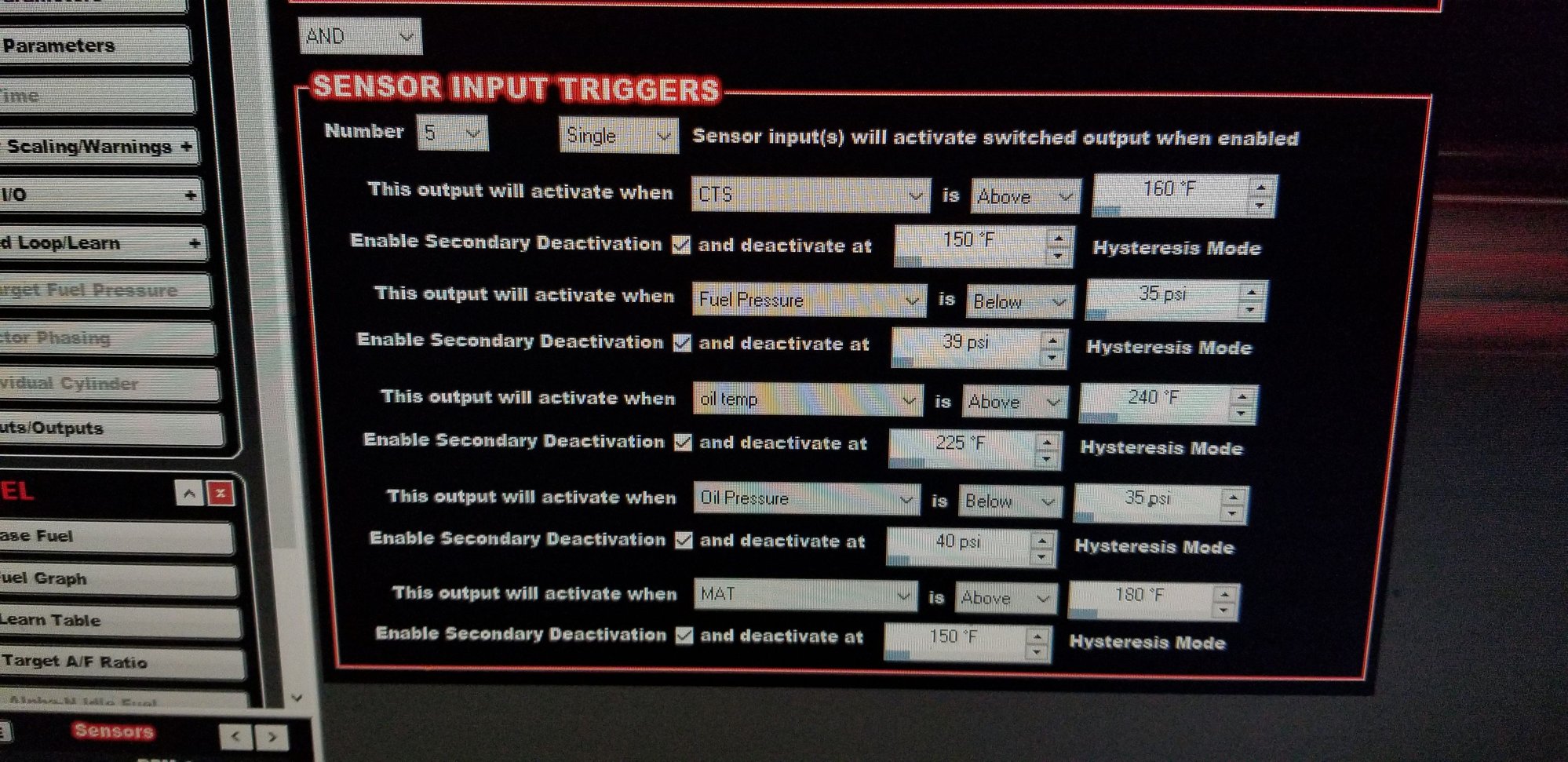
So If I were you brad I would say in yoiur holley to pull 1 degree at 130 and progress from there exponentially since you dont have a working knock sensor. You can also use a fuel modifier table to start adding PW vs IAT after 130 since its so easy to do in a holley. By 180 Id be adding 15% and pulling at least 8 degrees of timing in case your flow to innercooler has a issue, to point boat will start slowing down where you notice and it will protect it from detonation. The ability to quickly and easily build "saftety" into your iat and ECT tables in a holley is a great feature, Smitty

 06-06-2025 | 04:10 PM
#659
Thread Starter
VIP Member
Joined: Jun 2021
Posts: 3,486
Likes: 2,115
From: SW Ohio
so in my personal experience dynoing things to the "limit" of a given octane, usually around here on 93, IAT much above 120 pushes alot of stuff into detonation, same with afrs. Heres a example : I had a whippled 509 on dyno with tailpipe afrs around 11.5 in what I call "hard boost", 8, 9 psi. Was making around 800 hp, similar tq. This engine was leaving and going quite a distance away which makes in boat tuning more difficult so since mefi is blind speed density and thats what it had, I usually tiune at 50 to 60 psi and tune idle, part throttle slightly rich. This allows owner to make a "global" change in boat by simply lowering fuel pressure IF it becomes richer in boat which often happens. so I was about done tuning and reviewed my fuel pressure which was only at 40 psi, I had meant to increse it earlier and hadn't. So I increased fuel pressure to 55 from 40, about "1 bar", that usually increases fuel flow 12.5% on a typical injector. So I mathematically re-scalled the whole tune, when I repulled it the tailpipe afrs were NOT at the 11.5 but closer to 12.0, 12.2. I had pulled TOO much out trying to account for dead band/injector latency. This engine previously had not one hint of KR, at 12,0, 12.2 it not only had 2-3 degrees of KR but IF I stayed in it, it went into knock hysteresis and had to pull 7 or 8 degrees. So I worked on the tune to get afrs BACK where they were with new fuel pressure. At 11.7, 11.8 the KR was gone, I like to have a ;little safety margin so getting it back to 11.5 gave me a little safety factor. This last quip was sorta in response to a phone call from brad while tuning the other day.
IAT: I have also seen where at 140, 150 IAT where I started seeing KR on a long pull. I often use a 45 gallon supply of water and a circ pump when supply water to a innercooler, I try to temper water to a temp close to what customer would see, ie, he lives where waters 85 degrees vs 70, and will blend in water to hold that innercooler supply temp. I have done back to back pulls and allowed supply temp to reach point the IAT at intake was getting in that 140, 150 range and started picking up kr so I like to see no more then 130. In automotive world with a air to air innercooler those IATS are almost un-obtainable so much more timing is pulled and fuel added.
So If I were you brad I would say in yoiur holley to pull 1 degree at 130 and progress from there exponentially since you dont have a working knock sensor. You can also use a fuel modifier table to start adding PW vs IAT after 130 since its so easy to do in a holley. By 180 Id be adding 15% and pulling at least 8 degrees of timing in case your flow to innercooler has a issue, to point boat will start slowing down where you notice and it will protect it from detonation. The ability to quickly and easily build "saftety" into your iat and ECT tables in a holley is a great feature, Smitty
IAT: I have also seen where at 140, 150 IAT where I started seeing KR on a long pull. I often use a 45 gallon supply of water and a circ pump when supply water to a innercooler, I try to temper water to a temp close to what customer would see, ie, he lives where waters 85 degrees vs 70, and will blend in water to hold that innercooler supply temp. I have done back to back pulls and allowed supply temp to reach point the IAT at intake was getting in that 140, 150 range and started picking up kr so I like to see no more then 130. In automotive world with a air to air innercooler those IATS are almost un-obtainable so much more timing is pulled and fuel added.
So If I were you brad I would say in yoiur holley to pull 1 degree at 130 and progress from there exponentially since you dont have a working knock sensor. You can also use a fuel modifier table to start adding PW vs IAT after 130 since its so easy to do in a holley. By 180 Id be adding 15% and pulling at least 8 degrees of timing in case your flow to innercooler has a issue, to point boat will start slowing down where you notice and it will protect it from detonation. The ability to quickly and easily build "saftety" into your iat and ECT tables in a holley is a great feature, Smitty
Thanks for the call-back the other day. The numbers the tuner was throwing at me were leaner than the builder had mentioned throughout our conversations, and the tuner was more than willing to accept input from someone with more marine tuning experience.
Can I get a glossary of acronyms? A few of them I know. A few I have guesses....

Thanks. Brad.
06-07-2025 | 05:31 AM
#660
Platinum Member
Joined: Jun 2004
Posts: 7,317
Likes: 1,037
From: frankenmuth michigan
Smitty,
Thanks for the call-back the other day. The numbers the tuner was throwing at me were leaner than the builder had mentioned throughout our conversations, and the tuner was more than willing to accept input from someone with more marine tuning experience.
Can I get a glossary of acronyms? A few of them I know. A few I have guesses....
Thanks. Brad.
Thanks for the call-back the other day. The numbers the tuner was throwing at me were leaner than the builder had mentioned throughout our conversations, and the tuner was more than willing to accept input from someone with more marine tuning experience.
Can I get a glossary of acronyms? A few of them I know. A few I have guesses....
Thanks. Brad.
ECT; engine coolant temp
PW: pulse width or "ms" milliseconds of injector firing/triggering in a fuel table


