


We hurt the 496....


 01-14-2025 | 08:48 AM
#402
Thread Starter
VIP Member


Joined: Jun 2021
Posts: 3,475
Likes: 2,099
From: SW Ohio

No. As much as I'd love to, the shop that did the machine work gets $850 for a dyno session, and I just can't justify the cost. The builder has a preliminary base tune worked up, based on similar builds, and that will get it running on the stand. Once we get the engine back in the boat, it will have to wait until weather permits and we will go out, laptop in hand, and do final tunings, based on VE AFRs. This is fine, as I some need time to finalize the exhaust from the riser-elevated elbows to the tips.
One of the really cool features of the Holley HP is the self-learning function. As I'm told, you set the target AFR range, and the ECM works it out as you go. Once the tune is set, you save it and set the ECM to closed loop and disengage the O2 sensors. While I'm steadily wrapping my head around all of this, I'm leaving these aspects to the builder, who knows the Holley HP like the back of his hand.
Thanks. Brad.
 01-14-2025 | 08:53 AM
#403
Thread Starter
VIP Member
Joined: Jun 2021
Posts: 3,475
Likes: 2,099
From: SW Ohio
Ryan,
Couldn't find anything tangible, so I'm running on the theory you were right; that it's a continuity, due to a persistent draw (stereo clock, etc.), not a short. As we discussed, nothing was changed that would lead to a short. We'll know when I hook a battery up. There are breakers and fuses in place. If something pops up, we'll know.
Thanks. Brad.
Couldn't find anything tangible, so I'm running on the theory you were right; that it's a continuity, due to a persistent draw (stereo clock, etc.), not a short. As we discussed, nothing was changed that would lead to a short. We'll know when I hook a battery up. There are breakers and fuses in place. If something pops up, we'll know.
Thanks. Brad.
01-16-2025 | 11:32 AM
#404
Thread Starter
VIP Member
Joined: Jun 2021
Posts: 3,475
Likes: 2,099
From: SW Ohio
Guys,
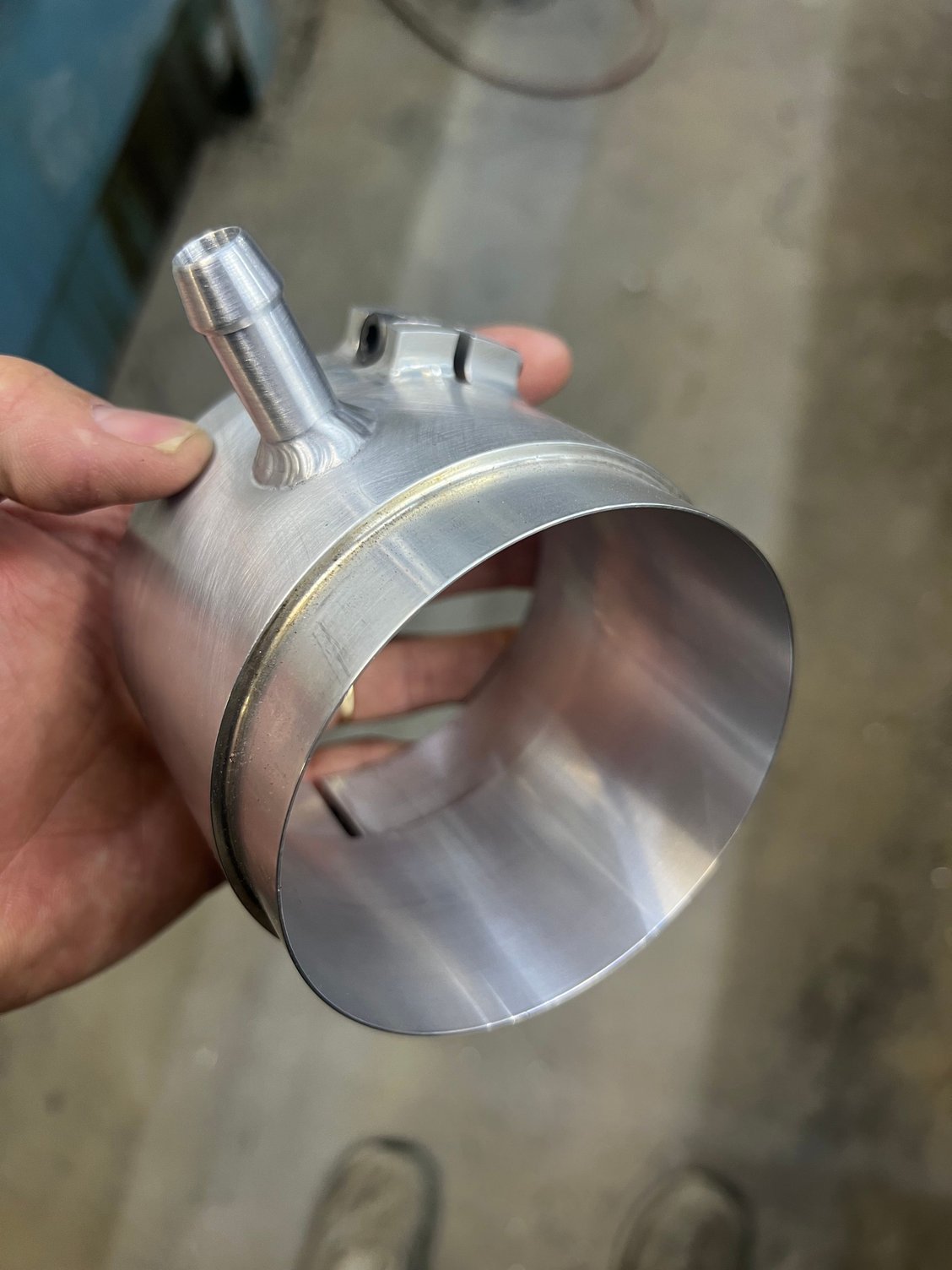
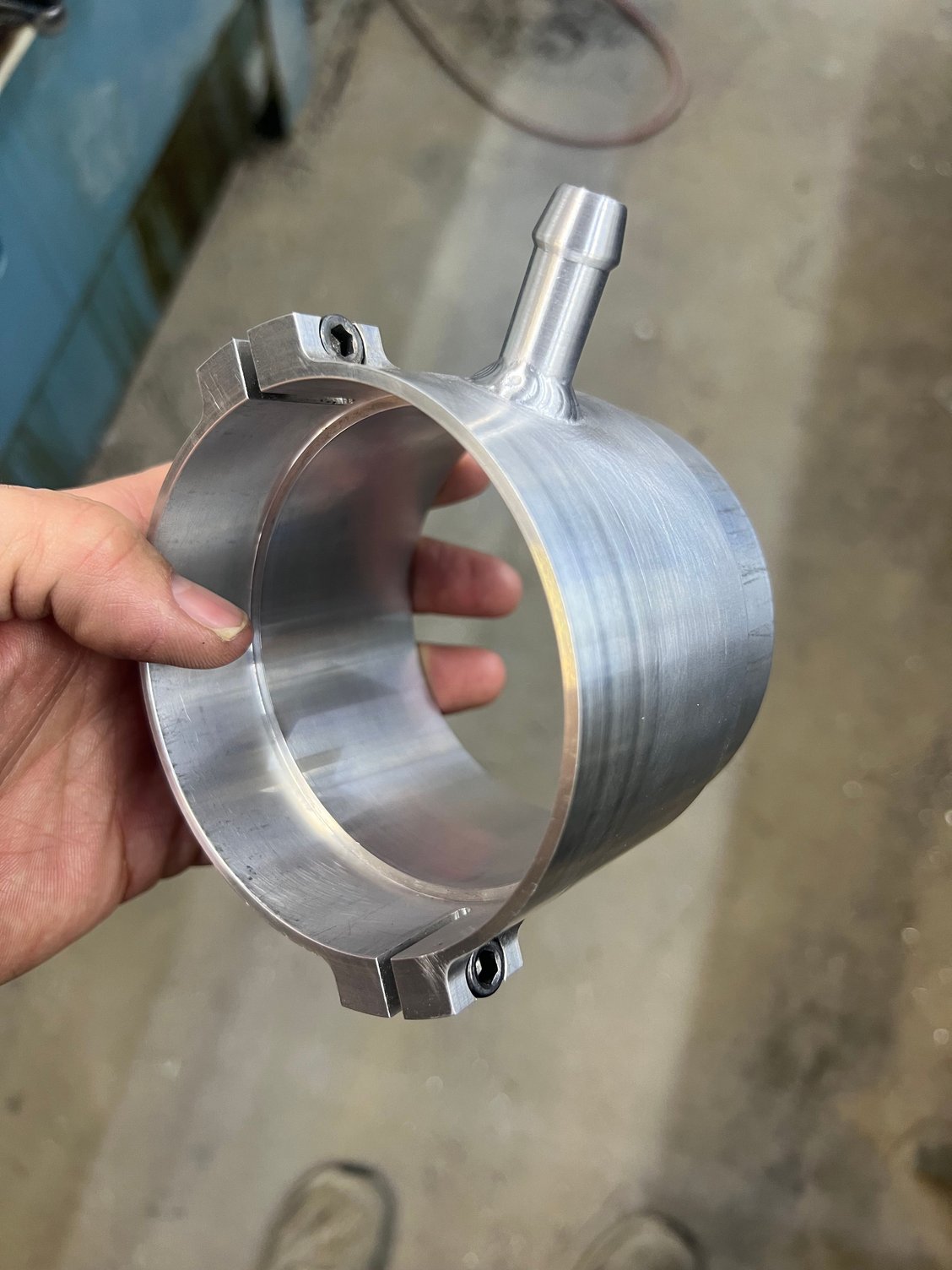

We eliminated the intake manifold OEM integrated “PCV” that was inducing crankcase pressure whenever we were in boost condition. So, I made an intake snout extension for the ProCharger that will allow for a vacuum draw on the oil fill cap.
The hose that was connected to the oil fill cap was previously just hanging in front of the breather on the ProCharger. This always led to the breather getting all gunked up. The extension will also get the breather about 2” further away from the belt and its dust.
Thanks. Brad.
We eliminated the intake manifold OEM integrated “PCV” that was inducing crankcase pressure whenever we were in boost condition. So, I made an intake snout extension for the ProCharger that will allow for a vacuum draw on the oil fill cap.
The hose that was connected to the oil fill cap was previously just hanging in front of the breather on the ProCharger. This always led to the breather getting all gunked up. The extension will also get the breather about 2” further away from the belt and its dust.
Thanks. Brad.
01-16-2025 | 02:01 PM
#405
Registered
Joined: Oct 2024
Posts: 96
Likes: 39
From: York Haven, PA
Guys,
We eliminated the intake manifold OEM integrated “PCV” that was inducing crankcase pressure whenever we were in boost condition. So, I made an intake snout extension for the ProCharger that will allow for a vacuum draw on the oil fill cap.
The hose that was connected to the oil fill cap was previously just hanging in front of the breather on the ProCharger. This always led to the breather getting all gunked up. The extension will also get the breather about 2” further away from the belt and its dust.
Thanks. Brad.
We eliminated the intake manifold OEM integrated “PCV” that was inducing crankcase pressure whenever we were in boost condition. So, I made an intake snout extension for the ProCharger that will allow for a vacuum draw on the oil fill cap.
The hose that was connected to the oil fill cap was previously just hanging in front of the breather on the ProCharger. This always led to the breather getting all gunked up. The extension will also get the breather about 2” further away from the belt and its dust.
Thanks. Brad.
01-17-2025 | 06:45 AM
#407
Thread Starter
VIP Member
Joined: Jun 2021
Posts: 3,475
Likes: 2,099
From: SW Ohio
I ran into the same issue on a car project of mine that I turbocharged... I didn't love the idea of running the crankcase ventilation to be the turbo inlet and all that gunk going through the turbo so I ended up installing a catch can inline to try to eliminate as much of this stuff as possible.. It has worked really well so far.. Have you thought about doing something like this? You just need to remember to empty it from time to time.. I try to do it every oil change.
I have not. I'm not all that worried about an occasional spit of oil going through the intake. I Think just getting rid of the positive crankcase pressure condition will all but eliminate it, given the height of the oil fill tube. And, if not, at least it will not get on the breather anymore.
Thanks. Brad.
01-17-2025 | 09:40 AM
#408
Registered

Joined: Jun 2009
Posts: 9,961
Likes: 6,444
From: Chicago
If you`re sending oil vapors back thru the intake just know oil lowers octane , I think it`s a terrible idea. Unless you have a vacuum pump you`re not getting rid of "positive crankcase pressure".
Everyone uses a catch can, especially on a blower motor.
Everyone uses a catch can, especially on a blower motor.
01-17-2025 | 10:25 AM
#409
Thread Starter
VIP Member
Joined: Jun 2021
Posts: 3,475
Likes: 2,099
From: SW Ohio
Dan,
Is it oil, or oil vapors, or both, that lowers octane? And by how much? Additionally, a catch can doesn't eliminate oil vapors, does it? Genuine questions.
I don't expect to see literally ANY oil. The fill tube is literally the highest point on the engine. I also don't expect there to be any crankcase pressure moving forward. If oil reaches that hose head, I've got much bigger problems than octane.
Mercury has been running a hose from the carb flange or flame arrestor to the valve cover for decades. The hose connection in the fill tube cap is OEM, although I don't know where it connects for vacuum in OEM configuration. Hell, even Whipple doesn't include or prescribe a catch can.
Thanks. Brad.
Is it oil, or oil vapors, or both, that lowers octane? And by how much? Additionally, a catch can doesn't eliminate oil vapors, does it? Genuine questions.
I don't expect to see literally ANY oil. The fill tube is literally the highest point on the engine. I also don't expect there to be any crankcase pressure moving forward. If oil reaches that hose head, I've got much bigger problems than octane.
Mercury has been running a hose from the carb flange or flame arrestor to the valve cover for decades. The hose connection in the fill tube cap is OEM, although I don't know where it connects for vacuum in OEM configuration. Hell, even Whipple doesn't include or prescribe a catch can.
Thanks. Brad.
01-17-2025 | 04:07 PM
#410
Registered
Joined: Jun 2009
Posts: 9,961
Likes: 6,444
From: Chicago
Oil vapors and oil lower octane obviously vapors less than oil.
Isn`t that on the suction side where it will be in vacuum?
A catch can takes all the oil and vapors to a remote location and keeps them at bay instead of making a mess.
On a supercharged engine?
Looks like you got it figured out then.
"While not strictly "required," installing a catch can on a Whipple supercharger engine is highly recommended as it helps to prevent excess oil from entering the intake manifold, which can be especially problematic with high-performance engines like those using a Whipple blower; this is due to the increased crankcase pressure generated by the supercharger.
Key points about catch cans and Whipple superchargers:
Isn`t that on the suction side where it will be in vacuum?
A catch can takes all the oil and vapors to a remote location and keeps them at bay instead of making a mess.
Mercury has been running a hose from the carb flange or flame arrestor to the valve cover for decades
Hell, even Whipple doesn't include or prescribe a catch can.
"While not strictly "required," installing a catch can on a Whipple supercharger engine is highly recommended as it helps to prevent excess oil from entering the intake manifold, which can be especially problematic with high-performance engines like those using a Whipple blower; this is due to the increased crankcase pressure generated by the supercharger.
Key points about catch cans and Whipple superchargers:
- Reduces oil buildup:
A catch can traps oil vapors and droplets that would otherwise be pulled into the intake manifold, potentially fouling the intake valves and reducing performance. - Improves engine longevity:
By filtering out oil, a catch can can help extend the life of your engine by preventing harmful deposits from accumulating.

